--> We are here today to mourn and to celebrate the life of Hazel. Someone we all miss terribly. Someone it was a joy to love. I want this eulogy today to be about that.
Monday, February 03, 2014
A eulogy of love in memory of Hazel
--> We are here today to mourn and to celebrate the life of Hazel. Someone we all miss terribly. Someone it was a joy to love. I want this eulogy today to be about that.
Wednesday, January 29, 2014
Good writing - less is more
The link is here.
A flavour is here: "Time is a truly precious commodity, thus brevity when it comes to writing is, to my mind, something to be treasured. There are loads of US writers I won’t go near, despite a welter of recommendations, because I really can’t be bothered with another bloated, overly wordy attempt at writing the Great American Novel. It’s as if once a writer has established a reputation and can be considered “box office” their work can’t be touched by an uppity editor. Balls to that – most novels could lose 50 pages at least without it having any detrimental effect. Films too, but let’s not go there."
Less is more.
Saturday, January 18, 2014
The football debate - only ever going to be one winner, but a spirited try
Friday, January 10, 2014
The 2014 reading pile
I'm currently rattling happily through David and Goliath by Malcolm Gladwell and have dipped into some of the others. I failed to nail last year's pile. But as an experiment in human nature and perseverance I will do these over all others, and soon. But necessarily in the order they are stacked in.
Friday, January 03, 2014
The Beautiful Game No More - football has sold its soul. Discuss.
This project I've been involved with - Discuss - has at its core, a mission to help facilitate debate about life and the passions of the people of the North.
We've had some belters so far - social media, HS2, Thatcher and Manchester.
Our next debate is about football and it will bring together fans, people in and around football and a special celebrity appearance in the shape of TV's Graeme Hawley who as well as being John Stape in Coronation Street is also an unhappy Coventry City supporter.
It's taking place on the 15th of January at The Memorial Hall, Albert Square Chop House, Albert Square, Manchester, M2 5PF
Doors open at 6pm, debate starts at 6.30pm. We finish formal proceedings at at 8pm. We then encourage after show Digressions. Tickets are priced at £7.
The way it works is that each side has 8 minutes each for their two speakers to make arguments for and against the motion.
Argument for the motion
A game beset by greed, finance and the worst excesses of human nature. Football has become tainted and distorted. Top class football, especially in the Premier League, the so-called richest league in the world, has become a rich man’s plaything. It is no longer within the reach of ordinary people. It can no longer claim to be the beautiful game.
The argument against
On the other hand, football is the most popular sport on the planet. It has the power to inspire and transform lives. The amount of money coming into the game is a reflection of this. And at its essence is the beauty of the simple game – two teams playing to the same rules all over the world.
Speakers:
For the motion
Graeme Hawley, actor known for his role as John Stape in Coronation Street and Coventry City supporter.
Dr Annabel Kiernan, senior teaching and learning fellow, Department of History, Politics and Philosophy) and director of The Centre for the Study of Football and its Communities (CSFC) based at Manchester Metropolitan University.
Against the motion
Professor Tom Cannon is Professor of Strategic Development at the University of Liverpool Management School. He is considered to be an expert on Sports finance, economics and business notably professional sports.
Colin Bridgford, chief executive of the Manchester County FA.
Tickets are just £7 - get them here.
Getting through a reading pile
Really enjoyed
The Slap
Max Hastings on the Second World War
Agents, Rovers and Cricket Loving Owners by Michael Blackburn
I'm not really here by Paul Lake
NW by Zadie Smith
The last Christopher Hitchens book, Mortality.
Just never got round to the rest. Will try. And will build a new tower soon.
Wednesday, January 01, 2014
Same old Arsenal?
Tuesday, December 31, 2013
The Marple Leaf Review of 2013
Marple - Asda got shown the way out of town, but Marple still seems to lumber on without a clear identity or a direction. Paul Howard Menswear closing was a blow to the retail core, no progress on the Kirkland development of a new Waitrose or Aldi. Crummy Corner looks even worse since All Things Nice departed for the new deli on the main street. The row at Rose Hill ended badly.
![]() |
| Rose Hill Stores - ended badly |
Journalism - Carried on writing, including a cover byline on Economia, the largest circulation business magazine in the country, but radio was what started really exciting me. I hosted Downtown's hour long business programme on CityTalk FM a few times and really enjoyed it. Have also enjoyed popping up on Radio5 Live and BBC Radio Manchester. Also did the Whistelblowers podcast a couple of times. I want to do more of this. Any help and hints gratefully received.
![]() |
| Whistleblowing |
Manchester - the city is definitely on the up, but large issues loom ahead. The circle of poverty around the city core is a blight on the rest of the shiny happy centre. I've worked with the top class civic leadership this year, but 2014 has to be year when a new generation starts to shine through as the whole city region looks beyond Sirs Howard Bernstein and Sir Richard Leese to the generation who will lead the city in the next 20 years.
![]() |
| Cass Penant and Bill Routledge at the NFM |
Telly - Enjoyed some quality box sets - Broadchurch, Breaking Bad, House of Cards and the most compelling of them all, Homeland.
Politics - massively unimpressed with all the parties. Yet for all the negativity about Ed Miliband he's been an effective opposition leader - prevented intervention in Syria, stood up to Murdoch and the Daily Mail. Labour's message about living standards may be starting to stick, but as things get better economically the prospects for the coalition parties improve by the day. The politician that has played it best in 2013 has been George Osborne even if he has missed all his own targets. I'm worried that the Scots will vote for independence - they have the momentum and Salmond is one of the most capable politicians there is. Liked Andy Burnham and Andrew Adonis.
Catholic stuff - We were lucky enough to visit Rome this year and celebrate Mass in the Vatican. Pope Francis has brought zest and energy to the Church. He seems to be able to connect with the essence of what the core Christian message is - love, charity and hope.
Friends - This was the year we said goodbye to Martin McDermott and Norman Geras. So sad. But I continue to be awestruck by the small acts of kindness, generosity and thankless endeavour by so many of of our friends. We are truly blessed.
Family - we continue to hope and pray for the health of Hazel, my Dad's loving wife.
Monday, December 23, 2013
Homeland - "I want it to end"
![]() |
| Pic from Showtime - Brody in prison in Iran |
The last twenty minutes last night - after the horrible public execution of Brody in Tehran - stripped back what was left and, frankly, it doesn't add up to much. Without Brody there is no series. The paranoia, the confusion and the second guessing of motive made Homeland so gripping, so surprising and to quote a word used twice last night - astonishing.
There cannot and should not be a season 4 - it has been reduced to the level of Spooks, where the story always trumped the characters. Enough.
Thursday, December 19, 2013
STAND - Against Modern Kids Football
I was really chuffed that they won Fanzine of the Year at the Football Supporters Federation awards night.
I've done a piece in the current edition on my experiences around kids football and who I blame for the appalling behaviour of some parents and managers. I was going to upload it on here, but for now I'll just urge you to buy the print edition.
Saturday, December 14, 2013
Mark Timlin, British hard boiled crime fiction at its best
Even before his Nick Sharman private eye novels were made into an ITV drama with Clive Owen, they had something characterful and true about them. I liked the sense of humour and naughtiness of them - name dropping TV series Sharman watched like Magic Rabbits and Invitation to Love - both series-within-series on Brookside and Twin Peaks respectively, he also hat tipped Crumley, which I thought was a nice touch. Timlin also had a delicious way of describing food, sex and clothes, something that is easy to get so wrong.
Friday, December 13, 2013
Whistleblowers podcast
![]() |
| Me, Stuart Deabill, Webbo, Kevin Day |
What is the point of the Manchester Evening News?
They’ve all come and gone and I have, occasionally, doubted my core view that the whole regional newspaper industry is sliding towards total oblivion.
The announcement this week that the Liverpool Daily Post is to close is just one more nail in the coffin of an industry in its death throes. These strategies are just dreams, whims and last gasps.
So let’s take this opportunity to take stock of the Manchester Evening News, also owned by Trinity Mirror and run by the same management team responsible for closing the Post. Now based in Oldham, the MEN reads and feels like a tabloid paper in a city region that does a decent job of reporting big crime stories, Metrolink problems and Premiership football. Beyond that, what else?
Really, go on, ask yourself if you can remember an MEN splash that wasn’t one of those stories?
Two days of the week it is handed out free (pic, above). Its very name is a triage of misnomers – it is neither Manchester, Evening, nor News. Such is the pace of which hard news is broken through web and social channels, not to mention through radio.
Circulation is heading downwards, as it is with all print titles.
Analysts of these trends tend to focus on the decline in the quality of the journalism and the supposed correlation with copy sales. Many will also evoke the take up of social media as evidence for public disengagement.
The real decline however is in advertising. That was the foundation upon which everything else was built. Advertising paid for the court reporters, the political editors, the punchy columnists and investigations. The layers of rock of newspaper advertising were jobs, homes, motors and classified. At each turn these have been cracked apart by more Internet disrupters – Monster, Right Move, AutoTrader and the all conquering eBay.
As I know very well, there is a small reservoir of business to business advertising, but it is barely enough for the MEN to sustain even its GM Business Week magazine, usually to be seen in unopened bundles in receptions in Spinningfields.
Any media property is at the core of a community. It provides a relevant platform for advertisers, attracted by an attentive set of readers. It also dominates the conversations people are having around that pivot. That has long gone in Manchester and in other cities around the world. What all regional papers are doing now is flailing around looking for a purpose. Good luck to them, but it looks like the game is up.
Tuesday, November 26, 2013
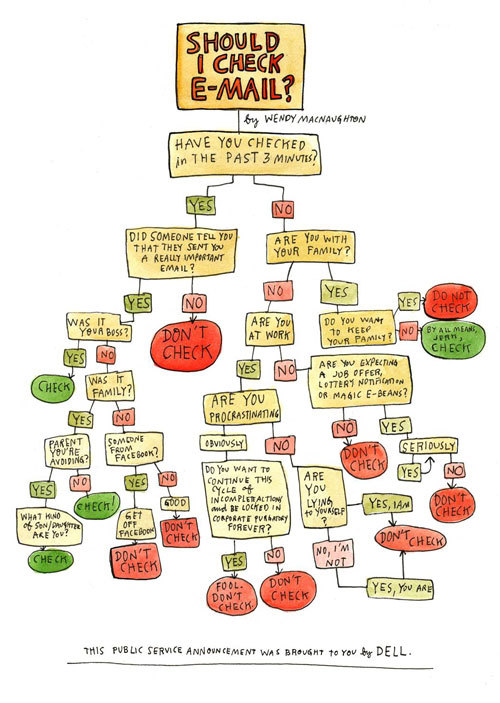
Should you check your email? Brilliant.
![]() |
| Should you check your email? This brilliant (and tragicomically true) illustrated flowchart by Wendy MacNaughton is now officially one of the best infographics of the year. |
Monday, November 25, 2013
Dirty electioneering starts here
It's actually fair enough for Melanie Philips to argue, as you'd expect, that he's an icon of our times, that he was hiding in plain sight and was utterly out of his depth as chairman of the Co-operative Bank. I don't dispute her right to make that argument and as usual she gets carried away. But she doesn't actually use the phrase patron saint. She suggests that he instead ticked all the right boxes and got away with it. She makes dubious use of the flimsy rumour that someone made a casual joke about Paul Flowers having a "Colombian cold" but that's it.
I also can't find the cover on the website. Just the piece which is here.
The choice of cover is down to the editor, Fraser Nelson. I don't believe it's a wise one and I'm pretty sure now that it's one they have regretted.
Friday, November 22, 2013
Manchester - time to stop bitching. Time to embrace REAL collaboration.
We also talked about London quite a lot. Manchester’s relationship with the capital is always a slightly thorny one. To be honest, I’m always happier not to. I’d rather talk about Manchester.
As the Tory magazine editor Fraser Nelson said in the Daily Telegraph last week – “Manchester does not behave like it wants to be Britain’s second city: it behaves like it wants to be the first.”
I like it that he says that and I like it because it’s at least partly true. But I actually wish it I wish it were really true.
Since June last year and my life changing visit to Silicon Valley in March, I have been determined to embrace the spirit of partnership and collaboration and help to join up the dots.
There is so much to co-operate on, so many opportunities in the city to do things for the betterment of the city. To simply focus on a narrow short term interest does no-one any favours. It just reinforces the image of the great cities of the North as parochial fiefdoms.
We have introduced businesses to new opportunities, opened the door to politicians of all colours and recommended companies to one another. It’s what we do and is all part of a wider mission to be a more grown-up city.
Yet I have been properly depressed at times to find myself on the other side of a fault line, drifting away from people I genuinely want to work with and share ideas with, but who have fallen back on supposed enmities and rivalries to the exclusion of, well, me. I genuinely thought I’d left that all behind in 1983 when I left school.
I’ve also been caught in the crossfire on some nasty personal battles that really should be beneath those involved.
We all have a duty to our businesses to succeed in a competitive environment. I get that. But what I don’t get is the nastiness. It’s just not necessary and it narrows your horizons.
So, here are the questions I’d like you to ponder.
Do the media do justice to the conversations that take place around the city – the initiatives that require backing, not just the ones they are media partners on?
Do the Universities really want to open their doors to the people of Manchester and share knowledge and expertise – and even to work with one another?
And is there a willingness amongst technology businesses of what they might require from an active financial and professional community, rather than just a slightly grumpy complaint they don’t understand the sector?
I’d like to think the answers to all of the above are “yes”. But I suspect, if we’re honest, they are “no”. I’d like to change all of that. Do you want to work with me?
Saturday, November 16, 2013
Imprisoned by dogma
My eastern pal Tony Murray had this to say earlier today: "My problem with climate change is that both the pro and anti- lobbies are so thoroughly objectionable.
"I am so tired of people who lack the technical proficiency to even change an inner tube pronouncing with absolute certainty on the root causes, likely consequences and solutions to a massively complex problem that may or may not exist."
What this points to is the imprisonment by dogma. The reduction of any argument to "yes, but" and "the same people who say this, say that". And I have to say, none of this is helped by social media.
Thursday, November 07, 2013
Manchester's Graphene opportunity - an essential SmartCity goal
So what’s the truth about Graphene?
It will soon be a decade since two scientists discovered wonder product Graphene at the University of Manchester. For our city and for the University the work that those two eminent scientists have been doing remains vital to giving the city a critical edge.
Indeed, at our SmartCity conference on the 13th of November at MOSI we will be hearing from Mike Emmerich, the chief executive of New Economy Manchester about these developments in Graphene and how the city will benefit in the future.
But a common view expressed is that Manchester’s opportunity has gone. That this is now an opportunity likely to be exploited by America and Asia, not Northern Europe. The evidence for this lies in the number of Chinese, Korean and US patents being registered, as well as the daily production of research papers all over the word.
In an article in The Manufacturer, Dr Helen Meese, head of materials at the Institute of Mechanical Engineering, says:“The UK is at the very forefront of graphene research, but academics are increasingly concerned that little is being done to encourage industry to develop practical uses. This must change.”
She says over 7,500 graphene-based patents had been filed worldwide by the beginning of this year but only 54 were from the UK. In comparison, over 2,200 are held by China and 1,754 by South Korea. The Korean company Samsung alone hold 407 graphene-based patents.
It’s a point reiterated by a research report from the Patent Office.
But the view from Manchester is that this doom and gloom can be overplayed. The building of the Graphene Institute is evidence of a serious research facility and the appointment Nathan Hill from Oxford Instruments is a sign of series intent as is a new prize for scientific work on commercialization.
Nathan Hill’s goal is to set up a graphene Industry Club and a number of strategic partnerships with major companies and the University.
His view is: “Having lived through the development cycle of superconductor and semiconductor materials and devices, working with the great team and resources at Manchester was too good an opportunity to miss. I’m very much looking forward to supporting the next stage of making graphene a powerhouse for further research, manufacturing and jobs in Manchester”.
I’m ever the optimist, the stakes may be sky high, but hopefully there is more going on than many realise and that Manchester’s role in the future of this wonder material is bright.
via Tumblr http://michaeltaylordowntown.tumblr.com/post/66273852214
Friday, November 01, 2013
Martin McDermott RIP
Driving around two Sundays ago, my favourite radio programme played New Order's signature tune Ceremony. My thoughts immediately turned to Martin McDermott who was, as we feared, just hours away from leaving us forever after a long illness.
Thursday, October 31, 2013
Malcolm Gladwell at the Liverpool Phil
But this was a strange event. Strange, as it was in a magnificent theatre, but the acoustics were dire. I couldn't quite hear what he was saying some of the time and when it's a one-man show that's pretty important.
I was also slightly puzzled that he chose Northern Ireland for his book about underdogs, but also to speak about in Liverpool, London and Dublin. Brave if nothing else, for North Americans can get the perspective badly wrong about who the bad guys were in that conflict. I refer to this piece in the Spectator to pick up that particular point - How Malcolm Gladwell Gets Northern Ireland wrong.
But negatives out of the way - I loved how he told the story of Alva Erskine Vanderbilt, the 19th century social climber par excellence. How different elements of her story told one way portrayed her as a hero of feminism, or from another view as a tyrant and a mother from hell.
All of which was a clever way of tacking the issue of legitimacy. People pay taxes when they feel government and authority is fair and respectful - it then gains legitimacy. Taxes are avoided, in Greece for instance, when the rule of law is widely seen as unfair. And it's a lack of legitimacy which causes much of the turmoil around the world. Other political theories around detterance don't cover this.
“People choose to obey the law not because of a calculation of risks and benefits but because they think of a larger justice,” he said.
“She does not stand back because she does not see society’s judgment as legitimate. She has been denied on every level the basic fundamental rules of legitimacy and she is angry. She puts every ounce of her domineering and ambitious personality into the cause and she is successful.
“Alva wins in the end and the message of that victory applies as much to this day as it did then. The lesson at the end of the day is that the powerful are judged not by their ends but their means. If you deny people legitimacy then they will come back and defeat you."
All told, it was enough to make me and my pal Alex want to buy the book. We missed getting one on the night as we were being social butterflies at the bar, him with this guy, and me with another old favourite.
Wednesday, October 30, 2013
Why Russell Brand is a little bit right about globalization and politics, but why he is still wrong about pretty much everything else
Florid, flirtatious and fun. But also angry. Russell Brand has this week been elevated to some kind of spokesman for a generation. He guest edited the left-wing current affairs magazine the New Statesman and contributed a long essay about the importance of changing the way we think.
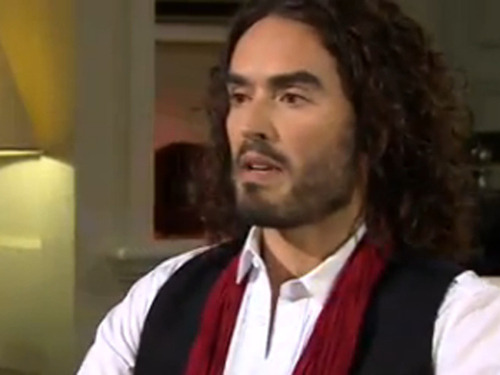
His entertaining interview with a glum and not very serious Jeremy Paxman (above) showed this to more people, via YouTube, than had ever even heard of the New Statesman.
It’s easy to pick holes in his comfortable pontificating from his mansion in LA, and to pick up on everything stupid thing he ever did, as this guy does here. but he has a point. And he may have hit a nerve.
I’m with Simon Kelner in the Independent when he said this: “His call for revolution may be Spartist nonsense, but Brand definitely articulates a strain of thinking among a growing number of young people who feel disenfranchised, disenchanted, disengaged and, most important, disinterested in the idea that politics can change the world.”
A session I went to at the University of Manchester this week saw four white men in suits presenting policy ideas from their respective think tanks. Yet it only really ignited when a member of the audience evoked the spirit of Rusty and asked if he was on to something or was insane. And this was in a room full of people who WANT to talk about policy and politics and all the things that are supposed to be so boring.
So what do we do? How do we engage and entertain and make relevant the things we seek to do?
The first is that we must seek out interesting people with creative solutions to difficult problems. How they talk, how they think and yes, how they look. People like Al Mackin, holder of our Tony Award, who has recently been to Tel Aviv and has a few things to say about what he found. People like Vincent Walsh who is rethinking our whole approach to food production in the city of the future.
Have I got your attention? Anyway, all this and more is on offer at our SmartCity event on the 13th of November.
You see, I don’t think we need a revolution in this country. I don’t think the system is fixed against everyone. I think there are plenty of revolutionary opportunities to make change and do things better and with more fun.
Tony Wilson on London, the North and the legacy - Chas and Dave
Monday, October 28, 2013
Marple's future in the hands of Waitrose
Now that's better - Homeland gets good again
Wednesday, October 23, 2013
Vikas Shah – Renaissance Man
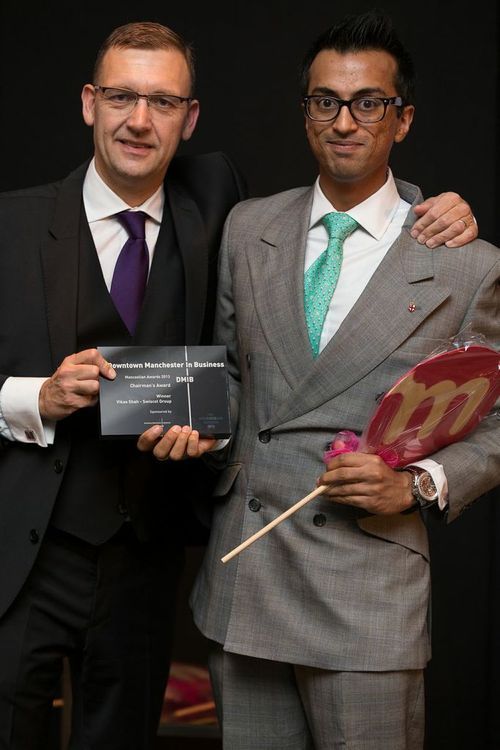
I presented the Chairman’s Award at the 2013 Mancoolian Awards. It went to Vikas Shah, someone who I’ve got to know over the course of the last year or two.
Vikas is one of those people in business in Manchester who makes things just that little bit more interesting. Though he works in his family business Swiscot, a textiles company, what makes him interesting is the range of different things he does.
He’s been involved in setting up the Greater Manchester Film Festival, has produced a couple of films, he supports a number of different entrepreneurs – many of them with the aim to pushing the agenda of Manchester and making it a great city to do business in.
One of the first things about him that caught my eye was his blog – Thought Economics. It will never win any wards for design but for content it is quite something. Over the course of the last few years Vikas has managed to interview some of the leading thinkers and influencers on the planet., including Nobel Prize winners, business leaders and people who are changing the world through incredible work in Africa and Asia. And then there’s Sir Richard Branson. We may disagree slightly on the bearded one, but Vikas still landed a good interview.
His work with a business school in Portugal and with Manchester Business School reminds us of the need to give in order to get. He has found new opportunities through working with entrepreneurs and start-ups that need that injection of energy, ides and inspiration.
What Vikas reminded me of was the whole essence of the Renaissance Man – the multi-faceted, intellectually curious and enigmatic risk taker. Sometimes people who don’t fit the profile of the straight laced corporate man attract suspicion, rather than admiration. As entrepreneur Luke Johnson says in his book Start It Up – “Centuries ago there were no sharp divisions between state and the private sector, between science and the art. Bring back that enlightened approach!”
To me it represents something important about Manchester as well. Successful Mancunians have always had that streak of curiosity and daring about them. It was therefore an absolute delight to present Vikas with that award and to mark his move into such exalted company.
via Tumblr http://michaeltaylordowntown.tumblr.com/post/64896177119
Monday, October 21, 2013
Homeland, three episodes in and it's rubbish
Norman Geras - an inspiration
My contact with him came many years later when I stumbled across his blog - Normblog. It is no exaggeration to say that a Marxist Blairite academic with a love of cricket, country and western music, philosophical discourse and political debate showed the way. He managed to provide a daily delight. When I wrote a feature about the benefits of blogging for Insider magazine he was both courteous and generous with his time. When he asked me to contribute to his weekly Friday questionnaire I was humbled.
What I took from him more than his searing intellect, or even his unique and detailed writing style, was a consistent sense of humanity and love. And from that place he was particularly critical of many on the left of politics.
He was also a devoted husband and father who obviously enjoyed a rich range of friendships. His loss will clearly be felt by all those close to him.
There's a link to an obituary, and then a link to a few more, which was often the way of the Normblog, here.
Tuesday, October 15, 2013
When a city is a character in a crime novel
To the Manchester Literature Festival to a panel discussion featuring Val McDermid, Cath Staincliffe and Tom Benn. All have featured Manchester in their work - not always by name, but the city works as a location as it is big enough to have a lot going on, but not so big that it swamps the characters.
This was all in my mind over summer when I read Kevin Sampson's first hard boiled crime book - The Killing Pool, which painted a very detailed, well researched picture of Liverpool's murky underworld. It was a good story, but it was Liverpool that seeped out from every page - warts and all. The video, above, sets out how the author set about creating such a story. I've been fascinated by this whole period ever since I read Cocky by Peter Walsh way back when. But he really brings the city to life, which was his aim.
Manchester similarly loomed large in the debut digital download novel of AK Nawaz's The Cotton Harvest. Again, another work produced from someone close to the centre of crime and the underclass in the city.
As Val McDermid said tonight, if the author does it well, then you visit a place and feel you know it. Think Ian Rankin's Edinburgh, Sarah Paretsky's Chicago and Raymond Chandler's Los Angeles.
Apologies to Helen Carter, in the chair tonight, for asking her if the portrayal of journalists in crime stories has changed and whether any of the panel were any good at it. I asked, because I think many get the workload and pressures of the journalist woefully wrong - AK Nawaz didn't, by the way. I didn't mean to put her on the spot regarding how Val McDermid does anything. A greater, more impressive force and a yet massively warm presence on a stage at a book event I have yet to see. Had I been offered an invitation to nit pick her work, I would have passed on it too. Soz.
Sunday, October 06, 2013
A proud performance at Wigan today - and Grant Hanley won't do that again
So there we were, 30 minutes in to the game at Wigan. Rovers were 1-0 up. I said to my lads - "this is the best we've seen them for years isn't it?" So in control, so positive and there's Grant Hanley, so strong and confident playing the ball out of defence. Then, bang! A Wigan player is down, the referee was better placed to see it than us. It's a red card.I don't want to dwell on what he did, but that raised arm probably cost Rovers the game. I don't for a minute think that with 11 men on the pitch we'd have been going into injury time at 1-1. This young team is playing with purpose and style. They will be rightly gutted about leaving empty handed, but will have learned a lot about each other today. Hanley will be gutted and disappointed with himself if he's half the character he appears to be. The fact that the team were applauded off at the end - and that every one of them lined up to take that applause and gave it back to a magnificent away following - says a lot for a club that has suffered such recent trauma.
Let's wipe our mouths and start again.
Wednesday, October 02, 2013
Let's have the emotional and excitable case for HS2, please
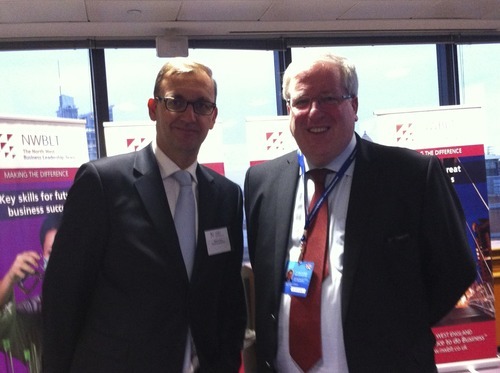
I was at a special event with the Secretary of State for Transport, Patrick McLoughlin on Tuesday evening. There he was presented with a well argued case for HS2 from an august group of business leaders from around the North West, notably Jurgen Maier of Siemens, the current chairman of the North West Business Leadership Team. And not for McLaughlin the coded messages about blank cheques transmitted a week earlier by Ed Balls. No, the Tories are determined that HS2 will happen and that the whole country will benefit from a well delivered project.
The case for HS2 has been rather meekly made so far. I speak to many businesses and the biggest gripe is that they fail to see the relevance of a long term project that will get you to London quicker, this from Lawrence Jones of UK Fast is typical: “We don’t need to get to London quicker. It’s a waste of money when we don’t have enough to go around, and it’s not all about London, which already gets the lion’s share of all our taxes.”
Then the argument about capacity on the West Coast main line seems to get confused with how many empty seats there are in First Class during off peak periods. So when Labour’s Andy Burnham met a few of us recently he was slightly taken aback by the lack of enthusiasm for HS2 and the weakening of the supposed cross party consensus.
People also feel that budgets in their billions sound like an awful lot of money. It is a lot of money. But it is still a modestly small proportion of the rail budget if you take a long term view and measure it against all the other transport plans.
And after the dripping of negativity from Ed Balls at Labour conference, it must have been encouraging for city council leaders like Sir Richard Leese in Manchester to see beyond party politics and welcome a Conservative government supporting a project he feels passionately about, because he feels it will benefit Manchester.
Richard has acknowledged too that he’s been criticised in his own party for sharing platforms with Tory ministers: “Today I shared a platform with the Secretary of State for Transport and had no problem whatsoever. We were talking about HS2, something I passionately believe in, and something that like all long-term infrastructure programmes needs cross-party consensus to deliver. Sometimes it’s more difficult but at the end of the day they are the party of government. Every day they make decisions that impact on this city and its citizens. My job involves standing up for Manchester and that means I should take every opportunity to argue Manchester’s case with the decision makers in Whitehall.”
That’s why I want a bit of vision and passion in the debate too. I like trains. I like new technology and I get excited about dramatic advances in how we live. I like a bit of vision and bold thinking. Indeed it was heartening to hear George Osborne evoke the spirit of Isambard Kingdom Brunel, one of the greatest of British engineers.
So in making the case for HS2 it has been important to hear how it cost £10bn to improve the current main line. As prime minister David Cameron said at his conference, why settle for less than the best if improvements are needed anyway?
“The fact is this: the West Coast Mainline is almost full. We have to build a new railway and the choice is between another old style Victorian one or a high speed one. Just imagine if someone had said no, you can’t build the M1 or the Severn Bridge, imagine how that would be hobbling our economy today.
“HS2 is about bringing the north and the south together in the national endeavour. Because think how much more we could do with the pistons firing in all parts of our economy.”
But there’s the rub, if this is a North-South thing, then why not build it from here first? I also share the frustration that the consultation and then the timetable for delivering HS2 is “painfully slow”. Patrick McLoughlin revealed to us on Tuesday that the new chairman of HS2, Sir David Higgins, is keen to quicken the pace too.
As the Birmingham to Manchester dimension is in open consultation at the moment I believe it’s important to make the case for building it sooner and to start the work in Manchester, particularly linking the city centre to the Airport.
I commend the report from the North West Business Leadership Team, which can be downloaded here. The main point is that HS2 has to be part of a range of measures that tackle problems in how road, rail and air transport functions effectively. It requires a fresh way of looking at the economy of the country, it requires a shift in thinking about how we view the country, it requires, as we’ve been saying for a while, a Northern Revolution.
via Tumblr http://michaeltaylordowntown.tumblr.com/post/62927710098
Thursday, September 26, 2013
Labour isn’t the party of small business just because it says it is so
But business relations have soured. Both on economic management and red tape, the Tories have secured the high ground. Not a single FTSE 250 chief executive backed Labour at the last election.
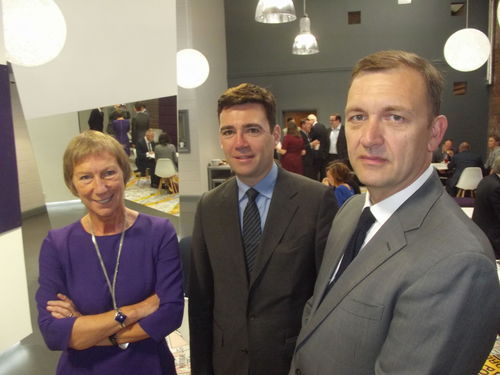
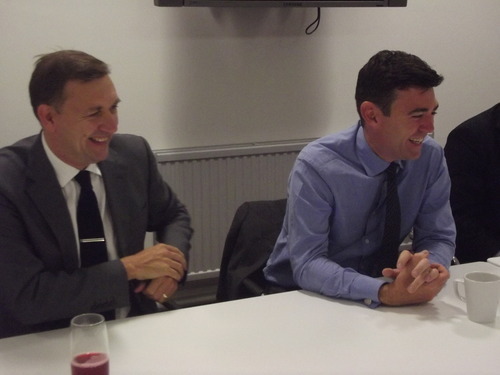
Days before Labour’s conference this week Downtown brought a couple of dozen members together for an audience with front bench heavyweight Andy Burnham MP at Manchester Science Park (pictured above, with Rowena Burns from MSP). One of the points I put towards him was the shift going on our cities and business parks and Labour’s need to engage better with businesses beyond the square mile of the City of London.
The demographic of Britain is changing. The last couple of years has seen record levels of new company formations and new businesses. According to the Start-Up Britain Tracker 382,792 new businesses have been started this year. That enormous figure may mask a multitude of different stories – it includes one-man bands, sole traders, kitchen table eBay traders, shell companies as well as a fully fledged companies with dreams of world domination.
What they all represent is that thread of aspiration through British society. A desire to get on, improve one’s lot and make money.
I wanted to know if there was room for any of that in Andy Burnham’s radical ‘aspirational socialism’ agenda which underpinned his earlier leadership bid. We have been comfortable so far with the soundings we have had with Lord Adonis as he embarks upon his Growth Review.Too often, Labour’s left leaning rhetoric has betrayed a lack of trust and empathy with the wealth creating classes, focusing firmly on taxes, fat cats and if you close your eyes and listen to Ed Balls spit the word out – “millionaires”.
Many of the 382, 792 will not become the “millionaires” that Ed Balls thinks were undeserving of a tax cut from 50 per cent to 45 per cent once they earned £150,000 a year. But they’re not stupid either. They hear that and think – he’s going to come after me once I make a bit of money for myself. They might not pack it in, but they’ll switch off when Labour come calling.
Ed Miliband was at least right in his instincts this week when he identified an opportunity to make a Labour pitch to be the party of small business. Small companies are often the forgotten and downtrodden underdog in a supply chain, the victims of cartels and stitch ups, shut out from the closed shops of procurement processes by bureaucracy and a high bar for admission to government frameworks.
A policy to cut business rates was a step in the right direction. So too is Shadow Business Secretary Chuka Umunna’s imaginative lifting of the Small Business Saturday project from America, but there is still a great deal more work to be done to convince anyone in a business that the state is on their side, whatever the party.Take what Chuka Umunna told the Daily Telegraph this week: “We want to celebrate companies that have good business models, which promote long-term sustainable value creation, who value their people and see business as part of society. During our time in government, we weren’t always discerning about the kinds of business models and practices we want to see.”
I’d like to know this: Where is Labour placing the tidemark on these models? No, OK, putting kids up chimneys is off, but cold calling? Lending money? Private healthcare? Entrepreneurial people tend to spot opportunities better than government. They should be supported when they do so. That support should be unconditional, otherwise the aspiration isn’t to support small business at all, just to support cool people we like, and the rest of you can just pay your tax and shut up.
via Tumblr http://michaeltaylordowntown.tumblr.com/post/62320110904
Sunday, September 22, 2013
Returning to Ewood Park - low expectations
Friday, September 20, 2013
Lessons in life from Lloyd Dorfman
I had the honour of interviewing him at an event for The Prince's Trust. He’s a class act, a proper gent and he has an incredible grasp of detail. I wanted to get from him some inspirational stories, some anecdotes about his life, why he is such a generous supporter of the arts and of charities like The Prince's Trust and what has driven him through his life.
He started his business in the toughest of economic times. In 1976 the odds were stacked against him when he founded the company as Bureau de Change from a single shop in London and now trades more than 80 currencies in more than 50 countries.
As he built the business up, he had to fight to get into locations like Heathrow Airport. He battled the vested interests of banks and dominant players. When the opportunity came along to bid for Thomas Cook’s financial services arm, Travelex was prevented from even entering the ring. He bet the whole business on sealing that deal, but it proved transformational and projected the business to a global stage. When he eventually took cash out of the business, selling to Apax, he stayed involved, keeping a 30 per cent stake and retaining his role as chairman. Not executive chairman, not non-executive chairman, just chairman.
I didn’t pick up on this until later but so many of his stories weren’t just about the obstacles that he’d overcome, but how a relationship with a real person turned it - the official at BAA, the Thomas Cook shareholder who ushered him into the auction which led to him buying it. His relationship with his CEO Peter Jackson.
I thought to myself, even a man who operates at the very top of life thrives on such basic raw connections. It starts to emphasise something we can all too often forget: people sell people and people don’t buy from you if they don’t like you.
More than ever this is a connected economy. We are frequently reminded of this, but I firmly believe this firm human contact is more important now than it ever was. The foundation of businesses like LinkedIn warehouse your network and treat your contacts like a commodity, but you always run the risk that you miss out on what is important to any individual.
So, there you go. Spending time with one of the most successful businessmen of his generation teaches you the most important lesson in life. Don’t be horrible.
via Tumblr http://michaeltaylordowntown.tumblr.com/post/61748963182
Tuesday, September 03, 2013
Rhodes stays - glimmer of light at Blackburn Rovers?
I heard last week that Wigan were very confident they'd got their man. And the Daily Mail is reporting today that the player is disappointed not to be going. This is the smoke and mirrors world of football managers and agents at work. Engineering discontent.
I'm also pleased that Pedersen and Givet are moving on. They made a contribution to better times, but they need to be playing somewhere else now. I still don't demur from the view that the presence of Venky's is destructive, but it seems like we're stuck with them. I also think we're stuck in this division for a while. The team Gary Bowyer has built is suited to it. Luck can get you up, or swing against you and send you down. This at least feels stable, which has to be something.
None of the good news masks the underlying problem at Ewood. I think there's a black hole in the finances. I have long since stopped trying to apply logic to what Venky's may do next.
I have also accepted an invitation to go to the Huddersfield game at the end of the month. My Rovers supporting sons will be delighted. We've stayed away as a protest, because I want our Rovers back. The question is which Rovers we're getting back. The honest one will do.
Monday, September 02, 2013
What Bill Shankly might have said about transfer deadline day
On this day of all days, Bill Shankly's birthday, we see all of football laid bare. Transfer deadline day, where Shankly's famous quip about life and death will be crassly taken out of context. I heard a Sky reporter say yesterday we were "witnessing history" as the team bus pulled up at the Bernebau for the very last night time WITHOUT Gareth Bale.I thought Frank Cottrell Boyce nailed it with his review in the Observer.
And if you want more on David Peace, then Phil Thornton did a brilliant interview with him.