Showing posts with label business. Show all posts

Monday, October 17, 2022

A brush with Marple wisdom

I did a talk to the Marple and District Probus Club last week.

Formed in 1972, they offer a chance for retired people to meet socially, converse, listen to talks and go on trips to places of interest.

My dear friend Peter Mount is involved and has brought all of his experience and energy to the club. They were short of a speaker for this week's meeting at the Senior Citizens Hall in Marple, and he asked me on Sunday if I would be willing to turn something around in a couple of days. For Peter I always find it hard to say no.

My talk was called My Life in 17 bylines - journalism and politics. The talk went down OK, I think. I spoke for longer than I anticipated, but then my experience is that the conversational interactions pad things out a lot. The best bit however was the question and answer discussion afterwards. Because I touched on my political experiences I came in for a bit of push back and scrutiny. It reminded me a little of being an election candidate on the campaign trail, not least for the fact that we used to have Labour Party events in the same room. 

That said, there were also questions related to journalism - on truth, due impartiality, the dreadful corrosive effect of the Daily Mail on our society and a question about a recent story in the Stockport Express which I have some knowledge of. 

I thoroughly enjoyed the experience. I found the people there to be sharp, wise, curious and deeply committed active citzens. 

Sunday, October 09, 2022

The Devil Wears Ciro Citterio


The foundation of my love of music was the media that provided the running commentary on the styles, scenes and sounds I grew up with.

Without the New Musical Express, The Face and i-D music would still be good, but it would exist in isolation, without context and without colour.

It was also the rock on which my love of magazines, writing and journalism was built. 

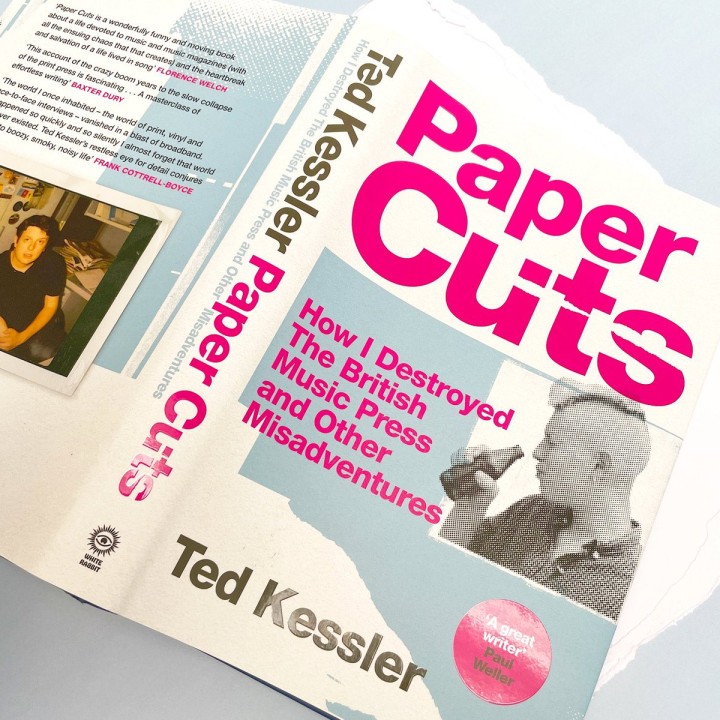
Last weekend I ripped through Ted Kessler’s brilliantly titled book Paper Cuts - How I Destroyed the British Music Press and Other Adventures. This is a longer version of the punchy review I did for the local papers.

The last ever editor of Q Magazine when the music monthly closed at the start of lockdown in 2020, Kessler shares the potent mix of his remarkable life story, interwoven with a rich commentary about the decline of the music press.

The other eye I had on this tale was my own early career choices. I often think about this world as a parallel universe down another fork on my life’s road. I started out writing about music, fashion, films and clubs but took that different path in my early twenties. Many other young journalists probably also compromised on their ambitions, but I do count myself lucky to have landed in an exciting sector. I made my home through the 1990s reporting on the television business and its technology, rather than music, stars and showbiz, later moving to Manchester to edit Insider, the best business magazine in the land. One of the reflections I used to share with journalism students at UCLAN was the access I had to real decision makers and headline makers was so much greater in the business press than I suspect it was in consumer media.

Although I’d interviewed some high-profile celebs in that phase (Ben Elton and the rapper Tone-Loc were favourites, various long-forgotten Australian pop stars, not so much), some of the PR-guided set pieces were excruciating and over-controlled. You really felt you were in their pocket and constantly on parole for good behaviour. Ironically, my best-ever scoop was about the revival of Countdown Revolution, a much-loved TV music show.

As I mentioned in this piece a couple of months ago, I have at times lamented that early choice. But deep down I probably always knew the money wasn’t good enough and the precarious nature of jobbing journalism for cool papers and mags was more than I could bear. Certainly, both Ted Kessler and Miranda Sawyer have confirmed their own financial precarity was a trade-off for an interesting life. 

Journalism is a hustle. You have to constantly negotiate access to a much sought-after interview, or work out the trade-offs required to stay in the game. The business press was a different kind of dance, but there were games to play and the advertisers had more power; too much if you weren’t vigilant. 

To be any good at journalism, in any field, you need courage, access and a genuine love for what you are writing about, if you don't then you are dead, because the gatekeepers have an antenna for it. Writing talent, as Ted Kessler describes, particularly for a high-output media like a weekly paper, isn’t as important. You just have to be able to knock out the copy sometimes.

I enjoyed Ted’s accounts of his own on-the-job learning, well remembering the brutal dressing-downs I had through my early career. I didn’t use words wisely, I was way too slow, and it took a while to balance the relationships that could taint a fair and accurate view of our world.

His tales of press trips and moments of genuine wonder are beautifully told, John Harris and him at an early Oasis gig, the energy of the Happy Mondays, but there was always a tension. These people weren't your friends and could snap in an instant. Maybe it’s also because the stakes were so high and the negative consequences so catastrophic. When he spends time with Radiohead and the editor ditches it as a cover story, relegating it to a chippy inside spread with poorly chosen photos, it triggers a grudge that lasts for a decade.

He gives Paul Weller’s Stanley Road album 6/10 in the NME and Weller invites him down to Surrey for a straightener in the car park of his studio.

I don’t ever remember being offered out by a grumpy TV facilities boss, but I upset plenty of people over the years. Sometimes it was my own fault. I can think of the press officers at major corporations, who were also our advertisers, who thought I was an idiot. I then decided I would go out of my way to deliberately annoy them by doing stories so offensive, so detrimental to their reputation, and so egregiously hostile, that they threatened to withdraw all advertising from my publication, and its sister titles, which were hanging by a knife edge anyway. It was high stakes but boosted my credibility and their requirement to take me seriously. And I was right, by the way, the story I worked hard to get published about them was true. And rather a troublesome idiot than a lickspittle, of which there were plenty elsewhere.

But as I matured I knew better and learned how to earn the right, to play the long game. If you’ve got a good reputation, if you do the work, serve the readers good stories, and try to be different, then your respect yields better stories. In later years, while working on a different magazine, that same advertiser flew me to Rome to interview the head of the Vatican’s TV station, and also to the World Cup in France 98. Though to prove where I stood in the pecking order it was only Bulgaria v Nigeria.

For an industry that holds its annual trade exhibitions in Las Vegas and Amsterdam, I enjoyed those years and had a good innings hanging around things I never fully understood, finding the personalities, spotting trends, and separating good new products from dross.

I was asked recently what my favourite ever story pitch was. It’s easy: “Hi Roger from Quantel here, how would you like to come to the Cannes Film Festival on our private jet?” That was a big deal. Competitors upped their game after that. Spending time with smart people brings insights, insights bring readers, readers bring credibility, and credibility gives you the freedom to be brave. Plus, though I knew Cannes was incredible from trips to the MIPCOM and MIPTV markets, the film festival was next-level insanity and glamour.  

But I think the real reason I really enjoyed Ted Kessler's Paper Cuts was that it was also about the decline of publishing, the collapse of the magazine industry as we knew it, and the self-inflicted wounds that legions of halfwitted publishers administered in the name of brand strategy, diversification and efficiencies. I went through many of the same kind of corporate bollocks that Ted Kessler outlines; strategy days, meetings about meetings, overreacting to anecdotal evidence in reader surveys and off-the-cuff comments from people making an excuse not to advertise. I've lost count of the pointless memos, botched redesigns, paranoia, new managers with the latest bright idea and the sharpening of knives by young bucks on the rise. There was also a clash of priorities between advertising, editorial and corporate merger strategy.

Ted Kessler’s characters, some tragic, leap off the page. Maybe he was blessed with big names and personalities, but for his Steven Wells (RIP), we had Oscar Moore (also, RIP). Yet it remains true that no one has yet written a savage portrait of working in the business press in the way Kessler does about his world, or Laura Weisberger's novel about Vogue, The Devil Wears Prada. I just don't think my magnum opus (The Devil Wears Ciro Citterio) would be quite the rip-roaring page-turner. 

The irony is not lost on me, by the way, that other hardy veterans may have well interpreted my own enthusiasm for events, video and podcasts as equally vomit-inducing careerism and therefore evidence of my own blatant hypocrisy. In a later career incarnation, I sat on the board, advocated change, and embraced the internet. As one of my American journalist friends said, "oh my God, you've become 'they'."

But you only have to look at the absolute bin fire that is the local newspaper industry to know what happens when you get the big calls wrong, promote the wrong people and fall asleep at the wheel. 

But for all of that I have never stopped being a journalist, and a supporter of journalism, and loving the company of journalists, not just because of stories from back in the day, but because of all the stories they tell so well. 

Paper Cuts is stuffed full of hilarious stories of wild encounters that us journalists love retelling. Trips to Cuba with Manic Street Preachers to meet Fidel Castro and dinner with Florence (but not her Machine) at the height of her success, a fair few involving Manchester music legends, Shaun Ryder, the Gallaghers and then there’s Mark E Smith of The Fall asking about the name Kessler: ‘Jew, Or Nazi?’ A story Ted Kessler’s dad bizarrely recounted with morbid glee.

But for all its depictions of a downfall of an industry, and the sad story of his Mum’s passing, the book also ends on an optimistic note. Kessler’s own Substack newsletter The New Cue fizzes with the same energy for new music and a rich heritage. It may not reach the heights of NME in the 80s, but it’s a platform for writing that matters. I hope they get the access they deserve in a world where social media gives artists the ability to totally control their brand and message, but often leaves too little a crack for the light to get in.

Tuesday, July 19, 2022

All we are saying, is give kids a chance


A couple of weeks ago I volunteered to help out at Aquinas Sixth Form College with some interview training.

I sat across the table from eight different young people with all their hopes dreams and aspirations laid bare, and tried to give them a first experience of what it’s like to talk about themselves one-to-one with a complete stranger for 15 minutes or so.

These were students who the college has identified as having real potential and suggested to them that they should apply to top universities. 

Let me mention first why I did it.

Young people have had a rough ride. Most of these did their GCSE year in lockdown. They’ve bounced from one challenging time of life into a new educational setting. 

The future is full of volatility and economic uncertainty. Technology is changing so fast that it puts real pressure on what students can learn that will be useful to them.  

As I look back from my comfortable position in midlife, I’ve made a promise to myself to say yes to such requests for help. Each and every offer of a helpful word, or a guiding hand, that I had when I was young, wasn’t always grasped at. But when I did, it was valuable.

You know too that the posh kids at the top private schools will have pushy Dads coming in to talk about careers in the City and corporate life. 

But it’s also because I’m sick to the back teeth with employers complaining about the lack of skills of young people entering the workforce, but doing naff all about addressing it.

Most, if not all, of the students I spoke to had never had a job interview or been grilled by an admissions tutor at a university. But nearly all of them had part-time jobs in shops, pubs and restaurants. A couple had e-commerce microsites selling things they’ve made on platforms like Etsy and eBay. 

I think that’s amazing and is really something to shout about. So is building your resilience by talking to workmates and customers.

Each and every one of us has a story, a view of the world that is entirely unique to us.

I was keen to make them feel comfortable and establish common ground. A bit needy, I know, but I at least wanted to get them talking about what mattered to them.

As a part-time DJ I find that music is such a great unifier, whatever our personal likes.

It’s amazing how often music provides that bridge. One of the students told me her favourite artist at this year’s Parklife Festival was Joy Crookes, who burst onto the scene last year and who we played on our show a few times. I also had the conversation about Kate Bush’s Running Up That Hill with the Stranger Things fans. 

Music ignites the passions, sport and literature and films do too. Sharing experiences won’t solve the world’s problems, but if it’s the simple act of listening and understanding the world from someone else’s perspective, then that’s got to be a good thing.

I don't know if it made any difference or not, but if I can leave you with one thought, it's this. Volunteer to help out with this kind of thing. Share your experience. As John Lennon sort of said, all we are saying, is give kids a chance.

(column in the Tameside Reporter and Glossop Chronicle, July 2022)

Monday, May 30, 2022

Why music and football matter


Why do some places have a good feeling about them, while others seem stuck in a cycle of decline? 

I asked this in my column in the Tameside Reporter and Glossop Chronicle this week. And I was also curious as to what music, sport and culture have to do with levelling up of a place? 

The government spent 350 pages of a policy report mulling over this point, before sprinkling on some nonsense about medieval Florence. I wrote about it at the time for Big Issue in the North, and frankly, if anything, I probably overstated how weak the government's commitment was to this agenda.

Yet for people at the coal face of local government, where urban regeneration and business intersect, the work goes on. For the last few months I've been immersed in this world in my work for the Leader of Stockport Council, seeing up close how committed groups of people can achieve positive change often against stacked odds.

What I'm about to say isn't civic boosterism, but it does show the importance of some key 'feel good' elements in how a town can think about the future. As I was writing for the Tameside paper I pointed out how two of the neighbouring boroughs of Tameside have suffered conflicting fortunes in recent weeks, highlighted by their football teams. 

Oldham Athletic have been relegated from the English Football League and into the National League. They also suffered the ignominy of being the first club to have played in the Premier League to then drop out of the 92. 

They have been torn apart by terrible owners and have developed a fractious relationship with their supporters. 

Oldham has been dealt a bad hand lately. Racial tensions have come to the fore again during the local election campaign, where Arooj Shah was the latest leader to lose her seat on the Council after a concerted and highly personalised campaign against her. 

I went to the launch of a review of Oldham’s local economy recently where some home truths were aired. Committed local leaders involved in the Oldham Economic Review Board were honest enough to recognise what Oldham lacked, and some of that came down to a sense of a direction. According to experts from the University of Manchester, two of the important factors in how a town feels about itself are “civic pride” and “social fabric”. The latter feeds the former.

In contrast, Stockport County have won the National League and will be replacing Latics as part of their march back to becoming a proper football club again. They have enjoyed sell-out match days, and it’s no coincidence that the club is run by a local businessman, Mark Stott, who enjoys a good relationship with the Council and the local community. 

In the summer of 2019, a major concert at the Edgeley Park stadium featuring local heroes Blossoms symbolised Stockport’s self-confidence. 

It has a clear identity that is comfortable with its relationship with Manchester - Brooklyn to Manchester’s Manhattan, the council leader Elise Wilson is fond of saying.

I don’t exaggerate when I say that Blossoms have been a major cultural lift for Stockport. The band and their families are even using their cultural power to invest in new ventures in the town, clothes shops, bars, salons, and supporting other bands. It’s all about wanting to put something back into the town that has contributed so much to their own identity; they’re not Blossoms from just outside Manchester, they are Blossoms from Stockport.

Manchester’s onward march as a city attracting businesses and retaining graduates is because of its own rich cultural assets. The city invested in an International Festival precisely to make it culturally attractive and known throughout the world. A rich musical history and two enormous global sporting brands add to the allure.

People cherish things that they have lost in the communities, and can't always understand why they've gone. A flourishing town centre is one, pubs, workplaces, theatres and sports clubs are examples of others. By the way, as well as sporting and musical assets, one of the other things that make people feel good about a place is lively independent media.

For what it's worth, the evidence from what I've seen in my recent deployment in Stockport, and from what I know of the people behind the deep thinking in Oldham, they are making steps in the right direction. But it is against a backdrop of precarious funding, disinformation, government drift and disruptions to local leadership. It's never been more important to hold places together as we step into an uncertain future.

Friday, December 10, 2021

Stockport is open


I mentioned last week how much I like living where I do. We've got to know a few retailers and cafe owners over the years and I'm really thinking about them at the moment.

I've recently joined the board of the Stockport Economic Alliance. Last week we were shown this video to try and inspire local people to support their local businesses. The presenter is Stockport-born actor Will Mellor, but the supporting cast are the real heroes; people from all over Stockport who wake up every morning to open their shop, business, or cafe, and hope, or pray, or both, that people will come through the door and spend. I am full of love and admiration for them.

I'm embarrassed to say there's a couple of shops and businesses on the clip that are right up my street (one literally) who I haven't shown enough love to. I'll do my bit. Rachel's just done hers at the fantastic Suburban Muse in Marple.

So, come on Stockport, do yours too. Show the love, why not make it a Stockport local Christmas. 


Tuesday, November 30, 2021

Writing for The Big Issue in the North


I'm very pleased today. There's a story published in the Big Issue in the North that I've wanted to write for a few years now, an interview with Patrick Grant from Community Clothing.

Full disclosure, I was an early adopter of the utilitarian clothing brand, I subscribed to the first crowdfunder and have a few of their hard-working pieces. But, as Patrick makes clear in the interview, they don't work with so-called influencers and chuck out freebies. I wouldn't want them even if they did. The reason I wanted to speak to Patrick and dig a little deeper into his philosophy is because of what he's doing for the cause of northern manufacturing and re-establishing a sense of purpose and pride to places that make things. It just so happens he's doing this from Blackburn, where I watch my football and have an affinity, but that's only part of it. 

In so many nooks and crannies of the fashion world I hear barbed digs about what Community Clothing is, and what Patrick's agenda is. Maybe I didn't dig hard enough, but I don't see anything to snipe at.

Anyway, read it and let me know what you think. It's a good follow up to the insights I picked up from looking into emerging northern textiles businesses for The Mill recently.

It's the second piece I've written for The Big Issue in the North this year, but not the last. The first was an opinion piece on the awkward spot the BBC has found itself in, then this week's piece with Patrick Grant, on Monday I filed another feature for next week with a nationally known public personality with lots to say. 

Kevin Gopal and Antonia Charlesworth, editors at Big Issue in the North, are also exceptionally good at nudging, pushing and tweaking. They definitely improved the piece from commissioning to publishing. It's not surprising that the magazine is always a good read. It's well written, authentic, lively, it has strong clear design, but with a very real sense of who it is for and what the reader will be interested in.

So, go and get yours today, support your vendors, and support quality print media.

Of if you can't get out to a Co-op store, or a vendor, and if you don't live in the North, then you can buy a digital copy online, here.

Tuesday, October 26, 2021

Writing for The Mill


I am dead chuffed to have made my debut writing for The Mill, a fresh and high-quality online newspaper for Manchester. It has the potential to grow and be so much more, so I'm strapped in and ready for the journey ahead.

Founded in June 2020, The Mill is for people who want a new kind of local news and don’t have the patience for pop-up ads and endless scrolling on social media. The newsletters recommend local events, keep you up to date on what’s happening in Greater Manchester and investigate important stories in politics, education, business and culture. There's a long read about it here.

I've wanted to delve into the burgeoning Manchester fashion sector for a while. I used to love looking around factories and workplaces when I was editor of Insider, so visiting Private White V.C. in Salford (pictured), English Fine Cottons in Tameside and the Manchester Fashion Movement in Manchester's appropriately named Ancoats was just great. The piece is here. 

I'll say this as well. Joshi Herrmann, the editor, is excellent to work with. Really innovative, challenging and curious. Hope there's more.

Saturday, October 09, 2021

My internal dialogue on football, Newcastle, oligarchs and Venky's


Why haven't you done one of your self-regarding and pompous blogs about the Newcastle takeover? Don't you care about murdered journalists?

I feel genuinely exhausted by all the commentary and back-and-forth on the Newcastle United takeover and pretty much every conversation about global football, investment trends and how everyone from your barber to the bloke that stands next to the fruit machine in the pub are now experts on sovereign wealth funds and cultural relativism.

So, you think you're above such banalities then? It's fine for you as the one-time editor of a business magazine, friend of football club directors and would-be owners of your club to have an opinion, but not now, right?

Everything that has been said and done has been said and done. Proper journalism's David Conn, a very good piece on an Arsenal website, and another piece by David Goldblatt in the Guardian, of course, which blames New Labour, obviously. It's the natural progression of the modern form of capitalism, acquisition of soft power assets by sovereign wealth funds to either greenwash or sports wash their reputation for a time when the oil runs out, or a UK passport gets secured. And something to do with TV rights and piracy in the Middle East and Qatar, or something.

Ah, so it's a government issue, not a moral one, that if only there was better regulation and enforcement of the rules on fit and proper persons who can own a football club, is that what you're saying? 

Do you know how many current Premier League and Championship owners would be barred from owning a club if the rules could by some miracle be enforced retrospectively? None. Not a single one. They aren't designed to block global tycoons, nation-states or oligarchs, they're meant to be a bar to the kind of local crook too thick to operate through an offshore trust.

Or a rapist?

Indeed. But equally I don't remember Blackpool fans complaining about Owen Oyston when Blackpool got promoted to the Premier League. Only when he took all the money, stiffed his Latvian business partner and laughed in the faces of the fans did it become an issue. Nothing in the rules prevented him from doing any of that.

So clubs should be co-operatives of local basket weavers run for the benefit of that nebulous and slightly contorted word "the community"? Basically, you're just tilting at windmills here, aren't you?

So if you follow the logical progression of football club ownership, this is all inevitable and therefore you price it in and swallow it? Skint local businessman gets bailed out by either highly skilful overleveraged and very lucky local businessman, who then flips it to national semi-celebrity businessman, or possibly a European with UK connections to the financial laundry of the City of London, who then realises he then needs to cash-out to either an oligarch, a nation-state, or a financially engineered American. 

Go on...

So if every club goes through a version of that progressive game of snakes and ladders, then the end result is a very wealthy Premier League, an ever more desperate Championship of clubs desperate to get into that cycle, and you just have to hope your club is owned by someone at the top of that slightly grotesque foodchain.

There's the German model?

If we had the German model of fan ownership then one of the big red teams would win the league every season, for a start. Plus, I used to have similar discussions when I worked in the education sector. You have to fix the fundamentals of the economy to get that model. The European Super League thing hasn't gone away you know.   

So you walk away from football then? Boycott it?

I see what you did there. So you either bail out of football entirely, go and support a non-league club, or suck it up. I think that's led us to the moral cop-out that says we can no more boycott football - it's too important - than we can give up using electricity.

But what about the long-suffering Newcastle fans burdened by the trauma of the Mike Ashley era, don't they have the right to a better future?

I don't care. Why do they think they're going to win anything anytime soon? In that world where every club is super-wealthy, only one team can win the Champions League, only one can win the league. And here's the other uncomfortable truth. Three of them have to be relegated. And who says it's a better future?

Will foreign ownership of football clubs end up being the same as the colonial slave trade issue of the future? Shamefully hiding their human rights reputations in investments into failing clubs…

Yes, kind of. But if you look at Manchester City it's been a well-run investment in a successful club that has also managed to project the new modern image of the UAE. As long as things are going well, the projection of that image looks good. You'll also see in the next year a series of well crafted long reads about Saudi Arabia's new generation of leaders moving on from Wahabi Islam, becoming a more tolerant and cohesive society, rooting out corruption and the old ways. How the ownership of Newcastle United is a gift to the people of the North East, consistent with the mainstream values of a technologically connected world. How tolerance and mutual respect for diversity of cultures is part of Saudi Arabia's step out of the dark ages.  

You're just jealous. I saw what your fans were saying on Twitter. Hoping for a rich Saudi to buy Blackburn, and you didn't stop supporting your team when a tax-dodger bought the Premier League, did you? Wouldn't you want Blackburn to be owned by a billionaire?

Blackburn Rovers literally is owned by a family which at the last time of checking was valued in the billions. But Venky's aren't stupid enough to break the rules of financial fair play on a gamble that may get us into the Premier League, but they are also somehow unwilling to walk away and plunge the club into liquidation. And I'd contest the Jack Walker description, a little bit, but Blackburn Rovers are very much on that conveyor belt of ownership. We got very, very lucky, played our hand well, then got very, very unlucky and were financially rinsed by a series of disastrous decisions made by people who didn't have the long term interests of the club at heart. No one truly knows what went on there except the Rao family, Steve Kean and Jerome Anderson. Portsmouth went through something similar too, they even went down the fan ownership route after having a financial disaster - and opted for the rich American option. But there's a long term structural reason why our club is currently where we are, the fan base, the tradition, the size of the town and the catchment area. As for expecting me to defend "your fans" though, really?

Tuesday, September 21, 2021

Why most networking is rubbish and how we can make it better


I've been thinking a lot lately about networks, networking and building up your own social capital. 

In my Freshwalks profile (here) I talk in zealous terms about my visceral rejection of what I used to think of as a networking event. We know the cliches, that dry mouth and raised anxiety level as you step into a room full of strangers, feeling unworthy of being in any way interesting enough for someone to want to talk to, then that sinking feeling as you get pumped and dumped, when the friendly face you thought you'd found gets visibly bored with you and spots someone over your shoulder and leaves you with another bewildered soul who's also questioning why they've bothered coming out.

It might surprise people who have known me for the last 25 years in journalism, politics and business that I get those terrors. People often say to me that they think I'm 'well networked' and that all this chit chat is part of the patter. 

But that's not networking is it? That's just a crappy experience of an event, the business equivalent of getting back in the dating game. But unfortunately, we pump and dump the idea of getting out and meeting people precisely because the experience has become such a metaphor for networking.

As you'll see from everything I've been writing over the last month or so, we're desperate to get out and live again after being locked away. I have genuinely really missed being in and amongst people and meeting new faces and old, and experiencing culture and sport, yes, and meeting people with my professional head on.  

Better sages than me will have urged you to start with asking "why?"

Do you need to build sales? Maybe it's to find better clients, more clients, a new job, a mentor, or just friends who you can relate to because you share things in common. Either way, I think we need to strip it back down and revisit the premise of building your network for your own sake. 

I struggle to accept that collecting business cards and shoving your card into someone's hand at an event, then reporting those numbers back to your boss the next day is proper evidence of building a network. Maybe this is a ludicrous 'straw man' argument and that no one actually says it is, but there is enough evidence that the whole premise of the fleeting encounter is still measured and evaluated. I'm a great believer that the more you put in, the more you get out. In life, in business. 

So the real depth to conversations, the real building up of trust and shared agendas can start in these places and spaces, but it can't solely exist in them. It's usually in the follow-up that magic happens.

How then do we build on these encounters? How do we fast track meaningful human relationships that can shape fruitful and enjoyable experiences of doing business with one another? 

If we truly want this pandemic and lockdown to be a reset, then maybe we need to rethink how we relate to one another in a much broader sense. What kind of person do we want to be, how do we want to lead people, show an example, make a difference, or make a mark? 

Maybe we need to start from a more generous mindset of thinking about how you might be able to do something good for someone. Pay it forward, give something, and just see what flows. Maybe this is just the hopeless meanderings of a middle-aged gadfly, but more than ever, I find myself offering this advice to people I meet from all ages and walks of life, and my own sons and their friends.

It might not rid you of the terrors of a networking event, but it might liberate you from the expectation that this is what networking is.


Footnote: the picture above is chosen entirely at random and in no way is used an example of a rubbish networking event. I think it's from an event in Scotland I went to in about 2013, which was quite good actually.


Thursday, September 16, 2021

On my bus


As part of the onward movement to being fully human again, I’ve spent today on an Army base in Yorkshire as a Fellow of the Forward Institute. It has been life-affirming, helpful, thought-provoking and has given me a particularly strong sense of mission again.

In a nutshell, Forward was formed by my friend Ruth Turner (above) to promote responsible leadership. In many ways it’s oxymoronic for me; I’m not currently in a leadership role, and even when I was, I would hardly express that with irresponsible leadership. However, did I always value diversity? Did I always care enough? Think for the long term? Be honest? Be brave? Of course, I’d like to think so, but when I’ve come up short it’s often against that set of principles.

I was enrolled on an Exchange programme with them through the lockdown. I got an enormous amount from the sessions, even if they were conducted over Zoom. My exchange partner was a senior Army officer, and I learned a lot from him and about what makes his world tick.  We observed one another in meetings in our work, supported one another, and took part in wider group exercises, where we'd share thoughts and stress test our ideas. Here’s the thing though, while I was obviously massively taken by his world, he says with all sincerity that he got a lot from walking in my shoes for a while.

Since then I’ve spoken in several discussions with other Fellows from different organisations, public, private and charitable sector. So many of us share the same challenges, which obviously I can’t go into great detail about, but it was all conducted with incredible candour in a place of profound psychological safety.

Today was a significant step up in our collective working relationship. It felt all the more special because we were physically together in one space. There were other Fellows in different locations around the country, and we hooked up for a guest speaker, beamed to us all in the manner to which we've become accustomed.  It felt like we were fully in the moment. That we devoted ourselves to the tasks at hand. Some of the heroes amongst us really valued this time and space to practice truly reflective thinking, given what they've been required to do over the last two years. 

I’ll cut to the chase, my two big learnings and actions are remarkably small scale in comparison. I’m journaling (which this blog is a part of, but a lot is private), and working generously. That’s easy to do when I literally don’t have a full-time job, but I have set a mode of thought and operation that I just have to believe in; that helping others, applying what I know, what I have passion for, will find its place. Part of that long-term thinking is taking responsibility for my own actions and those who I work with. To do that seriously requires a proper alignment in values.

There are other societal issues, business observations I have at the moment, but this main burning platform is largely reflective. My friend Penny Haslam speaks about getting the right people on your bus. I look around and see who’s on my bus, and I’m phenomenally grateful. People who keep you honest. People who tell you what you sometimes don't want to hear.  Among them, I realised today, are the Fellows of the Forward Institute.

Wednesday, August 04, 2021

The Unlikely Accountant


I was really humbled to be invited to be a guest on Victoria Mortimer's excellent podcast The Unlikely Accountant. In a very crowded market it really stood out as being authentic, warm, informative and it really piques my curiosity every time a new episode drops. I hope this half-hour chat comes across as OK. We explore some interesting issues around authenticity in business, the old chestnut about the values and attributes of certain professions, debate, but also about mental health, social media and the importance of being nice. 

Friday, April 30, 2021

Last day at Manchester Metropolitan University today


Some personal news. Today is my last day at Manchester Metropolitan University after 5 very enjoyable years.

I first worked in the Vice-Chancellor’s office soon after Malcolm arrived, then for the past two years have been part of Public Affairs, with Michael Stephenson and Josie Sykes, in the wider Communications team. I’d like to think I’ve been able to contribute to the University’s strategic progress over that time, particularly acting as an advocate with the business community and local government in Greater Manchester. 
 
I’m grateful to so many people for the opportunities that the last five years have presented, and for the support from peers and colleagues during a challenging time over the last year of working remotely. 

I’m particularly proud of what we achieved with MetroPolis, the University’s own think tank, a great asset for the University in projecting our research to policy makers. Hopefully this will continue to have a positive effect on the standing of the University, but more importantly to create better policy to improve people’s lives.

I hope to stay in touch with so many friends that I’ve made in my time at the University and to apply all I’ve learnt from you in the next phase of my career. 

Mobile number is the same, and we haven't done so already, we could always do the LinkedIn thing - https://www.linkedin.com/in/michaeltaylormanchester/ - either way, it would be great to stay in touch.

Monday, March 29, 2021

Hosting at Invest North 21: Selling the north to the world


Had a wonderful time hosting this final session at the Invest North 21 conference last week, Selling the North to the World organised by The Business Desk. The discussion was great, but I'm probably more excited by the way the new podcast rig looks and sounds.

I was joined by Collette Roche, chief operating officer at Manchester United Football Club, James Mason, chief executive for Welcome to Yorkshire, Sheona Southern, managing director at Marketing Manchester and Kerry Thomas – head of marketing – Blackpool Cluster – Merlin Entertainments Group.

We covered so many great things our tourist sector is gearing up to market as the economy reopens. But the spirit of the people was a constant. “Friendly”, “Down-to-earth” and “Hospitable” were just some of the attributes which will be used to help maximise the North’s attraction to international visitors, according to our panel of experts. I was pleased to slide in references to Freshwalks, my DJ work and Tame Impala, which hopefully added something.

Hope you enjoy it. It reminded me of a couple of things, I really enjoy doing this kind of thing. It's not for me to judge whether I'm any good at it, but the feedback was good. There's a link to coverage of the session here.

Tuesday, February 02, 2021

Vikas Shah's new book - impressive access, delightful insights


I've known Vikas Shah for about ten years. I first noticed him as he was doing a blog where he interviewed incredible people that you wouldn't expect a textiles trader from Manchester to be accessing, never mind uploading to a very basic looking blog called Thought Economics. In that time I've seen him grow in confidence, but never diminish in either energy or ambition. I've seen him fall in love and get married, get an MBE and deliver an incredibly powerful TEDx talk. This book then marks just another milestone in his fascinating life. In it he tries to do justice to the access he's gained by virtue of his own raw audacity and package the insights gained into a useful bundle, curated under such headings as identity, culture, leadership and entrepreneurship. The interviews include Maya Angelou, Marina Abramovich, Bertie Ahern and Carlo Ancelotti. And that's just the As. 

There's a lot of insight and some remarkably candid reveals, which I won't spoil, but having gone through them all, I still found myself being genuinely more stimulated and impressed by the interpretations of those insights that Vikas himself shares. Maybe that's a bias of my own pride in what he's achieved, but I rather think he's earned the right. 

Friday, January 29, 2021

Upping my podcast game, an update

I said I wanted to 'up my podcast game' a couple of weeks ago. Anyway, on that theme two recordings I did this month have landed today, rather proving the point that the production, marketing, social and framing of podcasts generally has been through quite the evolution.

First up, two of my hiking friends Mitch and Richard asked me to carry on a conversation that probably started at Kinder Downfall earlier in the year, just as we came out of lockdown one. They have an amazing podcast series about the world of work and it was so good to speak with them.  


Then the Higher Education policy platform and news hub WonkHE invited me on to the WonkHE Show pick through the week's news. Hope you enjoy it.


Tuesday, November 24, 2020

The way we wore - thinking a bit more about fashion


There's a certain ugliness to Black Friday. I never want to be that person attacking businesses for making a living, but there's something grotesque about this recent import. Impulse shopping driven by excessive discounting.

I hope it's a chance to think a bit about where stuff comes from. It's also maybe an opportunity for homespun brands that properly get provenance and building a decent partnership with suppliers. I was pleased to see that one of my favourite brands Haglofs are doing an anti-Black Friday campaign and urging people to recycle instead with the launch of Haglofs Restored. It's not something I'll have call for just yet, as I'm a recent convert and it seems remarkably resilient technical clothing that's also really well made and very smart too.  

I've been reading Patagonia founder Yvon Chouinard's book about the evolution of the outdoor brand and the risks he's taken and the decisions he made early on. Not only is it really smart gear, it's rooted in excellent values. I love how he declared his Manchester shop as a gift to the people of the city and the area. I want to believe that. I also find myself wondering why everyone doesn't do this. Not only is it good, it's good business. As a mate who knows far more about this sort of stuff than me pointed out, Kantar research reveals that brands with a clear commitment to purpose outperformed others massively. 

Patrick Grant, founder of Community Clothing has issued a bit of a plea for the fashion industry in this country. He's passionate about a revival and urges us to support social enterprises that support skilled jobs. I don't see a problem with that. I've bought loads of pieces from CC over the last few years, basic, well made, hard wearing staple items. I don't see the point of a massive mark up on well marketed brands that I won't name, but the lambswool jumper I'm wearing today is from a quality mill in Scotland and produced through CC, just as the Peacoat (pictured) was made in Blackburn using Hainsworth milled wool. 

Avid readers of this blog will note too that the picture is cropped to edit the trouser troubles I talked about last week. 

Thursday, November 19, 2020

Events dear boy, events


For the best part of 20 years, a huge part of my working life has pivoted around live events. As a business journalist the annual editorial calendar would be oriented towards trade shows and conferences. It's given me a good life, all told. I wouldn't have got to travel the world and learn as much without them. In my second act, from 2000, I found myself hosting business breakfasts, lunches and dinners pretty much every week. From 2012 I tried to build a client base as an events host and producer and to create a brand around live debates. Even at the University, building a regional network - and internal communications - has often involved the old fashioned tricks of filling a room full of the right people and engaging in meaningful conversations. 

About a year ago, I really enjoyed interviewing Andy Burnham on stage at a business event for my old client the ICAEW in Manchester in front of a live audience (pictured, above). The occasion was great, and it was the bits around it, the people, the conversations and the laughs over drinks that made it an evening to remember.  

COVID has clearly changed everything. I dare not even imagine the horrors of trying to earn a living doing all of these things in a time when events aren't allowed. The last live event I went to was TEDx Manchester at the Bridgewater Hall at the end of February. One by one, March's dates got cancelled including those run by good friends of mine.

Over time the attempts to do something different have been a real credit to the creativity of the events professionals I've got to know over time. I still get asked to chair sessions, introduce speakers and even speak at events and it's been a genuine lifeline since March. During lockdown, I've also been to lots of events on Zoom, and I was at one today about cities that was organised by the outrageously good new media outlet, Tortoise. New techniques, rhythms and disciplines have been established in that relatively short space of time. Technology can't make a boring speaker better, and sadly it can't light up a Zoom call in the way a great speaker can electrify a live audience. 

It's also required events themselves to be better structured and sharper. Given most of us get drained by the performative demands of Zoom calls and Teams meetings, the stage management of an event demands that something has to be better paced, scripted and prepped. 

I'm in that process at the moment, thinking through some internal projects, but also how we project externally and being part of the constant conversation. I've been grateful to Quest Media, Bird Consultancy, Downtown, the Growth Company, Labour Economics Society and Manchester Digital for opportunities to take a virtual stage over this time. Tomorrow I'm involved in two sessions at the iNetwork annual conference for public sector leaders. Next week, I'm hosting some freestyle pitches at the People's Powerhouse event. We should have been in Blackpool. Maybe next year.

Soon hopefully, we're hatching plans for a hybrid event schedule which I'm starting to get excited about. It will be a way to get back together in some form, when this cursed lockdown and social distancing is over. 

Monday, October 12, 2020

Downtown Den #111 // Michael Taylor in the Downtown Den


I had great pleasure in joining my old friend Frank McKenna in conversation last week. Inevitably, we're having to adapt to all kinds of new event formats during isolation, lockdown and working from home. This was an old fashioned two-way interview, conducted over Zoom.

We covered a lot, spanning the time we've known each other. The state of the regional media, social media, my first novel and the state of fiction, politics, mental health and my job at Manchester Metropolitan University.

Friday, July 24, 2020

Build Back Better - webinar with Andy Burnham, the LEP and the Growth Company


I was really pleased to be asked by the Growth Company to host this important webinar with Andy Burnham on Build Back Better - How Greater Manchester can make the best of the challenge of the pandemic and stay true to the ambitions of creating quality jobs, homes and businesses.

Let me know what you think.

Wednesday, June 17, 2020

LiveBetterVirtual - Stress, Health and Performance


Hosted a webinar on stress, health and performance with Professor Marc Jones from Manchester Metropolitan. We covered a lot, hope you enjoy it.

Marc's also doing a survey, so if you have time, we would greatly appreciate your contribution to this research, by completing the survey, which will take approximately 20 minutes. You can find a link to the survey here. All responses will be strictly anonymous.