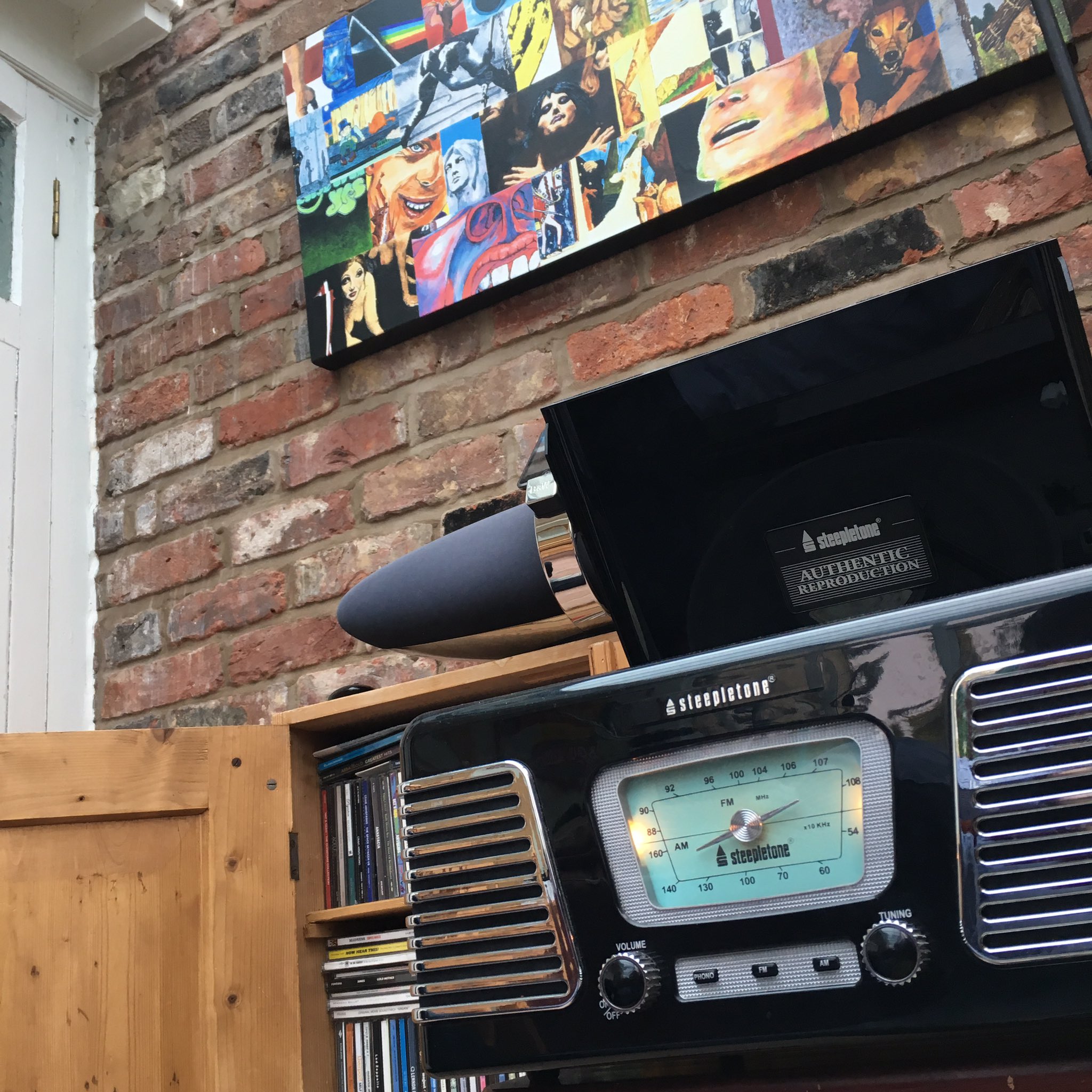
You don't need another article by someone from my generation (X, Y, etc) to observe with bewilderment at how media consumption is changing. But I do think we are in something of a golden age of television.
How you consume though is everything. I really enjoy the binge watching of a series and it has totally altered the way our attention spans pivot around a programme. Being married to a teacher not all of these have been shared experiences, one of us doesn't have the time, one of us travels on trains a lot. But the ones I enjoyed the most, we enjoyed together.
Here's what I've been watching over the last year since what I thought were the peak telly highs of Stranger Things and Narcos.
The Fall (BBC) - we gave up on this creepy, rapey, sexist crap. Should never have been broadcast. Outrageous. 1/10.
The OA (Netflix) - I didn't really get into this. The twists and turns seemed like strange leaps into the unknown and in the end I skipped a few to find out what was going on. 4/10.
Homeland (C4) - I thought Homeland had run out of steam around series three, but this last series probably cemented its place as a decent but run-of-the-mill spy thriller. The Trump election probably ruined the narrative about America's new place in the world and the characters rather fizzled out. 5/10.
Cleverman (ABC- iPlayer) - an Australian thriller, set in a dystopian racist future with the emergence of a secret race of "hairy people" or "subhumans" in a corporatist police state. Sometimes I wish they'd just get on with it, there's not quite enough going on, and I'm struggling to see the shifting motives of two of the lead characters. 6/10.
Taboo (BBC) - Tom Hardy's grunt fest was a real mixed bag. In parts brilliant. In others just a load of incomprehensible mystical tosh, which I admit is a harsh verdict given how forgiving I've been of Twin Peaks. By the end it had all the elements and you could truly smell the filth of London's dirty streets and rivers. 6/10.
Twin Peaks - The Return (NowTV) - strangely, I don't think I could handle binge watching Twin Peaks. It would be too much to handle. It started off with so many disparate strands and red herrings thrown to the winds that it seemed aimless and directionless. Just as I was losing patience with it came the outrageous 8th episode (Got a light?). It was off the scale Lynch weirdness, creepy, dark, ugly and needlessly violent. Unforgettable television that had as many theories as it probably had viewers. Since then it has started to draw the fragments together, from the first half and from the first series 25 years ago and from the film Fire Walk With Me. It is a masterpiece, for all it's flaws. Whatever happens now will be unable to be repeated by anyone. What Lynch has done is to graft onto an old project something that feels like a lifetime of work and creativity, sometimes with the sense that a director is indulging his fans and his own imagination. 7/10 (points deducted for needless indulgence).
Ozark (Netflix) - billed as an heir to Breaking Bad this was always on a hiding to nothing. But I liked it and was gripped by the end. Sympathetic characters were in short supply, but the stars of the show weren't the entitled money laundering Chicago family, trying to make a mark in the sticks, but the roughnecks of the Missouri Ozarks, especially the dysfunctional Langmore clan, exemplified by an outstanding performance by Julia Garner as Ruth. But for me the real show stealer was Peter Mullan as Jacob Snell. 7/10.
Top of the Lake, season 1 (BBC) - I came across Top of the Lake series one quite late. It was glorious to watch, unnerving and full of suspense with a series of jaw dropping scenes starring Elisabeth Moss, again. And Peter Mullan again, this time with his Scots accent intact. 8/10.
Top of the Lake, season 2 (BBC) - I was pleased that season two was made available all at once on the BBC iPlayer. It was hard going at times. Though I have a soft spot for pretty much anything Australian (of which more later) the grimy side of Sydney was too much at times. It wasn't until the third episode that a male character emerged with any redeeming features whatsoever. But it was a brave and ambitious series marked out with some complex character twists. 7/10.
The Code (ABC- iPlayer) - we watched two series of this pacy and high octane Australian thriller, pretty much one after the other. Taught and anxious due to stand-out performance of Ashley Zukerman as Jesse, a high functioning autistic lead character. I loved how it spanned different parts of Australian life, the outback as well as the stiff political class of Canberra. 8/10.
Hinterland (S4C) - we were properly gripped by Hinterland, picking up on where I left off from the first series which I reviewed here. I adored the sparse and oppressive central character in the show, the one consistent and dominant element that loomed not just in each episode, but every scene. That is the landscape of Ceredigion, and collectively the people of west Wales. I was disappointed that Sian and Lloyd weren't bigger parts, but the priority had to be flushing out the frankly ludicrous presence of the most useless copper on television, the brooding Prosser. We liked it so much we went to Aberystwyth for the day. 8/10.
The Handmaids Tale (C4) - I thought this was a masterful piece of filmmaking. Atmospheric, uncomfortable and terrifying. As part of an Elisabeth Moss binge it was right up there. But. There was a but coming. The experience of watching it every Sunday night, with adverts, was hard going. I'm delighted there's a next series, but I'm going to dash off the lot in a weekend. 5/10 for the experience, 8/10 for the actual programme.
Broadchurch (ITV) - we were dubious about how ITV could keep the momentum going with Broadchurch. More red herrings than a trawler could catch off the Dorset coast, the third series was actually my favourite of the lot. So many issues got resolved, so many didn't. I can't think of a better cast female detective than Olivia Coleman as DI Miller. 8/10
The Missing (BBC) - we found this second series a really tough watch, and frustrating for the jumpy timelines, but it was mesmerising and truly worthy of a week off between episodes. Keeley Hawes and David Morrissey were outstanding as the parents of a missing daughter, while Tcheky Karyo as Julien Baptiste brilliantly portrayed the detective who takes an obsession to a new level. The producers are constantly in the driving seat with what they choose to reveal, prompting a whole industry of speculation. 8/10.
Line of Duty (BBC) - for tension, twists, manipulation and sheer brass balls I watched most of Line of Duty stood up. This was the BBC at its best and at most preposterous. The clues were littered all the way back through the previous series, and sometimes it stretched credibility with the deep and frankly inexplicable dark criminal conspiracy looming over everything. 9/10.
But the winner is...
Broken (BBC) - as Catholics you sort of heave a sigh of predictable acceptance when a TV series focuses on a priest. It's usually only a matter of time before he gets outed as a kiddie fiddler. Dark as this series was though Sean Bean not only delivered a performance you could believe in, but depicted a priest that truly fulfils Pope Francis' call to them to get out and smell of the sheep. Tough storylines, full of despair, frustration and tension, but in doing so Jimmy McGovern also wrote a troubled love letter to the church. Full of contradictions, but full of the graces. 9/10.
Wednesday, August 16, 2017
Saturday, August 12, 2017
Tony Mowbray is the problem
That was awful. Pitiful, weak, shambolic, amateur and downright dishonest. Losing anytime is disappointing, losing at home is always particularly hard to take. But surrendering in our first home game of the season to newly promoted Doncaster really hurt.
I blame Tony Mowbray all the way. Sure, some players had individual off-days (Williams, Graham, Ward, Bennett) but he picked the team. He drilled the formation, he will have read the scouting reports on Doncaster Rovers and stuck Danny Graham up front on his own to hide in the shadows of two taller centre halves. Unbelievably, inexplicably, he sent them out in the second half to do the same again.
So if Tony Mowbray's the problem, what's the solution? For now, more Tony Mowbray.
I blame Tony Mowbray all the way. Sure, some players had individual off-days (Williams, Graham, Ward, Bennett) but he picked the team. He drilled the formation, he will have read the scouting reports on Doncaster Rovers and stuck Danny Graham up front on his own to hide in the shadows of two taller centre halves. Unbelievably, inexplicably, he sent them out in the second half to do the same again.
So if Tony Mowbray's the problem, what's the solution? For now, more Tony Mowbray.
Friday, August 11, 2017
I love the Inn at Whitewell
I love the Inn at Whitewell.
I've only been twice, but I have an irrational and emotional connection to it, possibly to everything it represents.
Growing up in Lancaster the Trough of Bowland was so close, but yet so far. Signs to places like Oakenclough, Calder Vale, Chipping and Clitheroe pointed to destinations we never quite reached. The hills and vales seemed like a nether region, somewhere that an Ordnance Survey map offered mystery, but an ancient map in an antiquarian bookstore would probably denote them as "there be dragons". We had our own names for our favourite beauty spots for picnics and paddling - the pipe place, the pools, the rocky place. Far from ice cream vans and penny arcades they contain firm memories of enduring innocence and, I've grown to appreciate, wise parents.
JRR Tolkein visualised Middle Earth when he was embedded at Stonyhurst College, a few miles away. As you peel away from Whalley with your Sat Nav charting a course ahead, along no obvious highway, defying logical directions to anywhere in particular, you can see why. It is glorious countryside, rolling and surprising.
Yesterday was a magical, glorious, emotional day. The wedding of our very special niece Danielle to Carl Holden, such a smashing lad. These days layer on the pleasurable experiences that cement a reputation. Stood on the terrace with braziers burning brightly and warmly added to the sense of comfort and hospitality. And I'm a sucker for a shop stocked full of cookbooks and expensive cashmere socks.
The Inn also kicked off the TV series The Trip, where Steve Coogan and Rob Brydon open their food travels of the North. The surprises on seeing that for the first time back in 2010 are all happy ones, a real delight, heightened possibly by Coogan's chicken choice pretty much matching what we had as our wedding banquet yesterday. I scanned the menu while we were there; local, seasonal and utterly tantalising. On the way there we passed by the Three Fishes at Mitton, the first of Nigel Haworth's monuments to Northern food where we have enjoyed many a splendid lunch.
I got hopelessly lost on the way home, in the dead of night. It didn't put me off, quite the opposite. I liked that it requires extraordinary effort to discover, but also to escape. I love that no-one stumbles on it by chance, that you have to go there with purpose and prior knowledge.
And that photo above of my beautiful wife Rachel in the private dining room will be one to treasure forever.
I've only been twice, but I have an irrational and emotional connection to it, possibly to everything it represents.
Growing up in Lancaster the Trough of Bowland was so close, but yet so far. Signs to places like Oakenclough, Calder Vale, Chipping and Clitheroe pointed to destinations we never quite reached. The hills and vales seemed like a nether region, somewhere that an Ordnance Survey map offered mystery, but an ancient map in an antiquarian bookstore would probably denote them as "there be dragons". We had our own names for our favourite beauty spots for picnics and paddling - the pipe place, the pools, the rocky place. Far from ice cream vans and penny arcades they contain firm memories of enduring innocence and, I've grown to appreciate, wise parents.
JRR Tolkein visualised Middle Earth when he was embedded at Stonyhurst College, a few miles away. As you peel away from Whalley with your Sat Nav charting a course ahead, along no obvious highway, defying logical directions to anywhere in particular, you can see why. It is glorious countryside, rolling and surprising.
Yesterday was a magical, glorious, emotional day. The wedding of our very special niece Danielle to Carl Holden, such a smashing lad. These days layer on the pleasurable experiences that cement a reputation. Stood on the terrace with braziers burning brightly and warmly added to the sense of comfort and hospitality. And I'm a sucker for a shop stocked full of cookbooks and expensive cashmere socks.
The Inn also kicked off the TV series The Trip, where Steve Coogan and Rob Brydon open their food travels of the North. The surprises on seeing that for the first time back in 2010 are all happy ones, a real delight, heightened possibly by Coogan's chicken choice pretty much matching what we had as our wedding banquet yesterday. I scanned the menu while we were there; local, seasonal and utterly tantalising. On the way there we passed by the Three Fishes at Mitton, the first of Nigel Haworth's monuments to Northern food where we have enjoyed many a splendid lunch.
I got hopelessly lost on the way home, in the dead of night. It didn't put me off, quite the opposite. I liked that it requires extraordinary effort to discover, but also to escape. I love that no-one stumbles on it by chance, that you have to go there with purpose and prior knowledge.
And that photo above of my beautiful wife Rachel in the private dining room will be one to treasure forever.
Wednesday, August 09, 2017
Clash of the abominable owners - Rovers at the Ricoh
It is an appalling situation that Coventry find themselves in. Kicking off the season in League Two (fourth division) is no place for a club of this size in a city like Coventry. Reading back through the coverage of their shabby period in charge provokes real anger. SISU thought they could turn around a distressed situation to their advantage, wreaking havoc on the fortunes of the club, the city and the asset they thought they'd enhance. Instead they've made it worse, arguably by applying their own ruthless business logic to a sport that defies it.
In one of our Discuss Manchester debates a few years ago my pal Graeme Hawley (currently on the silver screen as Morrissey's teacher in England is Mine) made the powerful and emotional case for fans everywhere. An unregulated wild west has enabled football to become the plaything of oligarchs and asset strippers. A club is no longer a focal point in a community that exists for the common good.
On looking out across this large bowl of a stadium last night my first sad thought was how sparse and eerie it was. How a few thousand people peppered around it accentuated the demise of what it ought to be. I texted Graeme to say I thought it felt like a music venue, an arena with a pitch in the middle, compounded possibly by a very good choice of music. The effect of that size and scale, that emptiness, has proved suffocating to teams, he said.
On my groundhopping journey, of which this season will be a very busy one, this is another new ground chalked off. I make it the 149th ground I've watched football on, I'm now on 79 out of the Punk 92 as I'd seen Coventry City at Highfield Road twice before, but it is my 71st of the current 92 as I lost Hartlepool United and Leyton Orient last season, the latter another club with bad owners.
I was pleased that we won, especially after the disappointment of Southend, but never have I felt as sad at a football ground for the fate of the fans following the other team.
Labels:
blackburn rovers,
football,
friends,
groundhopping,
Namedropping
Sunday, August 06, 2017
Southend away - back to reality
It always takes me a while to absorb the pattern of a game of football, to work out a formation and a game plan and to see who's on top and what's going on. Yesterday at Southend, after 20 minutes or so I thought to myself we're the better team here, our players are clearly a notch above and I like what I see. Of the new faces Peter Whittingham has a forward gear and an instinct to go forward in a way that Jason Lowe never did, and I like the look of Richie Smallwood. Bradley Dack never got in the game until too late.
So what went wrong? I had my say on TalkSport2 half an hour after the game as we rattled through the Essex countryside. I said there seemed to be too much of what we had last season. Reliance on our best player to pull some magic out of the hat, a defence that crumbled under pressure and failed to do the basics, and a forward that for all his undoubted poaching ability doesn't score enough goals.
There's something else though. Ever since we lost Mark Hughes as manager each of our teams has lacked steel. They've been a soft touch and been unable to impose their style of play and physical presence on a game. We just seem to adapt to the game plan of the opposition. When it counted we were bullied by Southend yesterday. Anton Ferdinand might as well have got a new pocket sewn into his shorts for Danny Graham to slip into for the second half. I don't honestly think Southend were better players, neither did they "want it more" but the last 15 minutes Rovers were totally unable to create momentum to get an equaliser. The introduction of Harry Chapman descended into farce when he fell over his own feet right in front of us. Despite that, I believe Sheffield United fans who tell me we've got a good one there.
There were loads of us in the sold out away end yesterday, an impressive turnout from a loyal support. It added to the occasion and the home fans relished beating the team everyone is going to want to beat. But as we discussed on the way home yesterday, we're going to have some more tough days like that. We should win this league. We can win this league, but it's going to be a lot harder than a lot of fans, and maybe some players, realise.
So what went wrong? I had my say on TalkSport2 half an hour after the game as we rattled through the Essex countryside. I said there seemed to be too much of what we had last season. Reliance on our best player to pull some magic out of the hat, a defence that crumbled under pressure and failed to do the basics, and a forward that for all his undoubted poaching ability doesn't score enough goals.
There's something else though. Ever since we lost Mark Hughes as manager each of our teams has lacked steel. They've been a soft touch and been unable to impose their style of play and physical presence on a game. We just seem to adapt to the game plan of the opposition. When it counted we were bullied by Southend yesterday. Anton Ferdinand might as well have got a new pocket sewn into his shorts for Danny Graham to slip into for the second half. I don't honestly think Southend were better players, neither did they "want it more" but the last 15 minutes Rovers were totally unable to create momentum to get an equaliser. The introduction of Harry Chapman descended into farce when he fell over his own feet right in front of us. Despite that, I believe Sheffield United fans who tell me we've got a good one there.
There were loads of us in the sold out away end yesterday, an impressive turnout from a loyal support. It added to the occasion and the home fans relished beating the team everyone is going to want to beat. But as we discussed on the way home yesterday, we're going to have some more tough days like that. We should win this league. We can win this league, but it's going to be a lot harder than a lot of fans, and maybe some players, realise.
First Generation: The campaign to transform lives
There's a really fabulous programme underway at work to support students to come to university. Across Greater Manchester there are bright kids at schools and colleges who are thinking that further education isn't for them. They don't have the peer groups, the siblings or the parents who can relate their experiences. What I like about First Generation is that it provides a level of pastoral support as well as a financial package. Have a look at the video and see if you can contribute to this really good cause.
Sunday, July 23, 2017
David Goodhart's Road to Somewhere and our journey to Oldham
Though it's a useful distinction and powerfully argued, Goodhart's compelling book The Road to Somewhere draws on these influences from a social and cultural perspective, rather than a political dichotomy between left and right. So far, so good.
If anything the 2017 General Election told us even less about the distinction than we could have reasonably expected in Brexit stricken Britain. As Goodhart said himself in the Catholic Herald last week: "the task of politics now is to create a new settlement between Anywheres and Somewheres which gives more space to Somewhere principles without hurting too many Anywheres. Theresa May produced an innovative programme that tried to do just that... but her own performance let her down."
At an event at Oldham College last month we wrestled with these and many other issues, with David present and ready to lead the discussion. There's a good account of that discussion, here, from the Oldham Chronicle.
I have a few issues with his central thesis. The first is personal, the second is the political expression of this dichotomy, the third is in his attempt to hang heavy charges on the university sector.
So, firstly, I don't fully buy that the Anywhere identity applies to anything like the numbers he suggests. Even as someone who moved from a Lancaster home to a Russell Group university, passed through London and Australia, settling 60 miles from where I was born, I was the offspring of itinerant post-war parents. But I hesitate to even begin to apply my own anecdotal experience into this sphere, because I think it's where Goodhart's arguments are at their weakest.
The University of Manchester has a corporate social responsibility programme that encourages staff and alumni to become school governors. Large international businesses in Greater Manchester mandate their senior staff to volunteer in their communities. Undoubtedly professional careers give people the options to advance in other places, but it's too convenient to assume the ties that bind them to a place are inevitably weak. In discussing this with my colleague who appeared on the panel with David, a French academic who is raising a family in Stockport, I tend towards less of Somewhere v Anywhere, but to consider the possibilities of a "Somewhere Else". Communities of people, brought together by where they live, shaping places into a diverse and different character by the contribution of changing groups of people and families.
As he closed the event in Oldham David Goodhart tossed in an anecdote that graduates of Russell Group universities have no close friends who aren't also graduates of similar institutions. It cuts to the heart of where these people go and where they end up? Parts of big cities, presumably. It's not my responsibility to disprove that, but Goodhart's to justify, but I suspect it's nonsense. I suspect too that there are more than a few anecdotes in search of suitable evidence, which is partly why I've indulged my own story too.
Second, there's the politics. There are large parts of the country where people feel that the system doesn't work for them. And when things don't work, you cast around for the causes, for who it does seem to work for. On page 225 he lists initiatives and government actions that were Anywhere priorities: Scottish devolution, the fox hunting ban, immigration, the Iraq war, EU expansion to allow Bulgarians and Romanians into the country in large numbers, £9,000 tuition fees, the Human Rights Act.
I read through that list with some sympathy. But it spoke to me of something far more fundamental to the British political psyche than Somewhere and Anywhere, but "don't take the piss", something I first heard articulated by a guy called Jonathan Simons at a Tory conference fringe last year. That to me comes closer to synthesizing the anger we feel all around us. And there are a variety of political responses that coalesce around a number of no-go zones of moral relativism; all attempts to manage sensibly public spending is "austerity" and the automatic response to an act of Islamist terrorism is to say it isn't Islamic and to say otherwise is playing to the racist right. To me, that's where we've got stuck. There are tribes of people who think the other side isn't just wrong, but "extreme", "alien" and "dangerous". No-one is talking to one another. Everyone is shouting. The left behind feel ever more helpless.
Thirdly, he has it in for the university sector. In fact, not only is this the sector where I work, my job is to do all the things he suggests we don't do and that are the cause of many social ills. He identifies a “university or bust” mentality; “Today’s university option is sucking in more young people than is economically or socially desirable” (p230); "Modern universities have expanded far beyond any useful purpose”; and (p165) that it would be preferable to recreate elite vocational colleges with strong local connections.
Some of the charges I simply don't recognise within the sector. A big drive to create more apprenticeships, more generous support for technical training, better links within and between northern cities and more patriotic procurement are all pretty much mainstream ideas today in Whitehall, not least at the top of the agenda for the Metro Mayors.
I don't accept the binary distinction between what is offered in universities and what is more practical and rooted, or that the shift from polytechnic to university was a mistake. I accept a massive underfunded skills shortage, but the fingers are all pointing to the wrong place. I don't see the evidence that what is achieved at a modern university is to the detriment of technical pathways. Or that we don’t offer them. At Manchester Metropolitan, where I work, we take most of our students from the North of England, 40% from Greater Manchester. Many are what we call 'first generation' students. The percentage of pupils coming from the 20% lowest participation neighbourhoods has increased from 14.5% in 2011/12 to 16.6% in 2015/16. Universities provide high quality, cost-effective routes to advanced technical skills. Degrees should not be placed in opposition to technical education.
We currently recruit a third of all degree entrants from BTEC and other vocational backgrounds and are one of the leading universities in the development and delivery of Degree Apprenticeships with employers, a good example of a pathway that is both ‘technical’ and ‘academic’.
I'm going to leave it there. It's starting to sound like I've got a bee in bonnet about what is in fact a very helpful and fascinating contribution to our understanding of some big trends in our society. It's certainly going to have some influence on society, politics and education for sometime. Though I don't think it's as effective a summary of our psyche as "Don't Take the Piss".
Thursday, July 20, 2017
Mobike - play nicely please, or is it all over already?
These sharing Mobikes are great. The first day I took them it was ideal - it was sunny, I was bouncing between work and the Digital Summit at the Museum of Science and Industry and it all felt very modern and exciting. And it worked. I felt really proud that our city had taken 1000 of them and they were popular.I last took one last Friday to go and meet my mate Steve Connor for a vegan lunch, which passes all Catholic tests too. But it was after four attempts. And in all seriousness I haven't seen a single one this week. Have they dispersed? Or are there more broken than they're letting on? Rightly, the MEN are asking this week if this spate of vandalism means we're just not ready for them.
Cycling advocate Helen Pidd in the Guardian was an early fan, but is wondering whether the vandals stealing the handles have potentially wrecked it for everyone and whether this is another example of crappy self-entitled sod-you attitude: "I do not want to live in a country where you can be caned for graffiti, but I would like to live in a city where people know how to share. The man who wanted to have his own personal Mobike displayed an all-too common sense of entitlement. There is always someone who refuses to put headphones on or take their feet off the seat, who won’t shut up during the gig and can’t be bothered finding a bin."
So, come on Manchester, play nicely. This could be great.
Tuesday, July 11, 2017
Manchester Climate Change Conference - a time to be Greater
As if we really needed reminding, our political culture is shifting in Greater Manchester. As I walked from work to the Manchester Climate Change Conference at the Royal Exchange theatre last night there was a protest outside Churchgate House, where the Greater Manchester civil service sits. The demand by homeless campaigners was for an audience with the recently elected Mayor Andy Burnham.
That thought stayed with me for the evening. I admire the work of Manchester A Certain Future, the city's climate change action plan, so was delighted to be hosting the event and leading a discussion. It puts some priorities in place for the city of 650,000 people to reduce carbon use and promote sustainable development. The targets slip away, but as the director Jonny Sadler outlined at the conference last night, there is some momentum and some urgency behind the city's ambitions to be carbon neutral by 2050.
But here's the thing. We had a wide ranging discussion last night about what those in cultural industries can do. The audience contributions were exciting and ambitious, sign me up for the Green Drinks Mcr, for starters. But volunteers from various voluntary groups and campaigners made helpful and creative suggestions for future priorities. But as you weigh up the achievements and start to think about what's achievable, it's pretty clear that the scope of the work to make Manchester carbon neutral falls short due to structural limits. Changes to housing policy are led by the Greater Manchester Spatial Framework on where new houses are going to go. Transport cuts right across borough and city boundaries. And the low carbon economy can't be created in the city centre alone. And how do you solve a problem like Peel?
More than one contributor last night - many more on social media - asked the question of what Andy Burnham was doing about this. Or where was he? Then people asked, to applause, why does the GM Pension Fund make investments in carbon businesses? What about the airport?
It is a matter of record than he has appointed the thoughtful and energetic Stockport leader Alex Ganotis to be the lead member on the environment. At his Digital Summit last week he announced that there will be a Green Summit too, to bring together stakeholders from across Greater Manchester to drive this. One of the challenges set last night was for a new board for Manchester Climate, a new chair and including members of the public. Who knows whether it will be funded long term by the city council. My hunch is that this important strategic work needs to adapt to these new political times and find a new home. Hopefully to make Greater Manchester the low carbon city region. More ambitious, scary targets, but done at scale. This is doable.
That thought stayed with me for the evening. I admire the work of Manchester A Certain Future, the city's climate change action plan, so was delighted to be hosting the event and leading a discussion. It puts some priorities in place for the city of 650,000 people to reduce carbon use and promote sustainable development. The targets slip away, but as the director Jonny Sadler outlined at the conference last night, there is some momentum and some urgency behind the city's ambitions to be carbon neutral by 2050.
But here's the thing. We had a wide ranging discussion last night about what those in cultural industries can do. The audience contributions were exciting and ambitious, sign me up for the Green Drinks Mcr, for starters. But volunteers from various voluntary groups and campaigners made helpful and creative suggestions for future priorities. But as you weigh up the achievements and start to think about what's achievable, it's pretty clear that the scope of the work to make Manchester carbon neutral falls short due to structural limits. Changes to housing policy are led by the Greater Manchester Spatial Framework on where new houses are going to go. Transport cuts right across borough and city boundaries. And the low carbon economy can't be created in the city centre alone. And how do you solve a problem like Peel?
![]() |
| With Martin, @Visceral HipHop |
It is a matter of record than he has appointed the thoughtful and energetic Stockport leader Alex Ganotis to be the lead member on the environment. At his Digital Summit last week he announced that there will be a Green Summit too, to bring together stakeholders from across Greater Manchester to drive this. One of the challenges set last night was for a new board for Manchester Climate, a new chair and including members of the public. Who knows whether it will be funded long term by the city council. My hunch is that this important strategic work needs to adapt to these new political times and find a new home. Hopefully to make Greater Manchester the low carbon city region. More ambitious, scary targets, but done at scale. This is doable.
Wednesday, July 05, 2017
My mate #24 Janine Watson
| Janine (in green) at her retirement do last from the UoM Alumni Board |
Janine and I first knew each other in our poacher and gamekeeper roles. She the softly spoken Alastair Campbell of Manchester Town Hall, protecting her estate. Me, the editor, the occasional hunter. I well remember a whispering phone call from Janine to follow up about something that Sir Howard Bernstein wasn’t happy about that had been written in Insider, the magazine I edited. But it was an early glimpse of her quiet steel in how she delivered the words that turned your blood to ice - "Howard isn't happy". It's also one of the hallmarks of how professional she was that we managed not to fall out and all emerge with dignity intact and relations remained strong. We always stayed good professional friends, especially so when she moved to Stockport Borough Council as assistant chief executive and her advice was always wise, especially when I got involved in the bear pit of local politics.
So I was particularly delighted when Janine asked me to apply to join the board of the University of Manchester Alumni Association, when she was taking over from our mutual friend Andy Spinoza.
In all that time over the last 5 years Janine has been mindful that the scope of the work of the board is to give strategic advice and to provide support and ideas to the Alumni and Development Office, and of course awarding travel bursaries to students. Part of the skill of any board chair is to make the best use of the rest of the board members, something Janine has become particularly skilled at. One day she called me with an invitation to support her on a particularly important piece of work. Given the build up and the hushed way she was briefing me on this special assignment I was practically packing my sunglasses for, the very least, a trip to host the Singapore Alumni reception, maybe even New York. No, it was to join her as part of a task and finish group to scrutinise an important piece of drafting on the new constitution.
In fact, there was probably only one job where she has consistently exercised chair’s privilege. Namely, any occasion where the job involved formally thanking and introducing Professor Brian Cox!
All of us do these voluntary roles because we care and we want to make a positive difference. I think we can agree Janine has done that, but more so that she's done it with great warmth and love. Keeping it going over and again is the real skill. But as a board we are more global, more connected, more digital than ever. We are working smarter and have held board meetings in London, to be closer to the wider network, though still not in Singapore! All meetings are now held using video conferencing with useful inputs from around the world, and we are all kept up to date on important events and ways we can support Kate White, Claire Kilner and all in the Alumni and Development offices. Both of us feel deeply that the University of Manchester transformed our lives. To serve on a board together like this and to turn business contacts into firm friends is a mark of how that experience persists to this day.
Labels:
friends,
Manchester,
my mate series,
University of Manchester
Tuesday, June 27, 2017
Monday, June 26, 2017
Why everyone's wrong about Arlene Foster and the DUP
Back in 2012 I took a finance conference to Belfast. It wasn't unusual to get some warm words from a local politician, but in Northern Ireland we were greeted with enormous appreciation from devolved government, notably by Business and Investment Minister Arlene Foster, as she was then, First Minister of Northern Ireland and supporter of the minority Conservative government as she is now.What struck me more than anything in the couple of years that I regularly hopped over to work in Belfast was the powerful desire to be seen as a "normal" part of the United Kingdom, somewhere that business is done, where visitors are made welcome and that peace was permanent.The last issue they're going to raise as part of a UK settlement is gay marriage and abortion. That wasn't on the table when they negotiated with Gordon Brown's team in 2010 and it isn't now. I don't doubt for a minute that the infrastructure spending in Northern Ireland will form part of the long promised 'peace dividend', and that concessions will be made to many of the campaigns that politicians on all sides in Stormont have made over the last twenty years. These include a competitive corporation tax regime with the Republic and further inward investment incentives.
At the heart of this hostile assault on the DUP is a depressing characterisation of the people of Northern Ireland. That they are the other. That there is more that divides us, than unites us, if you want to put it like that.
Jenny McCartney in CapX makes these points very well. "The level of vitriol has been disturbing even to those of us from Northern Ireland who are both wary of the DUP’s social conservatism and familiar with its flaws: the Paisleyite inheritance, the party’s dwindling rump of religious fundamentalists and creationists, the energetic self-interest and intermittent financial scandals. But the ecstasies of liberal piety and fury in the British press at any potential deal with the DUP – the sort of deal that Labour sought in 2010 – have gone beyond normal political criticism and plunged into outright hypocrisy and untruths. It was as if – hemmed in by correctness on all sides – many, mainly English, pundits were finally relishing the unleashing of fire on people they could feel really pious about hating."
The greatest misgiving I have about Arlene Foster was her poor handling of the botched biomass scheme, or "cash for ash". But she has stuck it out. The price of failure is a high one in Northern Ireland, so too is the value of unity around a project for peaceful co-existence, compromise and forgiveness, as Stephen Bush acknowledges, here: "The election result, in which the DUP took the lion’s share of Westminster seats in Northern Ireland, is part of that. But so too are the series of canny moves made by Foster in the aftermath of her March disappointment. By attending Martin McGuinness’s funeral and striking a more consensual note on some issues, she has helped shed some of the blame for the collapse of power-sharing, and proven herself to be a tricky negotiator."
I'll leave the last word to Jenny McCartney again, who goes on to say: "Foster is, in fact, a member of the Church of Ireland who happily drinks alcohol and only joined the DUP in 2004. She spent the day before the election in Messines, Belgium with the outgoing Taoiseach Enda Kenny, commemorating a WWI battle in which unionist and Irish nationalist soldiers fought side by side. When necessary, she has attended local events alongside the Sinn Fein MLA Sean Lynch, a former close comrade of the late IRA man Seamus McElwain, whom Foster believes attempted to murder her policeman father and succeeded in wounding him. How many armchair pundits have had to negotiate such a complex past and present?"
POSTSCRIPT: Here is a brilliant, concise, but detailed examination of the deal by Ciaran McGonagle, that summarises the very clever negotiation by Arlene Foster on this. It's on politics.co.uk.
Friday, June 16, 2017
Jonathan Schofield and Manchester's "betrayal" of its radical history
I could listen to Jonathan Schofield all day. I could listen to a talk on Manchester's radical history for even longer than that. So last night at Manchester Metropolitan University's 70 Oxford Street, the building that used to be the Cornerhouse, I listened and watched as he took us on a proper trek through Manchester's past.The proposition our favourite tour guide and historian put to us was this: has Manchester betrayed its radical roots? It's a story of nuance and myth, heroism and sacrifice. But it's ultimately a story about the thing that really encapsulates Manchester's real radicalism - pragmatism and progress.
I won't attempt to summarise his talk, instead I'll point you to his excellent books. But I will take three examples that rather show we haven't betrayed our past in the way some may think. Jonathan's journey took us from the development of the town of Manchester, England's least aristocratic, through the English civil war and the siege of 1642, the stubborn non-conformist Christians who challenged the divine right of kings to rule. He talked about the beginnings of opposition to slavery, a careful case built against it by the preacher Thomas Clarkson, a direct influence on William Wilberforce who eventually succeeded in outlawing such barbarism, despite opposition from the Liverpool dockers who tried to kill him.
Secondly, Manchester's radicalism was, he argued, middle-class and non-conformist. Even the reaction to Peterloo - the birth of the Chartist movement - had a moderating force despite its entirely reasonable demands for universal (male) suffrage, the victories of this soft radicalism - the vegetarianism and municipal parks of Joseph Brotherton, John Bright's opposition to the needless Crimean war and Richard Cobden's free trade treaty with France were all touched not by insurrection and revolutionary radicalism but by a rounded and benevolent pursuit of the common good.
Thirdly, the incredible achievements of universal women's suffrage were characterised by a determination, a collection of evidence, a persistence and a refusal to shut up. Isn't that so very Manchester. And then there's Engels observation of the 3000 people gathered in a socialist hall on a Sunday that no Englishman can go three minutes without telling a joke.
So, I don't think Manchester today is a betrayal of those roots. What we do now, based on evidence, decent moderation and noisy anger traces a direct line to all that in some form or other. True, we all don't do enough, like voting in greater numbers, for a start. Change dot org and Facebook clicking absorb our own calls to radical action, while much is so wrong in the world we seem unprepared to do much about it. But isn't it something that there has been a sea of flowers around the statues of Cobden and Bright in St Anne's Square. Those flowers are our response to an act of medieval barbarism, not an act I would ever describe as radical, never. Flowers next to statues that commemorate an idea that we should be tolerant, open-minded and free to exchange ideas and the fruits of our common endeavour.
Sunday, June 11, 2017
A bitter victory for Theresa May, a glorious defeat for Jeremy Corbyn
Back in April when the General Election was called, my contribution to the discussion was that it proved that everything we thought we knew was wrong. Today, many commentators, campaigners and pollsters are even more wrong. I broke it down then to what it meant for a number of key players. I’ll return to them all, in the same order, as we absorb the results today.
For Theresa May, it is a disaster, pure and simple. Her poor campaign has delivered a victory that feels like no victory at all. Her wide ranging manifesto lies in tatters – described by Nigel Evans MP for Ribble Valley as “dire” – her programme of a reforming Red Tory government now lacks a convincing mandate.
The decision to call an election and tear up the Fixed Term Parliaments Act was born of political calculation, believing her own hype and badly underestimating the resilience and popularity of her rivals.
It has been said too that she has relied too closely on her two closest advisers, Fiona Hill and Nick Timothy, and too little on her cabinet and the Conservative Party. Once called, the campaign was about her, less about how she would govern. Her u-turn on social care added to the negative perception that she was far from ‘strong and stable’ but was indecisive “Theresa Maybe”.
She called it the Brexit election, but it was barely an issue, hardly mentioned by Labour, while the two parties who are defined by that vote – the Liberal Democrats and UKIP - seem diminished and irrelevant.
For the business of government, there will be disruption. Those of us who work in the Higher Education sector were relieved the Higher Education and Research Bill sneaked through in the pre-recess wash-up. There will have to be a priority given to less contentious and controversial measures that won’t provoke a Tory rebellion. One example, on immigration policy and international students, it is arguable that there is no longer any clear mandate for the Conservative manifesto commitment for keeping international students in the net migration target.
For UKIP, I anticipated the disaster that followed. Paul Nuttall, one of their longest serving leaders this year (I think, I’ve lost count), has now resigned.
What was a factor was the distribution of UKIP’s 4 million insurgent votes from 2015. It seems more returned to a boisterous Labour under Jeremy Corbyn than the Tory campaign expected.
For Labour, it is the glorious defeat. After losing the Copeland by-election and trailing by 20 per cent in the polls, to achieve a result like this is nothing short of a miracle. It is a tribute to Jeremy Corbyn’s calmness under pressure and to the legions of volunteers and party activists that the uptick happened at all, let alone to the extent it denied Theresa May a majority. Localised campaigns where the MPs clawed back slim majorities were hard fought and attracted door-knockers and leafleters in their thousands. The most telling and popular policy in the manifesto of free stuff was undoubtedly the promise to abolish university tuition fees and bring back grants. It clearly did the trick in Canterbury, Lancaster, the Manchester seats and Remain supporting parts of London.
For the Tory campaign strategists, the push in Northern heartlands wasn’t enough, and they took their eye off the ball in London and parts of the South East, badly misreading the sentiment in places like Canterbury and Swindon. The squeeze on Jeremy Corbyn and Diane Abbott went too far. People stopped listening and it backfired. Even the rhetoric about Corbyn being the terrorist’s friend only worked to a limited degree.
For the SNP, it was a mighty fall. There was only one way to go after 2015 when they swept all before them, but no-one except the impressive Scottish Conservatives leader Ruth Davidson expected the losses they suffered. Politics isn’t just about winning elections, it’s also about governing. If people’s lives haven’t improved and they don’t feel things are getting better, then the electorate will take that out on the government.
For the Liberal Democrats, it was a disappointing campaign which failed to deliver the gains they should have achieved in an election where their pro-European purpose was a key issue. Their gains in Scotland, Bath and Twickenham were offset by Nick Clegg’s loss in Sheffield Hallam. It’s a sour end for Clegg who one commentator observed had sacrificed his party in 2010 for the good of the country, while David Cameron had done the opposite in 2016.
For Labour moderates, this now represents an existential crisis. Rather than Corbyn owning a catastrophic defeat, he owns a triumph of sorts. It should have been predictable that Corbyn was rather good at campaigning. Where he has frustrated the parliamentary Labour Party is his inability to effectively oppose in the House of Commons. The fragile government requires scrutiny, especially over Brexit, but even as talented seasoned centrist politicians like Yvette Cooper and Caroline Flint indicate they are willing to serve, Corbyn may feel he owes it his loyalists to continue.
Many MPs may point out that Corbyn’s face was on far more Conservative leaflets than Labour ones. That activists from across the party won their own local battles despite Corbyn. What the path to government is from here may be more rallies, more free stuff promised in manfestos, or it may be a gentle combination of the two.
For the devolution project and the Metro Mayors, they have an opportunity to come up with imaginative solutions to the problems that have evaded this failed “Mayist” project. They have the moment to operate outside the claustrophobia of Westminster.
Monday, June 05, 2017
My mate #23 Jonathan Reynolds
So, to the latest installment of the "my mate" series where I say something about one of my mates, telling a tale about how we met, etc, after a random shuffle of the address book.
By a remarkable coincidence it's my friend Jonathan Reynolds, who this week is up for re-election as the Labour Member of Parliament for Stalybridge and Hyde, the constituency next door to where we live.
Mothers know, don't they? I was with my Mum yesterday and showed her Jonny's video of his own story (above). How he was the first from his family to go to University, in Manchester, and made a home in Greater Manchester of which his family, community and his church are very much at the centre of his life. He also chairs Christians on the Left and the All Party group on Autism. "Wow," she said, "so many parallels, and I can see why you're friends. I wish I could vote for him."
I first met Jonny when he worked for James Purnell, his predecessor, where one of his duties had been to deliver Alastair Campbell from Turf Moor to a fundraiser at Hyde Town Hall. I bumped into him after that a couple of times, but it was Chuka Umunna who suggested I invite him to speak at a Downtown business conference I was involved in. He went down a treat that day, providing thoughtful and cogent ideas and arguments on regional devolution, while sitting alongside Terry Christian on a panel.
When the opportunity came up for me to stand as a candidate Jonny was hugely supportive, giving me a reference and some good advice. He introduced me to his team, including his amazing wife Claire and to his office manager, Jason Prince, who is also a great friend now. When I was selected in 2015 he came over to Marple to support me when he was on Caroline Flint's shadow energy team. "I'm the minister for all the green crap," he said, disarmingly, quoting David Cameron, to the gathering of activists and eco-entrepreneurs we'd corralled and of which we have rather a few in Marple.
I've had the pleasure to support Jonny of the last few weeks during this General Election campaign. I have seen people do extraordinary things for an extraordinary guy. The wells of love and support for him in his constituency are deep and real. People who remember favours he did, kind words he spoke and how he fulfilled his role as a proper community leader.
You'd expect me to say nice things about a mate who is standing for election, so I'm not going to disappoint or layer it on any less thick. But I will say this, we have disagreed on a number of issues, but it is a function of a strong friendship that one can disagree well.
On the side of this blog you'll see a quote from the Dangerous Book for Boys extolling the three virtues of boyhood - "be honest, be loyal, be kind". These are the attributes you'd think of when you think of Jonny. Bluntly honest, supremely kind and fiercely loyal.
Of all the people I know in the harsh and brutal world of politics I can say without fear or favour that he is probably the nicest of them all. That may be a low bar in that space, but it actually should count for something.
There is also a call to action in that same quote - to march on when things are tough, to work hard and not grumble. They are qualities you want in your representative in parliament. Someone who doesn't just tell you what you want to hear, or takes a position because it's easy, but someone who is drawn to this as a calling, a mission, a response to the parable of the talents.
So, people of Stalybridge, Hyde, Mottram, Mossley, Longendale and Gee Cross, you are very lucky to have an MP like Jonny. And me, I feel blessed to count him and Claire as friends. Best of luck, mate.
Labels:
Labour,
my mate series,
Namedropping,
Politics
Location:
Hyde, UK
Wednesday, May 24, 2017
Friday, May 12, 2017
Sunday, May 07, 2017
The precise moment when I realised my Rovers were going down
I think I can pinpoint the exact moment when I should have realised Blackburn Rovers were heading for the Third Division, or League One in new money. It wasn't today, as news filtered through that Forest were romping home and that Bristol City had given up on spoiling Birmingham City's day. That's when it was confirmed.
It wasn't before the game when I heard Massive Attack's Unfinished Sympathy, I song I always associated with sadness and grief.
No, I'm not even going to pretend to be a sage and say I've long feared we were heading that way, though I did say as much at the arse end of last season. It wasn't on the opening day when Norwich humiliated Owen Coyle's ragbag side in the first home game, or when Wigan humiliated us in the worst performance by a Rovers side in my living memory. It wasn't when a late headed goal sent all three points to Leeds, though that was a sickener.
It wasn't when the fans properly turned on Owen Coyle after more misery at Barnsley, making his sacking a matter of time. It wasn't even when we capitulated in such lame fashion to Barnsley, or let Bristol City control a game we should have stormed.
No, in my heart of hearts it was that late equaliser by Aiden McGeady for Preston North End at Ewood Park in March. I said at the time it was a cruel end to a game where we played some great football, that it still extended our unbeaten run, but that we'd be alright and get 51 points. Well, we did, but it wasn't enough. That result will have encouraged Burton and Bristol City. It said to every team we were going to play that we weren't a serious professional outfit, but naive bottlers. That was also before two tough trips to Brighton and Reading, where we got nothing. It wasn't the continuation of an unbeaten run, but further stagnation in a winless rut. There was never really a way back from those two points dropped.
Amazingly, of those 51 points, 24 of them have been won against just four teams - Forest, Derby, Brentford and, inexplicably, the champions Newcastle.
I liked the starting line-up today and hope we keep the guts of it. The spine of Raya, Mulgrew, Lenihan, Bennett and possibly Graham. Next season there'll be a clear out of players who are on too much money, which may include some of those I've just mentioned, and those who think they deserve to be playing at a higher level. Some are assets, but we've been lumbered with a lot of liabilities as well - the ninth highest wage bill in the division for a team that underperformed by 13 places is disgraceful. Why are Wes Brown and Anthony Stokes even on the payroll?
This is a dark time. I really don't know what's next, I'm too tired after driving there and back and having all that emotion drain out of me today. On the way home we went through all the away trips we want to do next season - 15 of them, 15! One of them will be Portsmouth. And do you know what? If there's one place that can give all fans of clubs with dodgy owners some hope, then it's Pompey.
Labels:
blackburn rovers,
football
Location:
Brentford, UK
Friday, May 05, 2017
Watching my eldest son play for his football team for the very last time
It was Joe's last ever competitive match for Marple Athletic on Sunday. The lads will be dispersing to university, world travel and faraway jobs this summer. So that's it. The final.
But what a journey it has been over the years; tournaments and trophies, tantrums and tears - and that's just the parents.
The team on Sunday included seven players who were involved in the very first season in 2006 when they were just 6 years old.
In the times I've been involved, there's always been a voice in the back of my head whispering - "who's it for?". It started with Jim White's excellent book - You'll Win Nothing With Kids, fathers, sons and football - which I reviewed on this blog in 2008. Routinely, before every game, I've said to my son, "Joe, remember what you need to do today. Enjoy yourself." After a while, I didn't need to say it, but we did it anyway, like one of those private family jokes.
I did jump for joy at times and probably over-celebrated on other occasions. I also felt their pain when they lost. But as much as I am totally convinced I'm absolutely not living my frustrated football dreams through my son, I will concede that watching this team is one of those rare occasions where I truly live in the moment and as a consequence feel a particular type of happy. As I walked off Brabyn's Park on Sunday it hit me that this would be the last time I'll ever do this. The very last time I'll ever be in that place of contentment, of belonging. Maybe it's also because in all the years I've watched Joe play I have never once come away thinking he's let himself down. It's a public and open arena for an expression of his developing character and a certain set of virtues which are expressed through how he plays. I see these characteristics in other ways, but maybe none so routinely and where they impact on others so publicly. And we passed the point long ago where this was any kind of displacement. Joe is a far, far better footballer than I ever was. That isn't just the blinkered parent speaking, by the way, it's something to do with the whole way these lads have been brought up and the expectations they have of themselves.
As our twin lads have stepped into refereeing I've witnessed again what I call "PlayStation managers" who scream from the touchline and move the players around the pitch vicariously. What has happened with these lads, as they showed in their final game, coming back from a goal down to win 4-2 against a decent Weston Rangers team, is that ability to make their own decisions. They just seem to know what to do. They can be tricky when they need to be, they look after each other on the pitch and they know how to win games of football.
I will always owe a massive thanks to the managers who've coached, cajoled and inspired my son and all the boys in this team, from those days to today - Padraig Walsh, Jason Isaacs and in the early days, Clive Breed. As Clive said over the weekend, if these lads apply themselves to their careers in the same way, then they'll do just fine. So I know who this has been for. It's been for the kids. For them as they are and for their future selves. It's always been for them.
But what a journey it has been over the years; tournaments and trophies, tantrums and tears - and that's just the parents.
The team on Sunday included seven players who were involved in the very first season in 2006 when they were just 6 years old.
In the times I've been involved, there's always been a voice in the back of my head whispering - "who's it for?". It started with Jim White's excellent book - You'll Win Nothing With Kids, fathers, sons and football - which I reviewed on this blog in 2008. Routinely, before every game, I've said to my son, "Joe, remember what you need to do today. Enjoy yourself." After a while, I didn't need to say it, but we did it anyway, like one of those private family jokes.
I did jump for joy at times and probably over-celebrated on other occasions. I also felt their pain when they lost. But as much as I am totally convinced I'm absolutely not living my frustrated football dreams through my son, I will concede that watching this team is one of those rare occasions where I truly live in the moment and as a consequence feel a particular type of happy. As I walked off Brabyn's Park on Sunday it hit me that this would be the last time I'll ever do this. The very last time I'll ever be in that place of contentment, of belonging. Maybe it's also because in all the years I've watched Joe play I have never once come away thinking he's let himself down. It's a public and open arena for an expression of his developing character and a certain set of virtues which are expressed through how he plays. I see these characteristics in other ways, but maybe none so routinely and where they impact on others so publicly. And we passed the point long ago where this was any kind of displacement. Joe is a far, far better footballer than I ever was. That isn't just the blinkered parent speaking, by the way, it's something to do with the whole way these lads have been brought up and the expectations they have of themselves.
As our twin lads have stepped into refereeing I've witnessed again what I call "PlayStation managers" who scream from the touchline and move the players around the pitch vicariously. What has happened with these lads, as they showed in their final game, coming back from a goal down to win 4-2 against a decent Weston Rangers team, is that ability to make their own decisions. They just seem to know what to do. They can be tricky when they need to be, they look after each other on the pitch and they know how to win games of football.
I will always owe a massive thanks to the managers who've coached, cajoled and inspired my son and all the boys in this team, from those days to today - Padraig Walsh, Jason Isaacs and in the early days, Clive Breed. As Clive said over the weekend, if these lads apply themselves to their careers in the same way, then they'll do just fine. So I know who this has been for. It's been for the kids. For them as they are and for their future selves. It's always been for them.
Thursday, May 04, 2017
How I voted in the Greater Manchester Mayoral election today
Today was the Greater Manchester Mayoral election. This has been a long time coming and is an idea that has truly found its time. For me, it's been something of a mission, to campaign for a different way of doing our politics and for a decentralisation of the UK.
So, apologies for the clickbait headline, I voted with considerably more enthusiasm than I will on June the 8th.
I supported a regional assembly for the North West in 2002 to 2004. I was part of Tony Wilson's Necessary Group, suffering that excess of civic pride that led us to commission Peter Saville to design a North West flag.
I campaigned against the weak directly elected Mayor option for the city of Manchester in 2012. I despair of anyone who thinks what we voted for today was what we rejected then (though of course I didn't actually have a vote).
I sat on the second row at the Museum of Science and Industry to listen to George Osborne make his first ever Northern Powerhouse speech in 2014, next to Susan Williams and Joe Anderson. I applauded with great gusto.
In 2015 I described how I'd got my political mojo back through the possibilities of devolution.
I blogged about the issues in the contest at the start of the year. If I got anything wrong it was how the national parties have had a negligible effect on the contest. If anything I was worried they'd taint it.
You see, at heart all politics is local. If the Brexit vote told us anything it was that mantra about taking back control has to actually mean something. Where we live there have been a few attempts at an insurgent break with the political norm. A new one is starting around opposition to the sitting MP. I'm intensely relaxed about people getting involved in politics, as long as they play by the rules.
As for the Mayoral contest, I've been really impressed by Andy Burnham and Sean Anstee at different times during the last few weeks. And on Sunday at the Lowry, the Citizens Assembly for Greater Manchester laid bare some of the knotty challenges the new Mayor will have to confront. The Times podcast on the West Midlands election showed how capable the likely winner of that contest will be and how our Mayor needs to be on top of their game in winning business and attracting investment.
I accept the turnout for this first election will be low; it's a vote for a role that's not widely understood. But the Mayor can truly bring together the disparate parts of the city region into a coherant whole. Hopefully too he can create an identity beyond national party politics. It can bring innovation, brio, verve and ideas to a political stage, while the national picture is stained with the bitterness of Brexit. So yes, I'm pretty excited about the possibilities, as you can see.
A new dawn has broken, has it not?
So, apologies for the clickbait headline, I voted with considerably more enthusiasm than I will on June the 8th.
I supported a regional assembly for the North West in 2002 to 2004. I was part of Tony Wilson's Necessary Group, suffering that excess of civic pride that led us to commission Peter Saville to design a North West flag.
I campaigned against the weak directly elected Mayor option for the city of Manchester in 2012. I despair of anyone who thinks what we voted for today was what we rejected then (though of course I didn't actually have a vote).
I sat on the second row at the Museum of Science and Industry to listen to George Osborne make his first ever Northern Powerhouse speech in 2014, next to Susan Williams and Joe Anderson. I applauded with great gusto.
In 2015 I described how I'd got my political mojo back through the possibilities of devolution.
I blogged about the issues in the contest at the start of the year. If I got anything wrong it was how the national parties have had a negligible effect on the contest. If anything I was worried they'd taint it.
You see, at heart all politics is local. If the Brexit vote told us anything it was that mantra about taking back control has to actually mean something. Where we live there have been a few attempts at an insurgent break with the political norm. A new one is starting around opposition to the sitting MP. I'm intensely relaxed about people getting involved in politics, as long as they play by the rules.
As for the Mayoral contest, I've been really impressed by Andy Burnham and Sean Anstee at different times during the last few weeks. And on Sunday at the Lowry, the Citizens Assembly for Greater Manchester laid bare some of the knotty challenges the new Mayor will have to confront. The Times podcast on the West Midlands election showed how capable the likely winner of that contest will be and how our Mayor needs to be on top of their game in winning business and attracting investment.
I accept the turnout for this first election will be low; it's a vote for a role that's not widely understood. But the Mayor can truly bring together the disparate parts of the city region into a coherant whole. Hopefully too he can create an identity beyond national party politics. It can bring innovation, brio, verve and ideas to a political stage, while the national picture is stained with the bitterness of Brexit. So yes, I'm pretty excited about the possibilities, as you can see.
A new dawn has broken, has it not?
Saturday, April 22, 2017
Statement on Hazel Grove and my plans for the General Election 2017
Standing as a parliamentary candidate in my home constituency in 2015 was one of the most exciting and rewarding experiences of my life. I was so proud to have achieved Labour's best ever result here, but I was even more proud of the team of activists who joined us in campaigning on a positive and lively campaign. I was particularly proud that my campaign team found room for people from right across the Labour family.
A great deal has changed since then, both in my life and in the world of politics. You won't have to look very far to find my views on Brexit, the Labour leadership and the challenges we now face as a country. I also have sons about to take GCSEs and A levels who need my support.
I'm also really enjoying my job at Manchester Metropolitan University where I work on political and external relations, including making a strong case for the Higher Education sector on developing skills and contributing to an industrial strategy. We've also established a non-partisan think-tank where we are finding opportunities to project world-class research into policy development.
For these reasons and more I wrote to the Labour Party North West office this week to make it clear I wouldn't be contesting this election.
I hope Labour select a candidate who will build on the strides we made in 2015, continue to hold together a broad based team of fantastic activists, gain the experience and, you never know, cause a major upset.
A great deal has changed since then, both in my life and in the world of politics. You won't have to look very far to find my views on Brexit, the Labour leadership and the challenges we now face as a country. I also have sons about to take GCSEs and A levels who need my support.
I'm also really enjoying my job at Manchester Metropolitan University where I work on political and external relations, including making a strong case for the Higher Education sector on developing skills and contributing to an industrial strategy. We've also established a non-partisan think-tank where we are finding opportunities to project world-class research into policy development.
For these reasons and more I wrote to the Labour Party North West office this week to make it clear I wouldn't be contesting this election.
I hope Labour select a candidate who will build on the strides we made in 2015, continue to hold together a broad based team of fantastic activists, gain the experience and, you never know, cause a major upset.
Monday, April 17, 2017
Blackburn Rovers - the despair I can handle, it's the hope I can't stand
I've never seen ball skills like it. The craft, the dedication and the persistence. And all the more impressive because it was done in the colours of the mighty Blackburn Rovers. Yes, that seven-year old girl doing keepy-ups was a brilliant half time distraction from the dross we had just been served up at Ewood today by the team we have learnt has the 9th biggest wage bill in the division, according to the director of football Paul Senior.
We were lost for something to say on the way home. I wish we'd been at the game the sponsors had seen where Jason Lowe was man of the match. Or the one the two blowhards on Radio Rovers saw where Bristol City "sat back". I've never understood that fatuous and meaningless phrase about a sporting encounter. Never mind that they managed more shots on goal and tested our (second choice) keeper far more than we tested our former third choice keeper between their sticks.
I genuinely don't think I've seen a worse performance from a centre-midfield pairing than that served up by Hope Akpan and Jason Lowe today. We saw the worst of Liam Feeney. We saw some horrendous passing by Elliot Bennett who was seemingly doing Ryan Nyambe's job for him as well. Tactically, Mowbray got it wrong today. The first half formation of 5-4-1 failed utterly. And the problem is the midfield. Ringing the changes at half time saw some kind of improvement, Bennett carried on doing Nyambe's job, he just didn't need the young defender on the pitch to do it. He put in a brilliant cross for Gallagher's goal and turned to our stand to roar his anger at the crowd, a proper snarl. I hate it when players do that. It's like he's saying, get behind the team you bunch of know-nothing idiots, love us blindly. Rightly, he'll have got some stick for some of that dreadful wayward passing today, but there's no need for that.
The goal of the season montage before the game shows that we have players who know where the net is - real quality goals. But Gallagher, Jao, Emnes and Mahoney didn't terrorise the defence enough. Then again, a player like Mahoney is always most effective running onto a ball so he can make a run into the box, or to skin a defender. Lowe has proved incapable of delivering that kind of pass.
Birmingham City seem to be doing their level best to loosen our grip on that last relegation spot. But we have win two of our last three games, if not all of them.
I've never really thought that we were good enough to stay up. We've had flickers of being a good side, but they've just been that, flickers. We didn't go to Forest on Good Friday, so we've missed a high among a season of lows. What I haven't been prepared for was just how miserable it was going to be. Watching this stumble to the inevitable is proving far more difficult than I imagined. It's the despair I can handle, it's the hope I can't stand.
We were lost for something to say on the way home. I wish we'd been at the game the sponsors had seen where Jason Lowe was man of the match. Or the one the two blowhards on Radio Rovers saw where Bristol City "sat back". I've never understood that fatuous and meaningless phrase about a sporting encounter. Never mind that they managed more shots on goal and tested our (second choice) keeper far more than we tested our former third choice keeper between their sticks.
I genuinely don't think I've seen a worse performance from a centre-midfield pairing than that served up by Hope Akpan and Jason Lowe today. We saw the worst of Liam Feeney. We saw some horrendous passing by Elliot Bennett who was seemingly doing Ryan Nyambe's job for him as well. Tactically, Mowbray got it wrong today. The first half formation of 5-4-1 failed utterly. And the problem is the midfield. Ringing the changes at half time saw some kind of improvement, Bennett carried on doing Nyambe's job, he just didn't need the young defender on the pitch to do it. He put in a brilliant cross for Gallagher's goal and turned to our stand to roar his anger at the crowd, a proper snarl. I hate it when players do that. It's like he's saying, get behind the team you bunch of know-nothing idiots, love us blindly. Rightly, he'll have got some stick for some of that dreadful wayward passing today, but there's no need for that.
The goal of the season montage before the game shows that we have players who know where the net is - real quality goals. But Gallagher, Jao, Emnes and Mahoney didn't terrorise the defence enough. Then again, a player like Mahoney is always most effective running onto a ball so he can make a run into the box, or to skin a defender. Lowe has proved incapable of delivering that kind of pass.
Birmingham City seem to be doing their level best to loosen our grip on that last relegation spot. But we have win two of our last three games, if not all of them.
I've never really thought that we were good enough to stay up. We've had flickers of being a good side, but they've just been that, flickers. We didn't go to Forest on Good Friday, so we've missed a high among a season of lows. What I haven't been prepared for was just how miserable it was going to be. Watching this stumble to the inevitable is proving far more difficult than I imagined. It's the despair I can handle, it's the hope I can't stand.
Friday, April 14, 2017
Top 100 tunes - tears, laughter and triumphs
I blogged way back in 2011 about my top 100 - my own very male and very anoraky list of my 100 top songs. To make the editing easier - and there is also a top 1000, a top 500, a top 250 and a top 150 - I restricted each artist to one track each and bent the rules for the New Order, Moby thing. But there's more to this list than just 100 songs I like; each one has a particular memory. At least three throw up cherished emotions about friends who've died, many others evoke memories of special times and places. This is a refresh of the original list with about ten new tracks.
We Could Send Letters, Aztec Camera
Yes Sir I Can Boogie, Baccara
We Could Send Letters, Aztec Camera
Yes Sir I Can Boogie, Baccara
A Day in the Life, The Beatles
One Last Love Song, The Beautiful South
Let Em in, Billy Paul
The Day Before You Came, Blancmange
Union City Blue, Blondie
Tinseltown In The Rain, The Blue Nile
Subterranean Homesick Blue, Bob Dylan
Waving Flags, British Sea Power
Born To Run, Bruce Springsteen
Nobody Does It Better, Carly Simon
Father and Son, Cat Stevens
The British Way of Life, The Chords
Straight to Hell, The Clash
Bloody Revolutions, Crass
Weather With You, Crowded House
One Last Love Song, The Beautiful South
Let Em in, Billy Paul
The Day Before You Came, Blancmange
Union City Blue, Blondie
Tinseltown In The Rain, The Blue Nile
Subterranean Homesick Blue, Bob Dylan
Waving Flags, British Sea Power
Born To Run, Bruce Springsteen
Nobody Does It Better, Carly Simon
Father and Son, Cat Stevens
The British Way of Life, The Chords
Straight to Hell, The Clash
Bloody Revolutions, Crass
Weather With You, Crowded House
Instant Crush, Daft Punk
Life On Mars, David Bowie
Dignity, Deacon Blue
California Über Alles, Dead Kennedys
Life On Mars, David Bowie
Dignity, Deacon Blue
California Über Alles, Dead Kennedys
Enjoy the Silence, Depeche Mode
There, There My Dear, Dexy's Midnight Runners
I Touch Myself, Divinyls
MacArthur Park, Donna Summer
You Don't Have to Say You Me, Dusty Springfield
The Killing Moon, Echo and the Bunnymen
One Day Like This, Elbow
I Touch Myself, Divinyls
MacArthur Park, Donna Summer
You Don't Have to Say You Me, Dusty Springfield
The Killing Moon, Echo and the Bunnymen
One Day Like This, Elbow
Getting Away With It, Electronic
Stan (Featuring Dido), Eminem with Dido
Paid in Full, Eric B. and Rakim
Love See No Colour, The Farm
Do You Realize?? The Flaming Lips
Welcome to the Pleasuredome, Frankie Goes to Hollywood
My Sweet Lord, George Harrison
La vie en Rose, Grace Jones
Stan (Featuring Dido), Eminem with Dido
Paid in Full, Eric B. and Rakim
Love See No Colour, The Farm
Do You Realize?? The Flaming Lips
Welcome to the Pleasuredome, Frankie Goes to Hollywood
My Sweet Lord, George Harrison
La vie en Rose, Grace Jones
The Message, Grandmaster Flash and the Furious Five
The Revolution Will Not Be Televised, Gil Scott-Heron
Your Evening of Swing (has been Cancelled), Half Man Half Biscuit
Zeus and Apollo, Hatchback
Silver Machine, Hawkwind
Love Train, Holly Johnson
When You're Young, The Jam
Tomorrow, James
Hallelujah, Jeff Buckley
Annie's Song, John Denver
Ring Of Fire, Johnny Cash
Atmosphere, Joy Division
This is the Last Time, Keane
The Gambler, Kenny Rogers
Sunny Afternoon, The Kinks
Stairway To Heaven, Led Zeppelin
Aria [with Michael Gambon - Layer Cake speech] Lisa Gerrard
All Woman, Lisa Stansfield
Wasting My Young Years, London Grammar
Idiot Child, Madness
Motorcycle Emptiness, Manic Street Preachers
Teardrop, Massive Attack
What's Going On, Marvin Gaye
Anchorage, Michelle Shocked
Irish Blood, English Heart, Morrissey
Express Yourself, N.W.A.
True Faith , New Order
New Dawn Fades, Moby
Girl You'll Be a Woman Soon, Neil Diamond
Time Of No Reply, Nick Drake
Don't Speak, No Doubt
All Around the World, Oasis
If You Leave, Orchestral Manoeuvres In The Dark
Because the Night, Patti Smith
Being Boring, Pet Shop Boys
She Said, Plan B
Cruel, Prefab Sprout
Purple Rain, Prince and the Revolution
Pretty In Pink, The Psychedelic Furs
Common People, Pulp
Losing My Religion, R.E.M.
Fake Plastic Trees, Radiohead
Silver Machine, Hawkwind
Love Train, Holly Johnson
When You're Young, The Jam
Tomorrow, James
Hallelujah, Jeff Buckley
Annie's Song, John Denver
Ring Of Fire, Johnny Cash
Atmosphere, Joy Division
This is the Last Time, Keane
The Gambler, Kenny Rogers
Sunny Afternoon, The Kinks
Stairway To Heaven, Led Zeppelin
Aria [with Michael Gambon - Layer Cake speech] Lisa Gerrard
All Woman, Lisa Stansfield
Wasting My Young Years, London Grammar
Idiot Child, Madness
Motorcycle Emptiness, Manic Street Preachers
Teardrop, Massive Attack
What's Going On, Marvin Gaye
Anchorage, Michelle Shocked
Irish Blood, English Heart, Morrissey
Express Yourself, N.W.A.
True Faith , New Order
New Dawn Fades, Moby
Girl You'll Be a Woman Soon, Neil Diamond
Time Of No Reply, Nick Drake
Don't Speak, No Doubt
All Around the World, Oasis
If You Leave, Orchestral Manoeuvres In The Dark
Because the Night, Patti Smith
Being Boring, Pet Shop Boys
She Said, Plan B
Cruel, Prefab Sprout
Purple Rain, Prince and the Revolution
Pretty In Pink, The Psychedelic Furs
Common People, Pulp
Losing My Religion, R.E.M.
Fake Plastic Trees, Radiohead
Open up Your Arms, Ren Harvieu
Orange, Richard Lumsden
Please Read The Letter, Robert Plant and Alison Krauss
Gimme Shelter, Rolling Stones
In Dreams, Roy Orbison
The Spirit Of Radio, Rush
The Great Rock n Roll Swindle, Sex Pistols
Run, Baby, Run, Sheryl Crow
Itchycoo Park, The Small Faces
How Soon Is Now, The Smiths
I Got You Babe, Sonny and Cher
Ghost Town, The Specials
Up The Junction, Squeeze
I Am The Resurrection, The Stone Roses
Good Day to Die, Sunhouse
Give A Little Bit, Supertramp
It's My Life, Talk Talk
Reward, The Teardrop Explodes
Orange, Richard Lumsden
Please Read The Letter, Robert Plant and Alison Krauss
Gimme Shelter, Rolling Stones
In Dreams, Roy Orbison
The Spirit Of Radio, Rush
The Great Rock n Roll Swindle, Sex Pistols
Run, Baby, Run, Sheryl Crow
Itchycoo Park, The Small Faces
How Soon Is Now, The Smiths
I Got You Babe, Sonny and Cher
Ghost Town, The Specials
Up The Junction, Squeeze
I Am The Resurrection, The Stone Roses
Good Day to Die, Sunhouse
Give A Little Bit, Supertramp
It's My Life, Talk Talk
Reward, The Teardrop Explodes
Heartland, The The
Song to the Siren, This Mortal Coil
I'm Left, You're Right, She's Gone,Tom Jones With James Dean Bradfield
Up Against the Wall, Tom Robinson Band
Funky Cold Medina, Tone Loc
Wide Open Road, The Triffids
Red Hill Mining Town, U2
Lucky Man, Verve
Story of the Blues, Wah
And A Bang On The Ear, The Waterboys
Baba O'Riley, The Who
Song to the Siren, This Mortal Coil
I'm Left, You're Right, She's Gone,Tom Jones With James Dean Bradfield
Up Against the Wall, Tom Robinson Band
Funky Cold Medina, Tone Loc
Wide Open Road, The Triffids
Red Hill Mining Town, U2
Lucky Man, Verve
Story of the Blues, Wah
And A Bang On The Ear, The Waterboys
Baba O'Riley, The Who
Sunday, April 09, 2017
There's no-one left to blame at Blackburn Rovers
Like most people, I watched most of yesterday's desperately depressing defeat to Barnsley in stunned silence.
I said at the end of last season that it might have been better if we'd gone down then. A team of over-paid stalwarts, loanees, cast-offs and kids needs something special to become a team capable of surviving. I think yesterday we saw what happens when it all falls apart. I still like honest Tony Mowbray. I still want to believe we can pull a series of performances out of the bag and survive, but I also find myself asking why we'd want to.
There are always three teams who will be relegated. Therefore there must be three teams worse than us over the course of a 46 game season for us to survive. The epithet "too good to go down" has been applied to good sides before. But we know in truth that this is not a good team. It is half a team, it has some elements of a team, but it can't mask the negatives with the abilities of Sam Gallagher, Marvin Emnes and the weight of expectation that sits on the young shoulders of Conor Mahoney. They should be the sparkle that makes winning enjoyable. Instead they flatter to deceive and come up short time and time again.
I often wonder about the motivation of professional footballers. What deep inner core of determination can unite a dressing room to perform as Barcelona did against Paris St German, or for Blackburn Rovers to overcome Derby County in the play off semi-final in 1992 after going 2-0 down so early. What is it? Why do some teams accept that they're just not beaten, while others capitulate, blame each other, do that arm shrug when there's no-one to pass to that virtue signals a frustration with a team that aren't as good as the player doing the shrugging. Why?
Go through the entire squad and ask yourself who will be here at the end of next season. The club's director of football has already hinted that there are players on too much money who won't be offered new contracts, presumably that's Lowe, Guthrie, Conway and Evans. The loan players will be off. Wes Brown has presumably played his last game of football. I think Conor Mahoney can have a bright future in football, but honestly, would you blame him if he worked out that the best place for him would be away from Blackburn Rovers? Can anyone tell me why Anthony Stokes was ever even signed?
Put like that you start to piece together the mess that the club is in from top to bottom.
I've headlined this blog, 'no-one left to blame', partly because the manager said there must be no more excuses. But the crowd yesterday was stunned and silent. We wanted to get behind a spirited performance and a dogged fightback, but none came. No player is capable of changing a game plan on the pitch, grabbing hold of a game and leading the team. The only two players at the club who could are both injured, Lenihan and Mulgrew were much missed yesterday, but if we're pinning our hopes on them coming back to save us, we're dreaming. Under Owen Coyle it would have been the hapless and clueless manager who would have got the brunt of the crowd's ire. But he's gone. Venky's are never there and don't listen. I don't honestly think Rovers have been starved of cash, if anything they've spent too much on the wrong things. We're paying dearly for the sins of the past. For them to walk away like Portsmouth's previous owners did would arguably be far worse. None of that changes the fact that we're still adrift and putting in a shift like that one yesterday.
I'm rambling now, I genuinely don't offer any solution. The world outside our club is suffering enough from people who think things are easy, obvious and solvable.
I said at the end of last season that it might have been better if we'd gone down then. A team of over-paid stalwarts, loanees, cast-offs and kids needs something special to become a team capable of surviving. I think yesterday we saw what happens when it all falls apart. I still like honest Tony Mowbray. I still want to believe we can pull a series of performances out of the bag and survive, but I also find myself asking why we'd want to.
There are always three teams who will be relegated. Therefore there must be three teams worse than us over the course of a 46 game season for us to survive. The epithet "too good to go down" has been applied to good sides before. But we know in truth that this is not a good team. It is half a team, it has some elements of a team, but it can't mask the negatives with the abilities of Sam Gallagher, Marvin Emnes and the weight of expectation that sits on the young shoulders of Conor Mahoney. They should be the sparkle that makes winning enjoyable. Instead they flatter to deceive and come up short time and time again.
I often wonder about the motivation of professional footballers. What deep inner core of determination can unite a dressing room to perform as Barcelona did against Paris St German, or for Blackburn Rovers to overcome Derby County in the play off semi-final in 1992 after going 2-0 down so early. What is it? Why do some teams accept that they're just not beaten, while others capitulate, blame each other, do that arm shrug when there's no-one to pass to that virtue signals a frustration with a team that aren't as good as the player doing the shrugging. Why?
Go through the entire squad and ask yourself who will be here at the end of next season. The club's director of football has already hinted that there are players on too much money who won't be offered new contracts, presumably that's Lowe, Guthrie, Conway and Evans. The loan players will be off. Wes Brown has presumably played his last game of football. I think Conor Mahoney can have a bright future in football, but honestly, would you blame him if he worked out that the best place for him would be away from Blackburn Rovers? Can anyone tell me why Anthony Stokes was ever even signed?
Put like that you start to piece together the mess that the club is in from top to bottom.
I've headlined this blog, 'no-one left to blame', partly because the manager said there must be no more excuses. But the crowd yesterday was stunned and silent. We wanted to get behind a spirited performance and a dogged fightback, but none came. No player is capable of changing a game plan on the pitch, grabbing hold of a game and leading the team. The only two players at the club who could are both injured, Lenihan and Mulgrew were much missed yesterday, but if we're pinning our hopes on them coming back to save us, we're dreaming. Under Owen Coyle it would have been the hapless and clueless manager who would have got the brunt of the crowd's ire. But he's gone. Venky's are never there and don't listen. I don't honestly think Rovers have been starved of cash, if anything they've spent too much on the wrong things. We're paying dearly for the sins of the past. For them to walk away like Portsmouth's previous owners did would arguably be far worse. None of that changes the fact that we're still adrift and putting in a shift like that one yesterday.
I'm rambling now, I genuinely don't offer any solution. The world outside our club is suffering enough from people who think things are easy, obvious and solvable.
Thursday, April 06, 2017
Martin Regan RIP
I was shocked and saddened to be told yesterday that the journalist Martin Regan had died. Even though we had a period of time where we were slightly bitter adversaries, I never failed to admire his dry wit and two-fisted editorial style.
When I took over as editor of Insider in February 2000 I was pretty stunned to get a congratulatory email from a predecessor and avowed rival. At that point Martin had fallen out with everyone at Insider and taken his EN magazine with him to a new venture, Excel Publishing. He used to point out that we were in fact a property magazine and in that first barbed introductory email he said he'd look forward to reading about "the next thrilling article" about "Eileen Bilton, industrial B1 workspaces in Runcorn and the price of sheds in Skem."
When we produced a 10th anniversary edition and I plundered back issues for nuggets I realised just what a fine writer and observer he was. His was a more acerbic and angry style than mine - and he never held back from telling me how he detested my embrace of corporate social responsibility, regarding me as an insipid Blairite - but if I was going to take barbs from a watchful opponent, then I'd better not be intellectually lazy or loose with facts. It was a strange but stiffening influence.
Over time we had a couple of lively legal disputes. One was his fault, one was mine. One attempt to get him to settle was met by the declaration that he'd rather cut off his own head than ever apologise or back down. But eventually over a long dinner at Nick Jaspan's house we crossed a line and moved on from such needless and wasteful squabbles. He was a man with a hinterland, a chess master, author, art collector, football lover, a writer and a father. He took more risks than most journalists and it made him all the more fascinating as a result.
At the Open golf championship in Birkdale in 2008 we were on the same hospitality table. We talked about the spoof Roger Cashman column which I'd started doing. I liked how he let me know he enjoyed it, without ever actually admitting it and we swapped notes on a few chancers and characters from around town who eventually found their way into Roger's imaginary orbit.
While I was serving my tedious year-long notice period I'd see Martin a lot more, initially on the street in Chinatown where we'd share a few more stories and tales of publishing comings and goings. We were both ready for something new and that personal competitive pride had ceased to be any kind of factor in our relationship.
Last summer I noticed he'd appeared on Twitter and was continuing with his pet rants about economics, politics and Manchester City. He was a natural for such a sparky environment, targeting the swirl of bullshitters that social media attracts. I helped him out, suggested he used that marvellous picture of him holding a fat cigar and pointing, instead of an egg, and that he boost his followers by joining conversations and picking fights. He soon got the hang of it, and I enjoyed chatting to him again.
Last year a national newspaper called me about a businessman I'd once written about and who features as a cameo in my book. I was slightly guarded and cautious, but also tipped the wink that Martin might be willing to talk a bit more than I had as he knew the character better (there had been litigation, I believe). When the journalist called again, his tales of what Martin had spilled were typically robust, ripe and utterly unusable. He hadn't held back!
As I've got older I've tried to make my peace with everyone I've ever fallen out with. It's for days like these.
I really liked Martin Regan, and I'm really sad he's gone so bloody soon.
Walking Dead - enough is enough
![]() |
| I'm Negan! credit: Andy Westwood |
After a needlessly brutal season opener, Season 7 has been the worst yet.
I was gripped by the books, which have taken the graphic novel form to a new level, and if I'm honest I've really enjoyed a few lost weekends binge watching the earlier series. But this was substandard at best.
The season finale had its moments, as the Independent says here, the battle scene was the culmination of so many sub-plots coming together - Sacha's sacrifice, the return of "badass" Carole and of Morgan finally dropping his sullen pacifism - but the rest of the episode was tedious, drawn out and like much of the 15 episodes that went before, it could all have been done in about a quarter of the time.
The one element that was done well and was genuinely shocking was the betrayal of Alexandria by the garbage pail kids. But it still hasn't tried to add up quite why they went along with the plan for war with little supposed motive to fight Negan, or even a passing curiosity about who he is and what they are all about.
Other unanswered dead ends, for starters.
1 - Where did Gregory go? Just vanished
2 - How did the Alexandrians not get butchered when they turned on the Saviours
3 - Dwight, friend or foe? - still not clear
4 - Are all three armies the worst shots ever? Was someone firing blanks? Who died?
5 - Why on earth do the garbage pail kids speak so weirdly, who are they, where are they from?
6 - And what next for that Tiger?
My theory since we discovered creepy Jadis and her black clad clan was that they will turn out to be Alpha and the Whisperers from the graphic novels, people who walk among the dead in zombie skin and attack those who trespass and who have reverted to a primitive animal state. The twists and turns in that story line are genuinely shocking.
But I may never know. I won't be buying a series pass, or subscribing to Fox. If I do catch up it will be long term, on a box set, or if comes back to Netflix. When I do I can fast forward through the lingering unnecessary moping about and find something else. Because what has been exposed by the dire pace of the broadcast series is that the single episode story structure has become stymied by ad bumpers and the mid-season break. Each episode is padded out to reach fake peaks around adverts, stripping the storyline of rhythm and adding false tension. Worse still, each half season is about the build up to the end point, which the showrunners clearly obsess about, to exclusion of caring about the progress of each episode.
Early ratings indicate that the show is rapidly declining in popularity. It needs a major reboot, or this next season must surely be its last.
Subscribe to:
Posts (Atom)