Thursday, July 25, 2013

Summer reading tips - a few books to get through

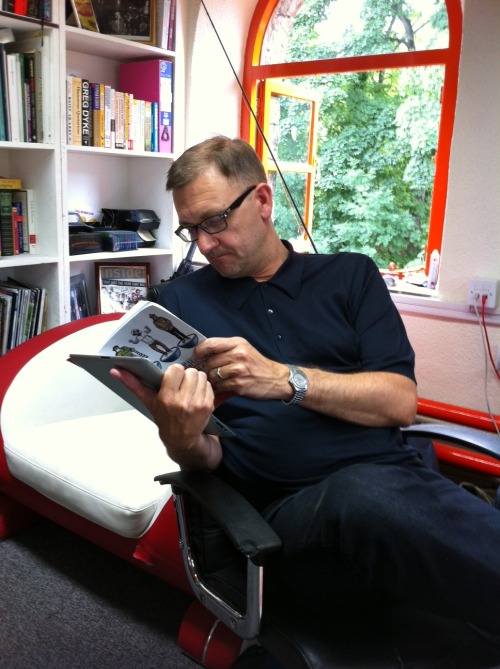
I love the summer holidays for catching up on topical reading, it’s a good time to open your mind to fresh ideas, escape with a story or just learn something new about our wonderful world. Apart from Lake Coniston, here’s what I’ll be diving into.

‘The Cotton Harvest’ by AK Nawaz I love urban crime noir. My favourite of this genre is James Crumley who set his grimy tales in Missoula, Montana. Having never been there I can’t properly say whether he’s done a good portrayal or not. Anyway, I know who AK Nawaz is (this isn’t his real name) but he should be able to get a decent grip on Manchester crime.

‘The Killing Pool’ by Kevin Sampson, set in Liverpool, Sampson has a good ear and a ready feel for all walks of life. His Awaydays was superb and this looks the business as well.

'The Atmospheric Railway and other stories' by Shena Mackay - I first read a collection by this quite brilliant English writer when I backpacked around Turkey in 1986. I'm looking forward to this collection after picking it up at a church sale last month. 

Welcome to Entrepreneur Country by Julie Meyer So far this has been an easy to read, but hard to swallow business book for a holiday. I like the crazy utopianism of Julie’s world view, which she advanced so elegantly at a Downtown and TechHub event earlier this month.

The Last Days of Detroit by Mark Binelli – Anyone involved in city politics and urban development looks at Detroit with horror. In fact, everyone looks at Detroit with horror, except the tourists who come to photograph urban decay and say they’ve come to see what the end of the world will look like. The former Motor City has recently gone bankrupt. Now I’ve had this for a while and have been dipping into it, but it’s a well argued, well researched examination of what went wrong and how it can bounce back.

‘The Quarry’ by Iain Banks – the last book by the recently departed Scottish author. I have really enjoyed The Crow Road and The Business and love the premise of this one, a group of university friends gathering together years later. Also touches on themes like parental mortality and autism, personal interests of mine.

‘Northern Monkeys’ by William Routledge – OK, I have a vested interest in this compelling anthology of quality musings on fashion, football and frolics through the years, but it’s still a great book to discover new insights and nuances. A wonderful reference and a work of beauty.

Five Days in May by Andrew Adonis - Having spent a bit of time with Andrew Adonis this year I have been impressed at his determination to get economic policy right for Labour, but also to work across party lines to articulate projects in the national interest – like HS2, Academies, promotion of LEPs and apprenticeships. This is his insider’s account of the birth of the Coalition government.

That should get me through the first week, any other suggestions gratefully received.


via Tumblr http://michaeltaylordowntown.tumblr.com/post/56432452426

Friday, July 19, 2013

Rose Hill Stores, a sad and predictable end

It would be a heart of stone that didn't at least feel a modicum of sympathy for the owner of Rose Hill Stores, which closed for business last week. Shortly after buying the old Post Office site and opening a Spar convenience store, the neighbouring shop, Thresher, went bust. He didn't cause their demise, far from it, but it did show that Soviet style planning and licensing of shop types doesn't exist in this area. There's a link here to other blogs on the store wars.
He also started selling newspapers, something plenty of other shops in Marple do, and are having to find other things to add to their offer.
Not long after, the next door shop was turned into a rival and bigger convenience shop, owned by a chain with bigger buying power, the Rajah Brothers.
Then it got ugly. Undercutting, police raids, accusations of intimidation and rows over access to the car parking at the front. The pictures above illustrate the lengths the owner went to in order to prevent cars parking on the land by his shop in order to shop at the Premier. Bollards and chains also made it very hard to park there, and threats not to shop at Premier if you parked there. I only ever went to Premier once, when Spar didn't have what I needed. I gave up when the parking situation got unpleasant. 
The only possible lesson you can take from it is that whenever you start any business there will be competition. You too will be someone else's competition. Not one single customer owes you their loyalty because you want to be in business, or because you are a person like them, just trying to make a living. Time and again independent shops are up against multiples. It is hard, very hard. But the ones that succeed aren't the ones that worry about what the competition do, but who think about what the customers can get that the competition can't do. 

In happier Marple retail news, I notice that Felix at Murillos Tapas Bar and Restaurant has opened a deli counter. Good luck mate.

Confessions of a Groundhopper - blogging for the Northwest Football Awards


One of the first things I do when the fixtures come out is look out for all the away trips that can take in a new ground.
I admit it, I’m a groundhopper and this is my confession. I’ve watched football on 135 different grounds around the world, all but a dozen in Britain. I love the feeling of walking through the turnstiles at a new ground, sampling the atmosphere, tasting the pies, weighing up the balance of two teams of toilers at an unfamiliar standard and feeding off the crowd's knowledge of who is who.
One of my favourite ever football books is The Football Grounds of England and Wales by Simon Inglis. He lovingly describes the architecture and the setting of each ground.
I also devoured the photography of Stuart Clarke – Homes of Football.
Last season I notched off Chesterfield as the 76th of the current 92, partly as a homage to see Adebayo Akinfenwa, the cult Northampton Town player and a favourite on FIFA 12 on the Xbox.
Except it isn't, it was my 63rd. I've lost 11 who have new stadiums, and then there is the Wimbledon situation which I'm not sure how I count that.
On the Punk 92 I'm at 76. That is, if you’ve watched one of the 92 at their ground it counts.

Of the92.net rules, it's 63. Same with the 92 Club.
I have a badge celebrating my membership of the 100 Grounds Club, and love visiting the blog with its stories of toilet blocks, railway sleeper terraces and rebuilt clubhouses.

But as I said, I count non-league as well and of the total grounds visited it's now at 135. My short term targets are to get all the Greater Manchester non-league grounds.
In an age when so many new stadiums are so boring and so much the same – it’s a treat to sample a rough character of the non-league set-ups. It’s great that the North West Football Awards has such strong connections to the grass roots of football through community clubs categories and a recognition of the progress made throughout the Conference and Conference North.
To give my non-league adventures a bit of a purpose I'm going to try and chalk off the Greater Manchester grounds this season.  But next up will be Glossop North End this Saturday, then any one from Curzon Ashton, Radcliffe Borough, Ramsbottom United (steam trains too!) or Trafford.
Also as a part-time Blackburn Rovers fan I’ll be taking in away games, especially targeting new grounds - we’re looking forward to Doncaster Rovers in the league this season for a first trip to the Keepmoat Stadium on August the 16th.

Friday, July 12, 2013

Somewhere beginning with M - Manchester - Melbourne connections


Melbourne Australia: World’s most liveable city (by InvestVictoria)
via Tumblr http://michaeltaylordowntown.tumblr.com/post/55248428374

Something beginning with M - the Manchester Melbourne connection
I only lived in Melbourne, Australia, very briefly, but it’s a city I admire greatly. And it’s a city that Manchester has much to learn from and both cities have much knowledge to share.
There’s a love or sport, music and clubbing. Both are cities with proud traditions of welcoming immigrants – Melbourne has the second largest Greek population after Athens and yet still has more Italians than Greeks. All of this has been flooding back recently as I’ve finally got round to reading The Slap by Christos Tsiolkas, I know, the book everyone had their head in two years ago. But it’s set in Melbourne, and has provided something of a tour of this ethnic, cultural and sometimes tense melting pot.
Mancunians also share a certain chippines about the main city in our country. Sydneysiders have a swagger and an arrogance and think their city is the first and last place of importance in the country. Sound familiar?
So I was delighted to read in Monocle magazine that Melbourne was named the second most livable city on the planet this year, tucked in behind Copenhagen.
The factors that fell in Melbourne’s favour included a strong economic performance – noting positive jobs growth, regional infrastructure developments, but also improvements in cycling and public transport.
I like the Monocle annual quality of life index because it picks up things that other surveys ignore, but are integral to the happiness of creative and urbane people who value things like shopping hours and amount of outdoor public seating.
As the capital city of the state of Victoria, Melbourne has the feel of a confident and progressive city. It is more industrial and mercantile too, innovative and attractive to international companies. KPMG research found it to be the best city in the world to carry out commercial scientific research, thanks to a generous tax regime.
The state government will give back 45 cents in every dollar spent by start-up businesses with turnover under A$20m, but it’s not just the system, but the ease with which it is implemented. How often do you hear the complaint that UK tax rules are so complicated businesses just don’t bother applying?
But I also return to the issue of autonomy. By targeting research and development, and making some adjustments to its tax policy, the state has been able to make this commitment. We indeed have much to learn and share.
I say all of this, because I’m meeting with a cross-party group of MPs from the Victorian State Parliament next week. They are coming to Manchester to find out about how this city has achieved so much. The public private partnerships here are admired around the world. So it’s particularly flattering that a city like Melbourne has much to learn from Manchester. But I shall very much enjoy the interchange of insights and look forward to sharing them with Downtown members too.
I am currently holding my breath as to whether cricket will be a topic for discussion.

Thursday, July 04, 2013

We have to get a move on – or HS2 will bring our talent closer to London


Imagine a scenario when High Speed Rail gets built. That the cities of the North have still lagged behind. That Scotland has a generous corporation tax regime that draws in ambitious technology businesses to Glasgow and to Silicon Glen. And that London continues its inexorable rise as a global powerhouse.

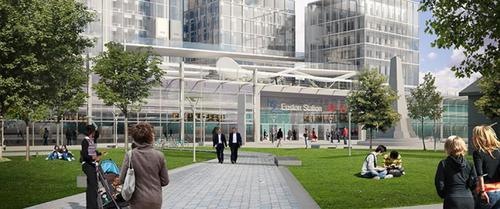
A new train line that can take people from Manchester to the centre of London, to a newly built Euston station (pictured), in just over an hour, does just that. It draws people in. Just that. There is no reason for the traffic to be two ways – few other meaningful businesses have followed the BBC to MediaCity and the public sector is still the biggest employer in large swathes of the North.

It simply can’t happen. It simply can’t be allowed to happen. And if we needed any further impetus to get political leaders in the cities to dig in for greater autonomy and power to have serious control over government budgets in an effective way for our urban economies, then this is it.

Geoff Muirhead, the former CEO of Manchester Airports Group made these points and more at our Northern Revolution conference yesterday.

This is the one that sharpens our senses though. If you accept the arguments that HS2 is going to happen, then we recognise it presents a challenge to the North as much as it does an opportunity. The prize is double edged – just relying on it and becoming a far flung suburb of London would be a disaster. It has to be more than that.

Any successful city has to create its own magnetism – a reason to draw people in, retain the talented and mobile, and provide a living and a quality of life for its people. And that’s the challenge of all of us.

Mike Emmerich, chief executive of new economy, an articulate and wise servant of the city who has experience of working in Whitehall, made the good point that public and economic policy needs to work on what is organically there. Otherwise it will fail. There is plenty of evidence of that all around us of abandoned schemes to dream a shiny new building into a rundown town and hope the investment will follow. It’s harder than that. It’s about economic performance, people then place. In that order.

via Tumblr http://michaeltaylordowntown.tumblr.com/post/54619994836

Wednesday, June 26, 2013

School's out - the idiocy of the teachers' strike

Tomorrow schools in the North West will be closed because of a strike by teaching unions. Without even breaching the reasons behind this, the whole fiasco is totally avoidable. The very threat of a strike, irrespective of whether individual teachers choose to withdraw their labour for the day, means schools will have to close. Schools can't ask who is going to strike and who isn't. Schools can't open with a provisional staff. And yet the very risk that kids will be left unsupervised will mean parents have to take a day off work and kids will miss lessons.

The barmy thing is that all the teachers could turn up to work and still get paid, but have no lessons to teach. But the school won't know in time to make the decision on whether to close or not. As I said, stupid.

As for the reasons why they're striking, I don't agree with that either. That's my personal view, of course, not that of the governing body I sit on. Reform has to come in teaching. Reform has to come to public sector pensions.

Tuesday, June 18, 2013

MOSI - a cautious welcome

Downtown Manchester in Business offers a cautious welcome to the announcement today from Ed Vaizey, the culture minister, over the future of MOSI.


However, the very fact that the future of this fine Manchester asset has been called into question is unacceptable.


Businesses in the city have been galvanised into action to protect MOSI, but also wish to partner with the board and trustees to ensure that the financial future of MOSI is guaranteed for future generations.


I hope that a new spirit of partnership can grow from this period of confusion and turbulence.


via Tumblr http://michaeltaylordowntown.tumblr.com/post/53272070561

Friday, June 14, 2013

Scotland the braver – the North of England’s noisy neighbour

I was up in Glasgow this week for Scotland’s Technology Show. It was an exhibition of a wide range of technology companies and featured a large presence from Scottish Enterprise, of which there is no equivalent in England, or in our Northern cities. And on the back of BBC’s Question Time from Edinburgh last night, I came away with 5 thoughts that have shifted my view of our Caledonian cousins.

Maybe it’s because I’m a political anorak, but I kept musing about what difference an independent Scotland would make to this event in the future, and to the business owners I met up there. I’ll be honest with you, I just don’t get Scottish nationalism. I thought any ambitions of a new independent nation joining the “arc of prosperity” from Norway to Iceland and Ireland would have been buried in the rubble of the financial crisis of 2008. The rhetoric of the SNP is also of a bygone era of high state spending with no real understanding of the kind of dynamic economy an independent Scotland will need to be. Plus, most of the oil is in English waters if you draw the line correctly.

Yet there is still a momentum behind this most implausible of political projects, one that will grow stronger as the gap between London and the other regional cities grows larger. I am pretty sure that full independence will be bad for Scotland, even though I’m not really entitled or required to have a view on that. But I’m still not sure as to whether it will be good for the North of England, or not.

What I am sure of, however, is that the institutions that Scotland has are making a better job than I previously thought of creating the kind of economy that it needs, whether a devolved part of the UK, or a small independent member of the European Union.

As we prepare for the Northern Revolution conference in Salford Quays, on the 4th of July it’s as well to learn from other places where policy and planning are working.

Here are five things I learned this week that show Scotland is heading in the right direction. And maybe Northern cities, or a collaboration between them, could study a bit closer.

1. The Scottish Investment Bank (SIB) – I like how the umbrella body of SIB operates a suite of investment funds. It provides clarity, a relatively lean and no nonsense model and does co-investment with a well established network of business angels through both the three equity funds and is also the lead investor in the privately managed Scottish Loan Fund.

2. Scotland’s Technology Show – the spirit of co-operation and excitement amongst disparate companies in Scotland to show off their products at a domestic trade show was impressive. It wasn’t to meet buyers of subsea marine engineering products, but it was to share ideas and meet other technology companies with similar ambitions.

3. There are more entrepreneurs in Scotland than ever – this was a trend that surprised me, but beyond the headlines, start-up rates are still way behind the rest of the UK. According to the Global Entrepreneurship Monitor, Scotland is retaining start-ups and has a high proportion of people of working age who have started a business. Sir Tom Hunter, who endowed the Hunter Centre for Entrepreneurship at Strathclyde University, thinks there is a reason for this: “Ultimately it seems we need to continue the cultural shift towards enabling our people to recognise entrepreneurialism as a real career option. We are in the teeth of a recession but when I started out in a similar recession there was very little by way of support. Today it’s different and I really do believe that we are finally integrating the support network for aspiring entrepreneurs.”

4. Entrepreneurial Spark – I led a panel debate with Jim Duffy, the CEO of this incubator and accelerator, and he had a great story to tell. His free Start Up Accelerator takes businesses through a tough 5 month process to get them in good shape.

5. Royal Bank of Scotland edging towards privatisation. Stephen Hester has done a good job getting RBS ready for a return to private ownership, even though he won’t get any thanks for it. But the reach of the bank into Scotland’s business base means it desperately needs clarity of its future if it is to be effective. It either shrinks and withers, or it is managed to a sustainable size. Never again can it be allowed to be sprawling empire Fred Goodwin spawned.

From a lower base, and with a much weaker entrepreneurial culture the picture in Scotland is looking brighter. It’s as well to keep an eye on this noisy neighbour, whether we need our passports to do business with them or not.


via Tumblr http://michaeltaylordowntown.tumblr.com/post/52940755153

Friday, June 07, 2013

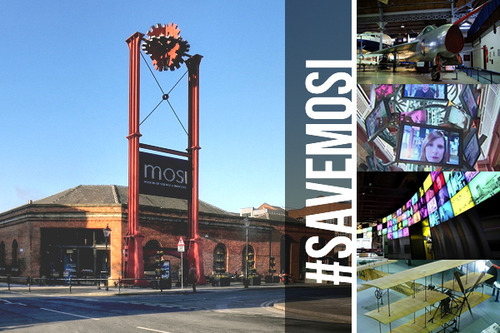
Why Downtown says: "Save MOSI"


There’s a danger that once any regional business ties its fortunes to a London centre – its chances of survival diminish. That’s why a campaign to save Manchester’s Museum of Science and Industry (MOSI) has so taken root in the city and has fuelled a strong sense of injustice.


MOSI isn’t just a ‘nice to have’ attraction in the city centre, it’s an integral part of what Manchester is all about. The start of the world’s first passenger railway service and a valuable educational resource for our children.


Downtown Manchester in Business has had no hesitation in taking a leading role in the “Save MOSI” campaign and have already begun the process of lobbying and voicing our view on this issue. I was on BBC Radio Manchester with Graham Stringer MP drawing a line in the sand on this issue and we have sat down with a number of other businesses in the city to kick off a campaign and agree its scope.


We must from the outset applaud Yakub Qureshi from the Manchester Evening News in bringing this story to the public’s attention and for Downtown members in expressing their outrage on social media sites.


The threat to MOSI comes as the national Science Museum Group is considering shutting it and the National Media Museum in Bradford and the National Rail Museum in York.


The Manchester Evening News reported: “The three northern visitor attractions, which are all part of the London-based museum group, have been put on the chopping block because of funding cuts.”


The last thing any of us in Manchester want to do is engage in a tawdry competition with Bradford and York about who deserves to survive more. Frankly it should never have got to this. It may suit the trustees of MOSI and the Science Museums Group for everyone to target the collation government and the ‘cuts to the arts” agenda. But that’s not the point either. What is the issue here is how important institutions are run and how they are supported and for who.


This campaign is only at the beginning, but it will also throw to the fore some important questions about MOSI and what it is for and how it can be improved too. That’s why we call on businesses and members of the public to start from the premise that MOSI is vital to future scientists and engineers and for the curiosity of Manchester and its visitors.


We also need to remind The Science Museum Group that they have a commitment to transfer all existing Grant in Aid on the condition that the site and collections would be preserved for a minimum of 25 years.


While we appreciate the trustees have a difficult job to balance their budget in the teeth of cuts to their budget, it is not acceptable that MOSI can be sacrificed, or that it can be even considered for closure.


As Graham Stringer MP told the Manchester Evening News: “I’m appalled at the idea we will end up with only museums in London. Something like 90 per cent of the funding for art galleries and museums goes into London already. It’s an extraordinary amount.”


Andrew Stokes, chief executive of Marketing Manchester, says: “MOSI is a museum of national significance and its visitor figures speak for themselves. Its location on the site of the world’s first passenger railway station adds to its appeal and provides a real tourism hub for the Castlefield area. Marketing Manchester will support wholeheartedly any campaign to keep the museum’s doors open – not only for the people of Greater Manchester, but also for the million international visitors a year that the city attracts.”


Jonathan Schofield, tour guide, and Manchester Confidential editor, says: “What is certain is that proposing something as blatantly unfair and desperate as closing all the Science Museum Group’s northern properties while keeping on the equally struggling London one looks shocking.”


So, stay posted, stay close and above all, Save MOSI.


via Tumblr http://michaeltaylordowntown.tumblr.com/post/52362593749

Saturday, June 01, 2013

A few more thoughts on how to enjoy the Hay Festival

https://www.hayfestival.com/wales/img/press-photos/highres/2013/18.jpg
Kids at Hay, joining in. Pic by Finn Beales


A good pal of mine described Hay as where the earnest reek of self improvement collides with the overwhelming stench of smugness. Of course he's right. Entirely. But, I like it for no other reason than it can throw up the possibility of enjoying someone sharing an idea you had never, ever thought of before. What's so bad about that?

Here are some thoughts I had from this time.

Go to a live recording of a radio programme. It's good fun, professionally run and as it has a multitude of guests from all around the festival. On Suzie Klein's Radio 3 Drivetime programme we had Peter Florence, the founder of Hay; maths guru Marcus du Sautoy, psychologist Oliver James, historian and writer of a new book on 1913 Charles Emmerson and my favourite of them all, Amit Chaudhuri who was talking about his new tome on Calcutta. We also saw the brilliant Ian Macmillan with band called Wora, writers Rupert Thomson and Tiffany Murray and a Welsh language poet Menna Elfyn.

Get kids to do stuff. Doesn't matter what, but it helps them get something out of a poet, writer or an illustrator if they can join in. We saw Dan Abnett, a writer of comic books do a whole session on how to draw a dragon.

Talk to people. OK, so my kids thought the risk of talking to a Tarquin was too much of a stretch out of their comfort zones, but it's always really nice to chat to people in queues and at the shop about their experience. And I have yet to regret stopping to chat to an author you recognise. They are always pleased to do so.

Some events are seemingly unrelated to books, ideas or anything at all, but they work. Take Michael Vaughan on the Ashes. He said more about team work and workplace psychology than any amount of experts.

Travelling through Wales, or England? We drove there via Wrexham and then through mid-Wales. It was beautiful, but exhausting. The drive home via Leominster and Shopshire and Cheshire was quicker and easier. We did the train in a day last year and it was harder work than it should have been.

Asda and the College scrap their plans - so what now?


It was announced this week that Asda and Cheadle and Marple College have scrapped their plans to build a supermarket on Hibbert Lane. I welcome this news as it was a bad scheme, badly thought through, poorly located and the wrong solution to local challenges.

However, it throws into the mix the possibilities of what should happen now. I liked the conciliatory line in the statement about consulting with the community about the best use for the site, but ultimately it is a matter for the governors of the college to fulfill their duties to provide education in a sustainable way and be responsible for their estates, here's the statement:
"Following the refusal of planning permission at the planning and highways committee, both the College and Asda have been carefully considering their position and contractual obligations.  Both parties have been in discussions with each other and their respective Boards about their appetite to proceed and the prospect of an appeal.  Both parties have indicated a preference to withdraw from the contract by mutual consent and have instructed solicitors to draft  an agreement in this respect.

"The College has been considering a number of options of how to proceed and would very much like to work with the Marple Community to explore a way forward.  It is our intent to collaborate and consult with key stakeholders in this respect." 
So here are a few new challenges for the community leader who articulated so powerfully what needs to be done next.

The College. There is no doubt that the College needs to do something new, and it needs to get a move on. Other colleges and schools are so much better equipped. Resources are tight, but the need to have a new campus, possibly on Buxton Lane will have to be costed within what is possible from developing Hibbert Lane for housing.

Chadwick Street Site. This development will also encourage Kirkland to proceed with plans for a town centre store. I've pondered before whether Marple is an Aldi or a Waitrose kind of place. I'm pretty certain the store was designed with Waitrose in mind, it is now a commercial decision as to whether they want to proceed.

Traffic. Something needs to be done about the roads round here. They just don't function properly. The traffic management is all wrong. I like what's been done in Poynton, but there are too many complicated one way routes at the moment and unflowing movements for it to flow round here.

Independent retailers. Free markets throw up the possibility of risk that a business won't work. I don't necessarily just shop at local independents just because they are independent. I welcome well run branded multiple retailers: I go to Greenhalgh's because I like their Broccoli soup, I get repairs done at Zipyard because they are friendly and cheap. This is not the devil at work. Everywhere has empty shops too, good ideas will come to the fore. But it's important that a college is supported in Marple, or many of these butty bars and pie shops will go out of business. 

Sports facilities. The football pitches and sports grounds round here are woeful. Marple Hall School astroturf is a misnomer, it's concrete with a thinning carpet. The swimming pool and gym are pretty ropey too. So, in working out what next for different land sites, surely this should be factored in. The set  in Woodley is good, but it's 4 miles away, and it's expensive. It should be factored in. And I don't accept that putting up full size posts on an unplayable pitch on Hawk Green is a meaningful contribution to local sports.

The media. How rubbish is it that the local weekly paper is so stuck in the cycle of weekly news there is no news outlet for news of this importance for Stockport and for Marple? Even the press statement seems to have been sent to the local messageboard.

I don't like saying NO to progress, so I look forward to the day when I can have a YES poster in my window for something positive and bold in Marple.

Friday, May 31, 2013

The brainy city


Quite rightly Manchester is lauded for its sporting and cultural contribution to the world. But there is also vast tradition of new ideas born of the city’s bold intellectual curiosity. Free trade capitalism, female suffrage, communism, vegetarianism, even the founding principles of the Co-operative movement were rooted in proud traditions of thought and new ideas in Manchester.
All the major political parties seem to be struggling to connect with what they really stand for. Instead of riding the technological wave of change, they seem to be drowned by it. And too often debate is quickly polarised – free speech for idiots, slogans without substance – can someone explain the difference between One Nation Labour, Red Tory and Blue Labour?
Over the next few weeks we’ll be inviting Downtown members and anyone interested in thinking a bit harder to join with us on raising the level of debate and articulating a Northern perspective on the major issues of our day.
It was one of the characteristics that attracted me to Downtown last year, a readiness for a growing group of people in our cities to approach our events with an open mind. In fact the last two events I’ve hosted have seen Lord Adonis encourage an educational revolution that is refreshing and bold, while TechHub’s Doug Ward kicked off an event with reference to the principles of Boulder theory and how a thriving technology ecosystem can thrive, inspired by Boulder in Colorado, a thriving enterprising city in the Rocky Mountains.
I’ve just spent a couple of days at Hay Festival in mid-Wales. There wasn’t much talk about start-ups and finance, but there was a real energy around understanding how technology is influencing how we learn and how quickly the world is changing. Eric Schmidt from Google had been there earlier in the week tackling big global issues, and no doubt being mugged on where his company pays its taxes.
There were thousands of people at this “Woodstock of the mind”, talking about a vast range of subjects, history, environment, creativity and there was also a fascinating analysis of the forthcoming Ashes series by Michael Vaughan, but that’s another story.
But the point of me mentioning all of this is that I’m particularly excited by our forthcoming events. An EU debate in Manchester on June the 27th, the Northern Revolution conference on July the 4th at MediaCity in Salford Quays. We’ve assembled a really impressive cast list of men and women with a vital contribution to this process of the exploration of ideas for what kind of world we are creating for our children in the north of England.
My good pal Mike Emmerich coined the phrase Brainy City in a speech at MIPIM. Science is a massive part of our future, but there is so much more to go at besides. Let’s all of us raise our aspirations, let’s do more of this kind of thing in Manchester.
Apart from anything, Hay-on-Wye is a dog to get to.
(pic above from Finn Beales, Hay Festival)

via Tumblr http://michaeltaylordowntown.tumblr.com/post/51793523149

Tuesday, May 28, 2013

My mate #20 - Bill Routledge

Cass Pennant, Bill Routledge and me
It's been a while since I did one of these for this blog's "my mate" series. I haven't run out of mates or anything, I've just been a bit tardy doing anything at all for this blog. But as a lot of people ask how I met Bill Routledge and how I got to publish his book, Northern Monkeys, here we go.

Bill is the first author for my new book publishing venture. He's a good mate of my brother-in-law Dave Tinkler and we were introduced after his last book, Waiting for Glory came out. It's incredible to think how far we've come since we first met four years ago for a drink and a chat about possibly working together on me helping him curate a collection of stories about the fashion around football culture, something we're both drawn to.

Now that we've published Northern Monkeys I can say with full confidence that I count Bill as a friend. I wouldn't have done so had I not met my side of the bargain and published a product I was proud of did to do true justice to all the hard work and graft he's put in to it.

In the foreword to the book he thanks me first, acknowledging my support on a sometimes lonely road. That means a hell of a lot as the world can be full of trickery and people who let you down. It also tells you something of the effort required to produce such a weighty tome.  I hope I can live up to that respect. But what struck me about Bill is his own personal sense of honour. It shines through not only the honest writing, the fulsome accounts of life in the world he has inhabited, but also the deep trust he's managed to secure with such a staggering breadth of people from so many walks of life.

At the Fanatic Live event last week at the National Football Museum his wife Jackie was reflecting on all of this and on how different we were, but I don't see it like that. I'm always drawn to people who are curious and interested in things. Bill is like that. He reads widely, takes on a lot of different influences and never stops learning.

Monday, May 27, 2013

Downtown welcomes you to TechHub

BLCrCWACUAA7IPk One of my priorities for Downtown Manchester in Business is to introduce groups of people to one another so they can make the city a better place to do business.

This was my motivation behind an event at TechHub, the incubator and shared workspace in Carver’s Warehouse in the Northern Quarter. It was a great success, Doug Ward from TechHub, Gareth Burton from Burton Beavan who provides me and techHub with financial advice, and Josh from Melbourne Hosting all gave their own perspective on how this ecosystem can connect in Manchester.

I’ll mention the context a little more – the event was informal, laid back and we served pizza and bottled beer. It also took place at 4pm on a Friday before the spring bank holiday at the end of May, a complete no-no in every events handbook I’ve ever read (or written). But it worked. All to do with the spirit of thinking differently.


via WordPress http://michaeltaylorevents.wordpress.com/2013/05/27/downtown-welcomes-you-to-techhub-2/

Friday, May 24, 2013

We need to talk about London

There is currently a move towards fiscal independence and partial devolution that could threaten the functioning of the United Kingdom as a sovereign state as we know it. No, not those troublesome Scots again, but a growing resentment in London that the capital is indeed another country, a thriving city state with its own talismanic government, structural needs, a tax base and different policy agenda.


OK, hold that thought for a moment. At our Downtown conference in July, Northern Revolution, we will be debating the issue of London with an illustrious panel. We will be examining “the London effect” and how it may direct the regional policy revolution we need to unlock the potential of the North.


Sometimes we can run away with ourselves and misunderstand the nature of the challenges the regional cities face. Helpfully, the view of the Core Cities group, of which Manchester, Leeds and Liverpool are a part, is this: “We all need London to continue to succeed, but it is unhelpful and incorrect to see growth elsewhere in the country simply as displacement from the South East. This severely limiting concept stymies the national ability to recover and grow.”


This isn’t just chatter, it was produced as evidence to a commission unleashed by London Mayor Boris Johnson after his re-election last year which has just made a bold case for London to control more of its own taxes than central government. You can link to the full report Raising the Capital, The Report of the London Finance Commission here.


To cut to the chase, here’s the conclusion: “A more devolved system implies both a need to remove government borrowing limits on London government and need to devolve revenue streams in the form of taxation to London government.”


The call for more devolution from London has to be seen as an opportunity for all our cities to develop the right models for new times. At our excellent Leader’s Lunch earlier this month, Sir Richard Leese came as close as he ever has to supporting the idea for a powerful metropolitan mayor for the Greater Manchester city region. However, he made the point that the London mayoral model would be as inadequate for Manchester as the pale small city model that Liverpool and Bristol have adopted.


Indeed, the very smart city deal that Manchester secured is viewed quite enviously by the London commission, who believe using the proceeds of growth in our city region is a good model.


Where I think this is a case of London having its cake and eating it, is how the national structures of the country have inevitably caused the growth of our capital. It is the financial, political, cultural, media and an international transport hub. All our transport runs into London, it is the mother ship, the death star, into which all roads and railways lead. There is no policy plank on which any serious attempt to grow other cities is being pursued with any real vigour. That’s where there is a need for a confident, bold and progressive policy revolution.


I had a peek over the paywall into David Aaronovitch’s excellent column in the Times this week, where he pretty much nailed the politics of today. He said an emerging fault line in British public life was emerging over issues like gay marriage, Europe and ‘political correctness gone mad’. In the shires, the Daily Mail and the narrow UKIP agenda matters, in the cities, it does not.


And the conclusion: “So we may need to secede from the hinterland. And the same is true of our other great cities and university towns which, together, could make an outward-looking, open-minded polity.”


There is a risk that we descend into chippiness, pretty much like the Scots have, where actually our Northern cities find common cause with each other and with London, over many important issues. These include business growth, a flexible approach to core technology skills and an immigration policy that recognizes what growing technology companies need from international labour markets. All important for a strong London indeed, but equally for the strong cities of the North too.


via Tumblr http://michaeltaylordowntown.tumblr.com/post/51211114989

Monday, May 20, 2013

I did an interview with those fine folk at Huddled (by...


I did an interview with those fine folk at Huddled (by HuddledNW). Things I like, the good people, the influences and where to go.


via Tumblr http://michaeltaylordowntown.tumblr.com/post/50904079173

Sunday, May 19, 2013

An audience with Cass Pennant

BKf8lcxCUAEL0eZ Well, when I started on my own I wanted variety – to be involved in live events beyond just business. I also wanted to work with different festivals and different events companies to learn new methods and push myself.


On Friday the 17th of May at the National Football Museum I did a live interview on stage with the author and film maker Cass Pennant. It was an introduction to the live screening of Casuals, the DVD which charts the history of this much misunderstood and ever evolving youth cult. Cass had been a major face on the hooligan scene in the 1980s and is long since retired from West Ham’s Inter City Firm. His exploits there, and since, have been immortalised in books and a film Cass, starring Nonso Anozie.


The event was the third in the Fanatic series of fan events promoted by events company Ear to the Ground. I did the first one last year which was a very academic and intellectual examination of fan culture.


So, how did it go?


This is what Cass said on Facebook: “Last night at the National Football Museum in Manchester had the opportunity to bring the film to a larger audience when screened the documentary Casuals as part of the – Fanatic Live event and it was a great success. I attended and held a Q & A session which certainly added value. Everyone that went (some 150) left the screening feeling the film was very well-done.”

Cass is a great story teller and he gave a great tease into the film, cueing up some of the subjects, looking into some of his career highlights, and telling the stories he weighed up very skillfully that the audience were here to lap up.


All I can do as the questioner is to lead him. As this blog is about the event craft I wanted to mention how well Cass dealt with the young lads who were clearly in awe of his hooligan legacy. They raced to the front to sit in the front row and really enjoyed his old war stories. But Cass didn’t patronise them, as I may have been tempted to, or cut them off, instead he made the point to me that this is a great opportunity to open their eyes to the rest of the museum, to films and books. You just never know how that might then go.


I was also chuffed to get a good reaction from Cass for the questions I prepared beforehand. He does a lot of events and is always ready to be interviewed, but he did say how he gets fed up when people haven’t bothered to prepare. So there you are. A lot of people will know I can do business events, technology seminars and a bit of politics. I was really pleased with this as it shows I can work in other areas of popular culture as well.


It was also a good opportunity to sell a few copies of Northern Monkeys by William Routledge, the book I published and am actively promoting. I am delighted with how this is going and there is plenty of scope to do more live events around this fantastic subject.


BKfY19OCQAALYmJ


via WordPress http://michaeltaylorevents.wordpress.com/2013/05/19/an-audience-with-cass-pennant/

Thursday, May 16, 2013

Manchester’s Going Dutch


Plans to bring a Northern European urban experience to Northern England are part of an ambitious plan to make Manchester the cycling capital of the country.


If you haven’t signed it yet, then please support Vélocity 2025 , Greater Manchester’s bid for funding to radically improve the cycle ways of the city.


I must admit to being a recent convert to the joys of two wheeled transport. I bought a smart new folding bike last year. I will confess that for a big chunk of the winter it remained folded in the back of my car.


Now the weather is better, so my bike is out again, and it is a joy to be alive.


When you start cycling, you do see the world very differently. It is also true that many cyclists maintain a lofty moral high ground, while other road users resent many of their flexible adherence to rules and codes. However, on balance, until I see hospital wards full of angry white van men and injured bus drivers mown down by lycra clad couriers, I know where my sympathies lie.


However, these clashes brought me to a swift conclusion that barely used cycle lanes were a waste of time. The better option is proper cycle only lanes.


Manchester seems to have embraced this in the grand plan too with some really progressive and radical thinking around the planning of new cycleways in and around the whole of the city region.


The most dramatic change proposed is closing a half mile stretch of Oxford Road around the University to cars. I’m sure there are people who will rant and rave about that, but it is such a positive step.


So, the bones of the bid are for £20 million of national investment, to be spent over two years, to make cycling safer and easier. If successful this will be the first phase of the ambitious Vélocity 2025 strategy which will see cycling in Greater Manchester transformed over the next 12 years.


It comes as part of the government’s Cycle City Ambition Grant (CCAG), which offers financial support for ambitious long-term plans for cycling in British cities and city regions.


Greater Manchester wants to kick-start a generational shift with a programme that has the potential to make cycling a part of everyday life and increase, by 2025, the number of people cycling by 300%.


If CCAG funds are awarded, they would unlock cycling investment for Vélocity 2025 worth £150 to £200 million from a range of public and private partners.


Check the Vélocity 2025 document out and hopefully it will convince you to add your support.


via Tumblr http://michaeltaylordowntown.tumblr.com/post/50570040673

Wednesday, May 08, 2013

Fergie - the greatest

OK, so everyone is praising Sir Alex Ferguson today, and why not. What he has achieved has been staggering. The picture above was taken at Gulliver's on Oldham Street in 1986 shortly after he'd joined Manchester United. He accepted an invitation to come along with his number two Archie Knox and talk to a Football Supporters Association public meeting - we attracted about 100 people. It shows how much football has changed in all that time.

He also did an interview for North West Business Insider when I was editor in 2009. In that piece he discussed retirement, saying it may come in three or four years, well, it's been almost four now. Here's what he told Jim Pendrill, who did the interview:

“Since I said I was going to retire and changed my mind I think people think I will be here forever,” he says. “Some days I wonder myself. It could be three or four years, other mornings you wake up and think ‘have I done enough’. Then you get to the training ground, see the lads and you know how much you love it.”
But when Ferguson does finally decide to walk away he won’t disappear overnight: “I have been on the treadmill for so long that when I come off I cannot just stop.”
He says he is comfortable with some kind of ambassadorial role at United, but adds that “you never know” what’s around the corner.
But finding the right moment to go will be tough. “I have a new team and want to see that mature, so picking the moment is difficult,” he says. “One, getting off the treadmill; two, because of how much I’m enjoying it; and the third thing, which may decide everything, is my health. So far I’m not too bad.”

Interesting too that he paid tribute to the Glazer family. That may not go down too well amongst the faithful, but as foreign owners of football clubs go, they aren't the worst are they?

Friday, May 03, 2013

The City of Manchester Business Awards – and some general points on presenting awards

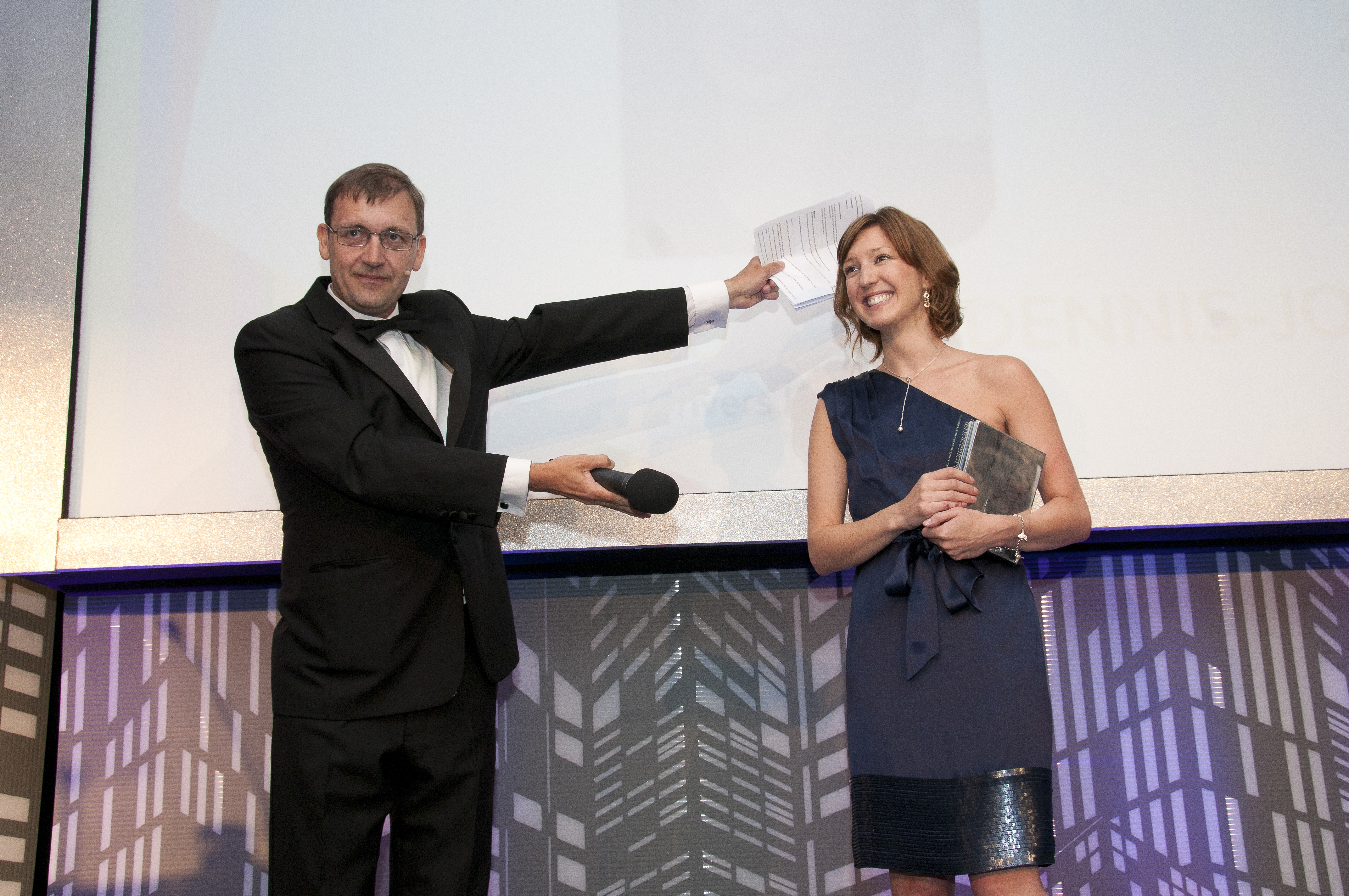
Insider's North West Young Professionals Awards 2011 at The Lowry Hotel.  My last awards presentation job was in March hosting the City of Manchester Business Awards for Downtown, of whom I am chairman in Manchester. It seems a good opportunity today to remember seven golden rules I have which I implemented at this event and many others over the years, such as the Manchester Young Professionals Awards (pictured).

1. It’s not about you – the stars of the show are the people coming up to get an award. Be confident, have authority, but don’t hog the stage and project your personality all over the event. And don’t tell jokes.
2. On no account be sleazy or flirty with women on stage, swear or remove articles of clothing. This is the most toe-curling thing you can do. As these are business awards making comments and drawing attention to how someone looks is a massive show of disrespect for their abilities as a business person.
3. Let everyone know how the winners were chosen – so many awards lack credibility. Rightly or wrongly they are seen as a sop to sponsors. Making efforts to explain exactly how the awards were won is essential.
4. Make the winners and shortlisted feel special. This is an important occasion for them, it matters. Make sure you congratulate them, discourage triumphalism, encourage humility. Make eye contact and shake hands with them. And get their names and company names right. Check everything.
5. Keep a pace to the event. There’s a thin line between rattling through categories too fast and making everyone else there engaged. The important time to get this right is at the script stage. Edit and tune the script, check everything. If there’s time, encourage a winner to say a few words of thanks, but not if they seem intoxicated. The very best way is to do a short question and answer with a handheld microphone. You can always politely remove it if they’re rambling.
6. Never tell the audience to shush. I’ve made this mistake once and it just makes things worse. If people are talking then there are many more devices to get round this. You don’t have to demand they are quiet. It’s their night too – help them enjoy it.
7. Enjoy it. Be warm, be natural, but above all have fun. I’ve seen highly paid professional comedians and public figures treat the whole thing as a chore. This is so disrespectful to everyone there. Instead, show how much fun you are having by sharing in the joy of others. Remember it’s a celebration.
I say all of this because of some feedback I had from the Downtown Manchester event. I took it in good stead, it was basically comparing my role as an awards host that night with my interviewing style when I interviewed Fred Done on stage a couple of years ago. It’s chalk and cheese. That was about Fred and me having a chat and making him shine; just me and him. Awards are so very different. I actually don’t want anyone to remember too much of what I do at an awards. I want them to remember the winners, like the woman in the picture above, Joanne Dennis-Jones from Deloitte.

via WordPress http://michaeltaylorevents.wordpress.com/2013/05/03/the-city-of-manchester-business-awards-and-some-general-points-on-presenting-awards/