Sunday, July 23, 2023

True love will find you in the end


Not long after we started doing our radio show, Music Therapy, I stumbled across a mesmerising and powerful song called True Love Will Find You In the End by Headless Heroes. 

I heard it on the soundtrack of the head-stretching BBC documentary series Can’t Get You Out of My Head by the film-maker Adam Curtis.

Headless Heroes are a collective of musicians who came together to record a number of cover versions, most notably featuring blossoming vocalist Alela Diane. 

The structure of the song is simple. 

The message of the lyrics a very obvious plea to someone in absolute despair to just hang on in there.

True love will find you in the end

You’ll find out just who was your friend

Don’t be sad, I know you will

But don’t give up until

True love will find you in the end

This is a promise with a catch

Only if you’re looking can it find you

‘Cause true love is searching too

But how can it recognise you

If you don’t step out into the light, the light

Don’t be sad I know you will

Don’t give up until

True love will find you in the end

It immediately felt like a song that was right for our Sunday evening show, Music Therapy. 

A simple song that folds neatly into our message that music can bring people together, make you feel a bit better and that by sharing thoughts, feeling, and ideas, we can look after each other.

It wasn’t until after that version of the song had lodged as a semi-permanent earworm that I started to discover more about its origin.

It was initially written and recorded by Daniel Johnston, an artist, and musician based in Texas who had a massive influence and touched an entire generation.

He died in 2019 from natural causes but had battled with his own fragile mental health all of his life. 

He was a cult figure in the alternative music scene in Austin, even though his pinched, high tenor vocals made it unlikely that he’d ever be a major star, his following flocked to the sincere raw power of songs like Life In Vain and True Love Will Find You In The End.

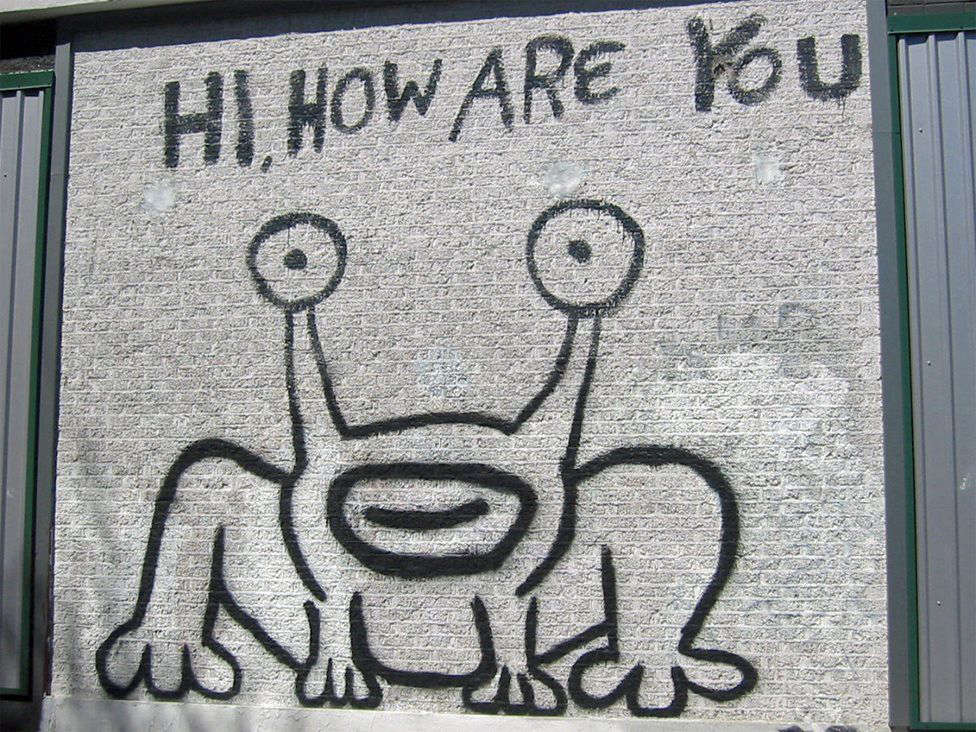
As well as his music, Daniel was also an artist of sorts and a doodle of a frog he produced in 1983, entitled Hi, How Are You? has become an emblem for a campaign in his memory - hihowareyou.org - and its location on a mural in Austin has become a shrine to him.

Its simple message is a call to check in with people and let them know you care about them when you know they are in trouble, and inviting supporters to pledge to do that. 

I’ve also discovered there are literally hundreds of versions of the song. 

We’ve shared a few of them with listeners to our show as the opener to the mellower second half of the show at 10pm and will continue to do so as long as we keep finding versions that do Daniel’s memory justice.

Neil declared his love for a version by American singer and songwriter Beck, which was recorded in 2004. 

I still don’t think the Headless Heroes version has been topped, but all the interpretations we’ve played have brought something new to what feels like a rising chorus of voices to do what we ask you all to do, as times get tough, to look after each other out there. 

You can listen to Michael Taylor and Neil Summers on Music Therapy on Tameside Radio 103.6FM on Sunday evenings from 9pm to 11pm. Click here to subscribe and catch up on previous shows.

Friday, July 21, 2023

Proud day for graduating students

 self esteem.jpeg


All across this area, proud parents have putting on their best dresses and suits to see their kids walk across the stage and graduate from university.

Many will have been doing so in a state of mystery, as their sons and daughters are the first in their family to graduate. They won’t know what to do, where to clap, or what to compare it to.


I was that kid many years ago, as I was the first member of my family to go to university.


But I’ve also been the proud parent watching two of my lads graduate, and I’ve also had the strange honour of sitting with the kids when I graduated as a 55 year old with my Masters degree.


The degree ceremony is a brilliant occasion. When I worked at Manchester Met I sat in on a few ceremonies and looked after the special guest motivational speaker. 


They have a really important job to do. I got asked to do it at the University of Central Lancashire in 2021, when they gave me an honorary degree. 


I talked about journalism and my own life, hopefully telling the graduates a few stories they’ll remember. The main one was just don’t be a dick, and look after people you meet on life’s crazy journey.


The previous day’s class of 2012 got Peter Hook from New Order and Joy Division. I genuinely don’t know what he said, but I’m sure it wasn’t that.


I was thinking about that day again this week even though I’m not involved in any ceremonies this year, as a student, parent or staff member.


One of our show’s favourites, Rebecca Lucy Taylor, better known by her stage name Self Esteem, was made an honorary Doctor of Music at the University of Sheffield on Monday (17 July 2023).


Frankly, she could have delivered large chunks of her breakthrough hit I Do this All the Time, notably the line, "Prioritise Pleasure", and brought down the house. 


But given the large numbers of Greater Manchester kids who study in Sheffield, I’m sure a few Tameside Reporter and Glossop Chronicle readers were there.


I’ve watched the whole thing on YouTube and she’s fantastic. Addressing head on the siren voice of self doubt and to comment from her experience on how women are often positioned in music, despite the supposed advancements of feminism. 


She said: “So I started my solo project, Self Esteem, which at the time I thought was just a cool artist name. But over the last seven years it has been exactly what standing up for myself, staying true to my vision and never compromising has given me every time I wasn't quiet just to keep the peace.


“Every time I said no, when I really meant no. Every time I didn't let a sound engineer assume I wouldn't be playing the drum kit, every time I let my emotions show.


“Every time a bloke on line attacked my appearance and I accepted that he is just a product of his lived experience and to reply would be futile.


“Every time I surround myself with people who accept me for exactly who I am, every time I've been brave, when I proudly exist in my skin, when I respect myself, when I remember there is simply not enough time left to doubt myself. It's completely pointless to ever think I'm anything other than the absolute tits.”


So don’t let some Oxford educated weasel tell you that your achievement is low grade, because we’re in a world that measures everything by monetary value and assumes university isn’t the right road for other people’s children.


Go Becky!


More to Manchester than the Hacienda

 1_Hac-Returns-1200x1200.jpg

Speaking as a couple of old blokes with fading memories, there was actually so much more to Manchester clubs in the 80s and 90s than popular legend has it, writes Michael Taylor, with help from Neil Summers. 
On hearing the news last week that The Hacienda will return to Manchester this winter with an "epic homecoming show" at Mayfield Depot on Saturday 2 December with DJ’s, Stone Roses frontman Ian Brown headlining a 10,000 capacity venue alongside Techno legends Leftfield.
It's as far away from the actual experience of going there in the 80s as it's possible to imagine.
But in talking to mates about my Manchester memories, so many of the club nights that really stick in the memory didn't involve the Hac.

I remember some actual warehouse parties years before they were called raves, that had such an incredible vibe, merging different scenes from around the city.


Our go-to club was Man Alive on the corner of Grosvenor and Upper Brook Street, while later club devotees speak in hushed tones of the magic nights at Spice, where DJ Justin Robertson filled the room with musical joy.


My earliest memory of the Hac is of a student night that hardly anyone went to. It then had an elitist and slightly po-faced phase in 1986 and 1987, which we endured, rather than enjoyed; because I always thought the music sounded poor.


By the time we left University in 1988 it all changed again and the rest is musical history.


For his part Neil remembers that era at the Hacienda and how door policy moved the scene on to other places in the city.


Towards the end of 89 young bugged eyed scallies from Stockport had become persona non grata at the Hacienda. 

“Fortunately around this time a number of smaller clubs popped up in Manchester specifically to cater to those ravers who weren’t mates with New Order or didn’t wear Paul Smith suits. Alongside the Thunderdome, NRG House, Man Alive & the Sound Garden was my favourite haunt ’Konspiracy’.”


“A cross between the Star Wars cantina and the ghost train at Blackpool this subterranean shebeen was one mad Saturday night out. I saw some truly insane things in there throughout the Summer of 1990 before things came to a head one night in October when someone (stood a couple of feet away from me) got a bit ‘trigger happy’. 


“Not the kind of thing you want to see in any state of mind, but it probably ruined my night less than the guy being shot at. Even the golden rule of ‘don’t stop the music’ was broken albeit it temporarily as the house lights went on & DJ Pig C hit the stop button on his 1210s & we all tentatively headed towards the exit. 


“A few weeks later someone got stabbed and Konspiracy was no more. Great while it lasted though.”


For all the house music legends and for all the pretending to look cool, my best night there remains an indie night in the summer of 1988, when I went with friends from Lancaster, where the DJ was Dave Haslam who I’ve since got to know.


Dave’s a great writer and touched on this selective nostalgia in challenging essay he wrote in 2015.


He said: "The city authorities habitually give a nod to Factory Records, but I’m not sure they quite get important parts of the Factory story. The Hacienda wasn’t a disco version of the Trafford Centre. 


“The Factory label, the club, those around and involved – from musicians to video makers – produced culture. It wasn’t an exercise in consuming but creating. In addition, like Shelagh Delaney, not only were they forced into action by despair at the cultural provision of the time, Factory operated outside the margins. One of the richest chapters of Manchester’s cultural history began when the lads who went on to form Joy Division began to meet up in a makeshift rehearsal room above the Black Swan Pub, near Weaste Bus Depot.


"This self-organised, independent activity still happens of course; actors, crews, artists, printmakers, musicians, freelancers hiring pub functions rooms, meeting wherever and whenever, trying to bring ideas to life. Isn’t it time these people were celebrated and encouraged?"


Since then I feel the city has become even more of a shallow memorial to the misunderstood past of Madchester. But there we go, adding to the legend.

Friday, July 07, 2023

Blossoms at Castlefield, what a night

IMG_6841.jpg
Neil, Joe Donovan (Blossoms drummer) and me


I took the eldest of my five sons to his first gig in 2016. I say took, I dropped him off outside and was waiting outside the venue in Liverpool with his younger brothers when he emerged three hours later.

He’d been to see Blossoms, Stockport’s finest and now darlings of the Glastonbury stage.


In that brief moment I was aware of their talent, but also of their moment.


There was a feeling as the kids streamed out of Oasis 1995 about them. Or Arctic Monkeys 2005. This was his band. The band that him and his mates were flocking to see. Scanning the forthcoming festivals for whether they’d be there. Snapping up tickets.


I was not about to do something stupid like say I liked them, or place them in a historical arc. It was important I let him love them for what they were; five lads from the neighbourhood, who you’d see around and about, and who were so utterly relatable, and created great tunes.


So I stepped away.


Not long after I was reading my go-to menswear journal, stuffed with archly observed cultural references. In there I stumbled across more love and appreciation of Blossoms. 


Neil Summers’ writing and interviews (for it was he) provided a frame of appreciation, and so too did the added knowledge that they’d benefited from the musical alchemy of James Skelly from The Coral in his producer mode.

And yes, those tunes. The opening bars of Charlemagne, the tight wall of sound of There’s a Reason Why. 

The cross currents with Stranger Things and a snappy pitch perfect video melding the two together into Stockport Things. Genius.


Their contribution to keeping us entertained during the morbid lockdown dates was nothing short of heroic. Artfully composed musical vignettes, using improvisation and deep reserves of creativity.


But still I kept it to myself, as the next tier of sons also got a Blossoms bug.


Apart from seeing them perform on Piccadilly station concourse for BBC Children in Need in 2018 I hadn’t seen them live until last week.


I don’t say this lightly, but their performance at Manchester’s summer festival in Castlefield Bowl was as good as anything I’ve seen.


After the delightful Glastonbury sojourn with Rick Astley singing The Smiths, this was a set for the true believers. Not a single cover, save for the rousing audience rendition of Half A World Away, theme tune for TV’s The Royle Family, also pure Stockport.


The standard of production, musicianship, posture and staging was pitch perfect. The centre of gravity of the band shifted throughout the set. The harmony and balance of the end product always delivering songs in reliably crystal form, or sometimes altering the opening, or chorus, in ways that reminded you of the magic of a live show.


None of this happens by accident. This is a band who are tight. They know they can play, but the real skill is they also know how to play well together and who their audience are.


It was also a crowd I felt comfortable in. A Greater Manchester collective, as if a fire alarm had gone off in Heaton Moor. All life was here.


I have theories and ideas of where this band might go next. What direction their sound could take. Every single scenario is an exciting one. In a world where artists make their living from performing live, it is indeed a fine thing to be a great live band.


From when my lad nervously stepped in to Liverpool’s O2, way back when, to now, that’s what Blossoms are: a truly great live band.


IMG_6838.jpg

Saturday, July 01, 2023

The Wham boys of Morecambe


 Life got a tint of optimism in 1983, thanks to a couple of sharp teenage dudes from Watford.

As I was emerging blinking from the dark turn that punk had taken in 1983, edging towards the end of The Jam and The Clash and willing to accept new sounds and styles, along came Wham!


George Michael and Andrew Ridgeley gazed out from the cover of their debut album Fantastic with the swagger and confidence that shiny 80s icons and boy bands alike would copy for evermore.

I bought mine from HMV in Manchester, after my first copy was robbed off me at a cafe next to Euston station when I’d splashed out my pocket money on a trip to London to see what the fashions were.


I saved up a couple of weeks later and made sure it was glued to my hands when I took it home on the train to Lancashire.  


It was a rite of passage in more ways than one.


The thing that grabbed me more than anything - and trust me when I say that even my raging and confused teenage hormones didn’t entertain the idea that George might be gay - was that they had something positive to say about unemployment.


Soul on the Dole was the line in Wham Rap (Enjoy What You Do?) - it spoke to a reality of embracing the hustle.


In the next breath they were dreaming of Club Tropicana where drinks are free. It felt aspirational and hopeful of better times breaking out to a life of international travel and endless summers.

Bad Boys was a fun rebellion at your parents scolding you for being out late.


But for me the most mesmerising track on the whole album was Nothing Looks The Same in the Light, a stirring ballad that proved a foretaste of the incredible songwriting talent that George Michael was to become.

Andrew told Classic Pop magazine this month that he thought it was a dreary filler.

Legend has it that the one song left off the album was Careless Whisper, a song written when he was just 17. 

Yet apart from the obvious song writing credits which attributed every song to George, there was no sense that they were anything other than a prolific duo.


As time went on, George credited Andrew with having been the stronger personality early on to hold them together and give him the confidence to get up and strut his stuff. But the female vocals from Pepsi and Shirley were an important part of the whole dynamic too.


Giving his friend songwriting credits on Last Christmas and those early songs was the gift of a true pal.

If you want a bit more of this on the 40th anniversary of the release of Fantastic! Then Wham! are the focus of a new documentary that will premiere on Netflix on 5 July.


With unprecedented access to both George [Michael] and Andrew [Ridgeley]’s personal archive including never-before-seen footage, and previously unheard interviews, it’s meant to chart in their own words the four year journey from teenage school friends to global superstars.


For me, they represented a care-free alternative and a breakout from a one-track approach to the right kind of music. They even spawned a name for a group of lads from Morecambe who seemed to have so much more fun, so many more girls and looked better than everyone else. Yes, the Wham Boys. It was meant as an insult, but better that than the mosh pit at a Discharge gig at Preston Warehouse.


Friday, June 30, 2023

More mental heath and music musings

Lewis-Capaldi-Glastonbury-2023-2-696x442.jpg 


Lewis Capaldi’s episode at Glastonbury is a timely reminder of the precarious nature of celebrity, writes Michael Taylor. 


The fact he's honest enough to admit to needing a break makes you think about what so many others are bottling up.


We don’t get that much feedback on our show. Most of it is quite nice. But in the social media age, everyone is fair game.


Our own Angela Rayner spoke recently about the scrutiny and abuse women in the public eye get on social media. It’s as true of politicians as it is about musicians, actors, artists of any description.


Full disclosure, I’d find it unbearable to get that much abuse and scrutiny. I’m much more comfortable in the relative obscurity of local media, thank you very much.


I’ve spoken before about how I’m a terrible critic, and no kind of music reviewer.


I just can’t bring myself to trash the work of someone who has way more resilience and courage to get up and do what they do, than I could ever dream of. 


I therefore err on the side of saying nothing, rather than being mean. Simply playing someone’s music and saying we like it is as far as we mean to go.


Choosing tunes is subjective enough. Personally, I just don’t rub along with the music of Elton John. Yet he clearly has got on absolutely fine without my patronage and endorsement.


Which brings me to music, mental health and personal resilience. 


I don’t equate the two, by the way. 


But you can’t just look the other way and think a pile on, a media scrum and an open season on someone’s personal life is a price worth paying.


In the music world that’s got to be linked to the prevalence of artists who take their own lives. The successful ones we hear about, but what about the ones who could have been, but only ever got a snide review on page 78 of the NME that finished their career in 1983.


How do you live with that?

But I picked up a book a couple of weeks ago, Bodies, by author Ian Winwood who explores the music industry’s many failures, from addiction and mental health issues to its ongoing exploitation of artists. 


On the face of it, money, freedom, adoring fans: professional musicians seem to have it all. But beneath the surface lies a frightening truth: for years the music industry has tolerated death, addiction and exploitation in the name of entertainment.


Winwood explores the industry's reluctance to confront its many failures in a far-reaching story which features first-hand access to artists such as Foo Fighters, Green Day, Trent Reznor, Biffy Clyro, Kings of Leon, Chris Cornell, Mark Lanegan, Pearl Jam. Much more than a touchline reporter, Winwood also tells the tale of his own mental-health collapse following the shocking death of his father. 


I’m enjoying its warmth and humanity, but at times quite shocked by his bracing honesty, especially as Bodies is also a deeply personal story where he displays an enormous amount of vulnerability. 


The paperback edition I got has an additional poignancy with a brand new chapter covering the death of Taylor Hawkins, the Foo Fighters drummer, and his massive Wembley memorial concert.


We call our show Music Therapy because we both get the link between music, mental health and the capacity it has to make us feel better.


We’re not blind to the toll however that the production of that magic takes on its creators. Bless them all. 


Friday, June 23, 2023

Nick Drake and the Endless Coloured Ways

Endless coloured ways.jpg 

Nick Drake looms large in our minds as the very essence of English melancholia.

He died in 1974 aged just 26, unappreciated and though loved deeply by his family and close friends, in relative obscurity.


The days of appreciation and discovery of his genius would come much later.


But a new book and a unique collection of records inspired by his songs have been released this year. 


I first discovered him around 1992, thanks to my friend Dr Richard Bircher, the Stalybridge GP, and sometime contributor to this newspaper.


I can’t claim that I was any kind of early adopter, but Richard’s sharing of the Way to Blue collection was an absolutely eye opener and an appreciation of a masterful collection of atmospheric quintessentially English folk inspired songs.


Since then Nick Drake has been mythologised and studied, time and time again. 


There have been documentaries, radio programmes - one notably by Brad Pitt - and collections of his music.


His life spans a colonial upbringing in Burma, childhood in Warwickshire, life at boarding school and then Cambridge and in London, then back to his parents' home in Tamworth. 


There is no film of him in existence and his quiet folk style made his one live tour a disaster. His lack of success and gradual withdrawal end with his death at 26. The last two years crippled by depression.

This new book Nick Drake: The Life, by Richard Norton Jack has been released as close as it’s possible to be, an official account, or at least one compiled with the co-operation of Gabrielle, his older sister and Cally Calloman, who manages the Nick Drake Estate on her behalf, ensuring that is music lives on, in the right way.


It starts with the premise that in 1968 Nick Drake had everything to live for. The product of a loving, creative family and a privileged background, he was not only a handsome and popular Cambridge undergraduate, but also a new signing to the UK’s hippest record label, Island.


Three years later, however – having made three well-reviewed but low-selling albums – Nick had been overwhelmed by mental illness. He returned to live in his family home in rural Warwickshire in 1971, and died in obscurity in 1974, aged just 26.


In the decades since, Nick has become the subject of ever-growing fascination and speculation. Combined sales of his records now stand in the millions, his songs are frequently heard on TV and in films, and he has become one of the most widely known and admired singer-songwriters of his generation.


Nick Drake: The Life is the only biography of Nick to be written with the blessing and involvement of his sister and Estate. Drawing on copious original research and new interviews with his family, friends and musical collaborators, as well as deeply personal archive material unavailable to previous writers – including his father’s diaries, his essays and private correspondence – this is the most comprehensive and authoritative account possible of Nick’s short and enigmatic life.


It includes a foreword by Gabrielle Drake and over 75 photos, many rare or previously unseen.


Also out now is The Endless Coloured Ways, a collection of Nick Drake songs performed and recorded by over 30 incredible artists from a range of different backgrounds, genres, age groups and audiences. From Fontaines D.C to Guy Garvey, and Aurora to Feist, each artist has offered their own incredible take on a timeless classic.


“Cally and I embarked on this venture with one simple brief to each of the artists — that they ignore the original recording of Nick’s, and reinvent the song in their own unique style,” Jeremy Lascelles from Chysalis Records said in a statement. “It was really humbling to hear so many similar responses, with everyone saying how important Nick’s music was to them, and how much they wanted to be part of this project. As the results came in one by one, we were thrilled by the brilliance and invention that each artist had shown. They had done exactly what we hoped for — they had made the song their own.”


We played Cello Song by Fontaines D.C. on the show last week, and John Parish and Aldous Harding’s take on “Three Hours” the week before. They are works of great beauty, and we plan to share a couple more from the collection next time around.